Homestead Mom: Teaching, Not Failing! #selfsufficienttanya
By Self Sufficient Homesteading & Gardening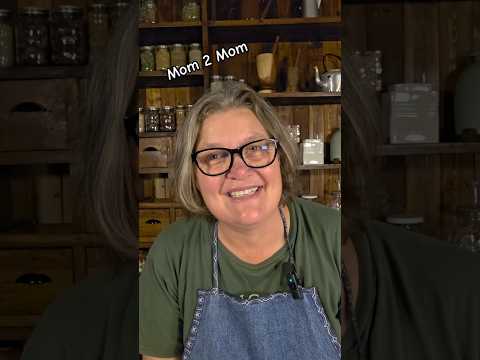
PermaNews Brief
Key Takeaways
Mothers engaged in homesteading and homeschooling are teaching their children essential life skills through real-world problem-solving and resilience.
- Challenges in homesteading teach critical thinking and adaptability.
- Children learn resilience by observing mothers overcome difficulties.
- Homesteading fosters a strong work ethic and responsibility.
- Modeling continuous learning helps children embrace mistakes.
- Experiential learning is more impactful than theoretical knowledge.
Why It Matters
The challenges of homesteading and homeschooling provide invaluable life lessons, fostering critical thinking, resilience, and a strong work ethic in children, preparing them for an unpredictable world.
What to Do Next
Reflect on a recent challenge you faced and how you modeled problem-solving for your children or mentees.
Recommended for: Mothers engaged in homesteading or homeschooling who are seeking encouragement and a deeper understanding of the educational value of their daily challenges.
The article addresses the common feelings of inadequacy and self-doubt experienced by mothers who are actively engaged in homesteading and gardening, particularly those who are also homeschooling their children. It reframes these challenges not as failures, but as valuable learning opportunities and essential life lessons being imparted to the next generation.
A central theme is the idea that the struggles and imperfections inherent in homesteading – such as crop failures, animal health issues, or unexpected repairs – are not signs of a mother’s incompetence. Instead, they are presented as real-world problems that require critical thinking, resilience, and problem-solving skills. By witnessing their mothers navigate these difficulties, children are implicitly learning how to adapt, persevere, and find solutions in the face of adversity. This hands-on, experiential learning is argued to be far more impactful than theoretical knowledge gained solely from books or structured lessons.
The article emphasizes that the homesteading lifestyle, with its inherent unpredictability and demands, naturally fosters a strong work ethic and a sense of responsibility in children. They observe the direct correlation between effort and outcome, understanding that tasks like planting, weeding, and caring for animals are necessary for sustenance and well-being. This exposure to the cycles of nature and the tangible results of labor helps them develop a deeper appreciation for where their food comes from and the effort involved in producing it.
Furthermore, the piece highlights the importance of modeling a positive attitude towards learning and growth. When a mother openly acknowledges a mistake, researches a solution, or seeks advice from others, she is demonstrating valuable life skills. Children learn that it is acceptable to not know everything, that continuous learning is a lifelong process, and that seeking help is a sign of strength, not weakness. This creates an environment where curiosity is encouraged and experimentation is seen as a pathway to knowledge.
The article also touches upon the concept of "unstructured learning" that naturally occurs within a homesteading environment. While formal homeschooling might have its curriculum, the daily rhythm of homestead life offers countless spontaneous educational moments. From identifying plants and insects to understanding weather patterns and animal behavior, children are constantly exposed to practical science, biology, and ecology. These observations are often more memorable and meaningful because they are directly relevant to their immediate surroundings and daily activities.
Finally, the article serves as a reassuring message to mothers, encouraging them to view their daily efforts, even the messy and imperfect ones, as profound acts of teaching. It suggests that the most valuable lessons are often those that are lived and experienced, rather than explicitly taught. By embracing the challenges and celebrating the small victories of homesteading, mothers are not only providing for their families but also cultivating a generation of resilient, resourceful, and environmentally conscious individuals. The overarching message is one of validation and encouragement, reminding mothers that their dedication to a self-sufficient lifestyle is a powerful form of education for their children.
Source: youtube.com
Related Analysis
- Does Growing Your Own Food Actually Save Money? The Real Numbers — Most home gardens save money by year two — but only if the right crops are planted. Herbs and salad greens deliver 5–10x…
Related on PermaNews
- Ernst Götsch's Cacao Syntropy: Master Agroforestry Now (How-To Guide)
- Finnish Off-Grid: Rocket Mass Heater Performance in Greenhouse (Case Study)
- Berlins schwimmende Gärten: Permakultur auf dem Wasser (Case Study)
- Rodale Report 2025: Thermal Mass Boost in Solar Greenhouses (Case Study)
- AUTarcaMatricultura La Palma: Permakultur & Energieautarkie (How-To Guide)
- Earthaven Ecovillage: 30 Years Off-Grid with Hydro & Solar (Video)
Explore more in Skills, Preparedness & Self-Reliance — the full hub for this knowledge area.