Year-Round Food: Simple Strategy for Abundant Harvests NOW
By More Than Farmers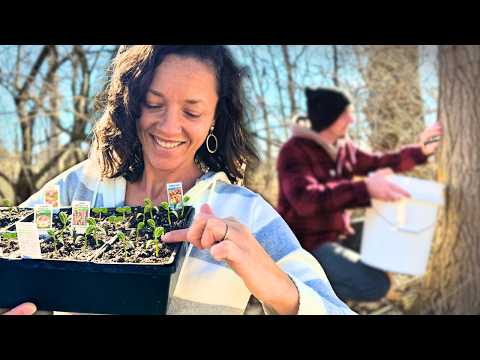
TL;DR: Achieve a year-round food supply from your garden by applying simple, efficient permaculture strategies focused on planning and soil health.
- Maximize yield in small spaces with thoughtful crop choices.
- Implement succession planting for continuous harvests year-round.
- Prioritize soil health through enrichment with organic matter.
- Assess resources and define realistic goals for your garden.
- Focus on staple crops that are productive and easy to grow.
Why it matters: Implementing these strategies can significantly increase food self-sufficiency and reduce reliance on external food systems, promoting a more resilient lifestyle.
Do this next: Start by evaluating your garden space, sunlight, and local climate to inform crop selection.
Recommended for: Home gardeners, permaculture enthusiasts, and anyone looking to increase their food self-sufficiency through efficient garden management.
The article outlines a practical strategy for cultivating a year's worth of food, emphasizing simplicity and efficiency in garden planning and execution. The core idea revolves around maximizing yield from a relatively small space through thoughtful crop selection, succession planting, and soil health management.
The initial phase of this plan focuses on assessing current resources and defining realistic goals. This involves understanding the available garden space, the amount of sunlight it receives, and the local climate. A crucial step is to identify the family's dietary preferences and consumption patterns to prioritize crops that will be genuinely utilized. This avoids growing an abundance of produce that might go to waste. The article suggests starting with a manageable number of staple crops that are known to be productive and relatively easy to grow in the specific environment. Examples often include potatoes, sweet potatoes, beans, squash, and various leafy greens, as these offer significant caloric and nutritional value.
Once the crop list is established, the next stage involves detailed garden layout and planting schedules. The article advocates for intensive planting techniques, such as square foot gardening or raised beds, to optimize space utilization. This means planting crops closer together than traditional row gardening, which can also help suppress weeds and retain soil moisture. Succession planting is highlighted as a key strategy for continuous harvest. Instead of planting all of one crop at once, staggered plantings ensure a steady supply throughout the growing season and beyond. For instance, instead of planting all lettuce seeds in spring, successive plantings every few weeks will provide fresh lettuce for a longer period. This also applies to crops that can be harvested multiple times, like kale or Swiss chard.
Soil health is presented as the foundation of a productive garden. The article stresses the importance of enriching the soil with organic matter, such as compost and well-rotted manure, to improve its structure, fertility, and water-holding capacity. Healthy soil fosters robust plant growth and reduces the need for synthetic fertilizers. Companion planting, where certain plants are grown together to benefit each other (e.g., deterring pests or improving growth), is also mentioned as a natural way to enhance garden productivity and resilience.
Water management is another critical component. The article suggests efficient irrigation methods like drip irrigation or soaker hoses to deliver water directly to the plant roots, minimizing waste and reducing the incidence of fungal diseases. Mulching around plants is also recommended to conserve soil moisture, regulate soil temperature, and suppress weed growth, thereby reducing the gardener's workload.
Beyond the growing season, the plan addresses food preservation. The article encourages gardeners to learn and implement various preservation techniques such as canning, freezing, dehydrating, and root cellaring. This ensures that the harvest can be stored and consumed throughout the year, fulfilling the goal of year-round food security. The emphasis is on simple, accessible methods that don't require extensive specialized equipment.
Finally, the article underscores the importance of observation, learning, and adaptation. Gardening is an ongoing process, and each season offers new insights. Keeping a garden journal to record planting dates, harvest yields, pest issues, and successful strategies can be invaluable for refining the plan in subsequent years. The overall message is one of empowerment, demonstrating that with careful planning and consistent effort, it is entirely feasible for individuals and families to significantly increase their food self-sufficiency, even with limited resources.
Source: youtube.com
Related Analysis
- Farms Build Resilience, Pivot to Regenerative Soil — New initiatives and analysis explicitly frame regenerative agriculture as a direct solution for climate resilience, focu…
- Federal Policy Pivots, Builds Indigenous Agriculture Frameworks — Federal policy trends are integrating Indigenous knowledge with soil science in regenerative agriculture, shifting polic…
Related on PermaNews
- Ernst Götsch's Cacao Syntropy: Master Agroforestry Now (How-To Guide)
- Finnish Off-Grid: Rocket Mass Heater Performance in Greenhouse (Case Study)
- Berlins schwimmende Gärten: Permakultur auf dem Wasser (Case Study)
- Rodale Report 2025: Thermal Mass Boost in Solar Greenhouses (Case Study)
- AUTarcaMatricultura La Palma: Permakultur & Energieautarkie (How-To Guide)
- Earthaven Ecovillage: 30 Years Off-Grid with Hydro & Solar (Video)
Explore more in Food Systems & Growing — the full hub for this knowledge area.