10 Innovative Solutions from Community Gardens Tackling Food Deserts in 2026
PermaNews Brief
Key Takeaways
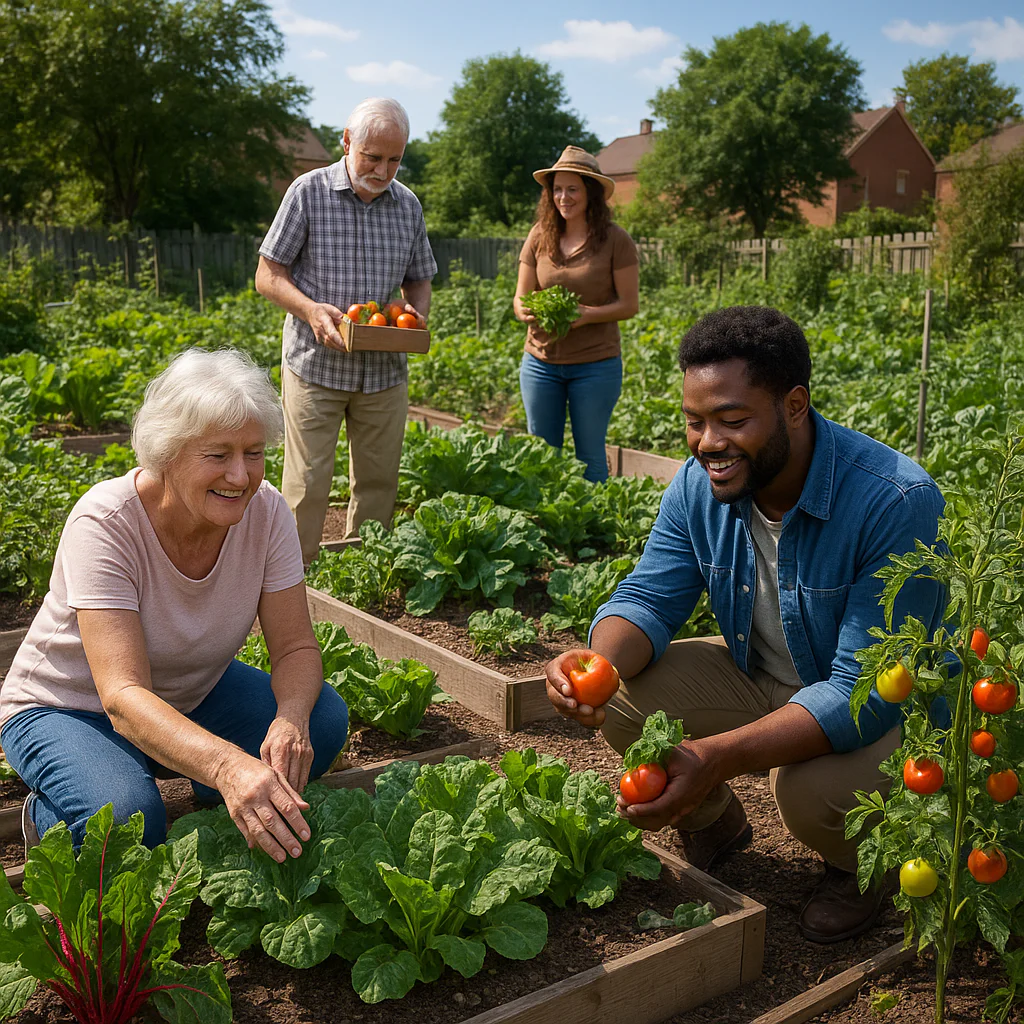
Community gardens provide practical solutions to food accessibility and empower local communities through engagement.
- Reduce transportation barriers to fresh produce
- Utilize land banks and vacant lots for gardens
- Check rooftop safety before planting
- Foster community ties through gardening
- Support local skills and knowledge sharing
Why It Matters
Community gardens enhance food security and social infrastructure, making neighborhoods more resilient and self-sufficient.
What to Do Next
Research local land acquisition options for community gardening initiatives.
Permaculture Context
For permaculture practitioners, the quiet significance here is that community gardens are finally being recognized not just as charitable food patches but as legitimate nodes in a regenerative urban network. When a neighborhood secures a vacant lot through a land bank and begins growing culturally relevant crops, it is actually performing a fundamental permaculture design act: closing loops, reducing energy expenditure, and building redundancy into a fragile food system. The rooftop engineering detail is worth pausing on, because it reflects a broader principle that good regenerative design always starts with honest site assessment rather than enthusiasm. For anyone working toward genuine food resilience, the practical implication is this: a community garden in your neighborhood is not a supplement to your personal homestead practice, it is an extension of it. Connecting with that garden means accessing seed networks, shared labor pools, local growing knowledge, and social trust — all of which are resources that no amount of individual preparation fully replaces. Resilience, in permaculture terms, has always been a collective achievement, and these gardens are increasingly where that work gets done.
Recommended for: Community organizers and activists focused on food security.
This article is a highly practical community-garden operations and food-access piece. It argues that community gardens can place fresh, culturally relevant produce directly inside food deserts, reducing transportation and affordability barriers that often prevent residents from accessing healthy food. That is a concrete implementation claim, not just a general benefit statement, and it makes the piece useful for organizers working on neighborhood food security.
One of the most actionable parts of the article is its discussion of site acquisition. It explicitly recommends securing land through city land banks, vacant lots, schoolyards, or rooftops, and even notes that some vacant lots may be leased for very low annual costs. That is the kind of operational detail that community groups need when moving from concept to launch. The rooftop guidance is also practical because it flags a key safety issue: load-bearing capacity must be checked, and engineering approval should come first. This detail makes the article useful for real project planning rather than purely inspirational reading.
The piece also treats community gardens as social infrastructure. Beyond produce, gardens build skills, social ties, and economic opportunities. It explains that gardens can function as neighborhood anchors, not just food sources, and that they support collective problem-solving, food sharing, and local knowledge-building. For practitioners, that matters because a garden that only produces vegetables may be less resilient than one that also develops leadership, participation, and mutual aid.
The article further notes environmental co-benefits, including reduced urban heat island effects and stormwater management. Those points are especially relevant for cities that want projects with measurable climate and resilience value. It also recommends a basic launch process: map food access gaps, build a committed team, secure land, test and prepare soil, design accessible and culturally relevant spaces, seek funding, host events, and track progress. That sequence makes the article useful as an introductory project roadmap.
Although it is more general than a formal technical manual, it offers enough specific guidance to support early-stage planning for a community garden, especially in neighborhoods facing food access challenges. It is strongest where it combines food justice, site selection, and practical launch steps.
Source: community-gardening.org
Related Analysis
- DIY Root Cellar vs. Chest Freezer: Build Costs & Payback — A DIY in-ground or basement root cellar in the US costs roughly $500–$5,000 to build depending on method, while a chest …
- Worm Composting: 6 Ways to Build a Bin, Real 2026 Costs, and Where the Research Actually Disagrees — Vermicomposting turns kitchen scraps into worm castings using a container, bedding, and red wigglers (Eisenia fetida) — …
Related on PermaNews
- Seed Saving: A Revolutionary Act for Biodiversity & Food (Article)
- New York's Initiative Boosts Community Gardens for Urban Food Security (Article)
- The Essential Impact of Community Gardens on Food Security (Article)
- Examining Shanghai's Pujiang Country Park: Urban Agriculture Policies (Article)
- Urban Agriculture Certificate (How-To Guide)
- Transatlantic Lessons from Community Gardens and Farms (Video)
Explore more in Food Systems & Growing — the full hub for this knowledge area.