Bristol's Lush Greens: Urban Farming Against Food Inequality
PermaNews Brief
Key Takeaways
A Bristol community farm provides affordable food and strengthens urban food networks.
- Operates on a two-acre site in Bristol
- Supports 60 families weekly with fresh produce
- Uses a pay-what-you-can community-supported model
- Redistributes surplus to local food initiatives
- Combines paid staff with volunteer help effectively
Why It Matters
This model addresses food inequality while promoting community engagement and resilience. It showcases how urban farms can thrive economically and socially.
What to Do Next
Explore local community gardens and consider joining a CSA.
Permaculture Context
What Lush Greens demonstrates, beyond its headline metrics, is that the hardest design problem in urban permaculture is not growing food — it is building the social and financial architecture that keeps a food system alive past its first enthusiastic season. The pay-what-you-can CSA model solves something most community gardens quietly fail at: creating a revenue stream that is both equitable and stable enough to support paid labor. That combination matters enormously, because volunteer-only operations tend to collapse when founding energy fades, while purely commercial urban farms drift away from food-justice mandates under financial pressure. The dual-distribution model — serving households directly while channeling surplus into the broader city food network — is essentially a designed redundancy, a permaculture principle applied to economics rather than ecology. For practitioners designing their own systems, the lesson is to treat social infrastructure with the same rigor as soil health: map your distribution channels, build in multiple revenue streams, and plan explicitly for how paid and volunteer labor will divide responsibility before you put a single seed in the ground.
Recommended for: Urban planners, community organizers, and aspiring urban farmers.
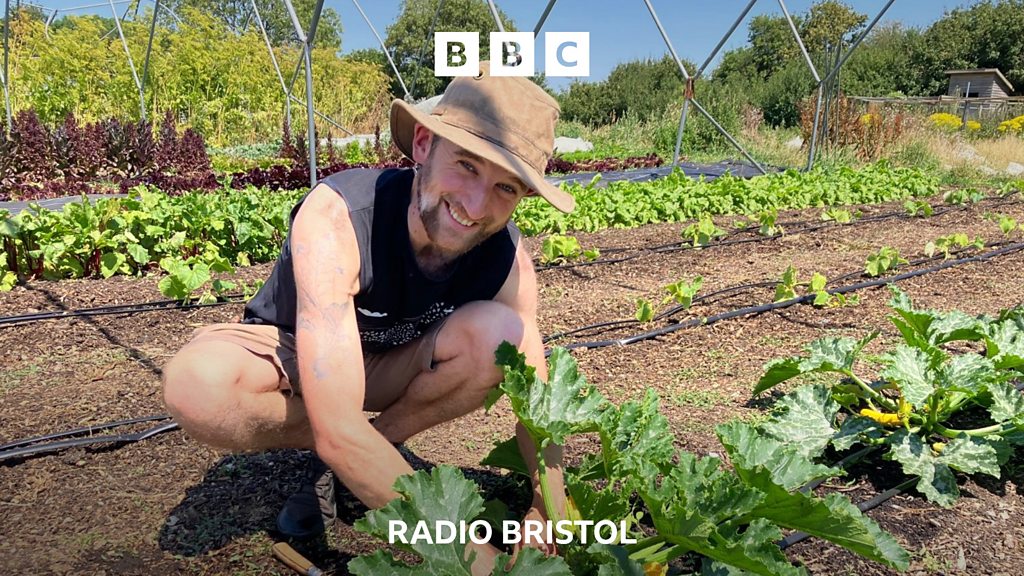
This BBC Sounds item profiles Lush Greens, a community market garden in Hengrove, Bristol, and is the strongest practical case study in the set because it shows an operating local food system rather than a concept or general guide. The project has been in operation for more than a year and grows food on a two-acre site among residential homes. Its weekly output is concrete: it supplies fresh produce to 60 families each week, using a community-supported agriculture model in which participants pay what they can afford. The model is important because it demonstrates a real financing structure that combines affordability, community participation, and revenue stability. The project also shows how labor is organized in practice, with farmers Jimmy and Ol Jamies working alongside volunteers to plant, harvest, and package vegetables each week. That mix of paid growers and volunteer participation is a practical detail for anyone studying staffing models in urban agriculture.
The most useful operational insight is that Lush Greens is not only serving households directly but also moving surplus into the wider Bristol food-support ecosystem. Excess produce is sold in bulk to other community initiatives across the city, which means the garden functions as both a neighborhood supply node and a contributor to broader food-resilience infrastructure. This dual distribution model is significant for practitioners because it shows how a small urban farm can balance social mission and financial viability. The source also identifies the setting as a community market garden embedded in a dense residential area, which suggests land-use compatibility and local accessibility as part of the model’s success. For readers interested in urban food systems, the example provides a clear, real-world case of a pay-what-you-can CSA, volunteer-supported production, and citywide redistribution from a compact urban site.
Source: bbc.co.uk
Related Analysis
- Worm Composting: 6 Ways to Build a Bin, Real 2026 Costs, and Where the Research Actually Disagrees — Vermicomposting turns kitchen scraps into worm castings using a container, bedding, and red wigglers (Eisenia fetida) — …
- Is It Cheaper to Raise Backyard Chickens for Eggs? The Real Per-Dozen Math — Does raising backyard chickens actually save money on eggs? In the US as of 2026, the honest answer is: usually not in y…
Related on PermaNews
- Berlins schwimmende Gärten: Permakultur auf dem Wasser (Case Study)
- Soil Strategies for Transitioning to Small Scale Organic Regenerative Ag (Event)
- Seed Saving: A Revolutionary Act for Biodiversity & Food (Article)
- New York's Initiative Boosts Community Gardens for Urban Food Security (Article)
- 10 Innovative Solutions from Community Gardens Tackling Food Deserts in 2026 (How-To Guide)
- Webinar - TOPP Educator Webinars: Organic Certification for Urban Farms (Event)
Explore more in Food Systems & Growing — the full hub for this knowledge area.