Effortless Seed Saving: The Essential Secret
By Homesteading Family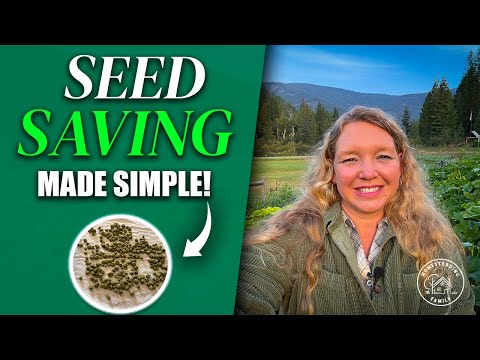
PermaNews Brief
Key Takeaways
To successfully save seeds, prioritize labeling, select open-pollinated varieties, and ensure proper drying and storage for long-term viability.
- Label seeds clearly with variety and harvest year.
- Choose open-pollinated or heirloom plant varieties.
- Harvest seeds on dry mornings for best quality.
- Use fans for rapid and uniform seed drying.
- Carefully extract seeds from pods without damage.
Why It Matters
Saving seeds fosters self-sufficiency, preserves biodiversity, and adapts plants to local conditions, strengthening sustainable food systems.
What to Do Next
Watch the video to learn more about specific seed extraction techniques for different plant types.
Recommended for: Home gardeners, permaculture enthusiasts, and anyone interested in increasing their food system resilience.
This article provides practical guidance on the process of saving seeds, a fundamental practice within permaculture and sustainable agriculture. A key emphasis is placed on the importance of accurately labeling seed samples. Each batch of seeds should be clearly marked with its specific variety and the year of harvest. This meticulous labeling ensures precise tracking and helps in maintaining the quality and provenance of the seeds over time.
For successful seed saving, the selection of appropriate plant varieties is crucial. The recommendation is to focus on open-pollinated or heirloom varieties. These types of plants produce offspring that closely resemble their parent plants, leading to predictable outcomes when sown. Conversely, hybrid seeds are generally less suitable for seed saving because their progeny often do not exhibit the desired characteristics of the parent generation.
The optimal time for harvesting seeds is during dry mornings. At this time, the moisture content within the plants is at its lowest, which enhances the quality of the harvested seeds and reduces the risk of mold formation during the subsequent drying process. Harvesting under these conditions significantly contributes to the longevity and viability of the seeds.
Following harvest, simple drying techniques are outlined. The use of fans is presented as an effective method for rapidly and uniformly drying the seeds. This practice prevents the development of mold and ensures that the seeds are sufficiently dry before storage. Proper drying is a critical step in preserving the germination capacity of seeds over extended periods.
Another significant aspect covered is the extraction of seeds from their pods or heads. Methods are described for efficiently and carefully separating the seeds from the plant material without causing damage. While the specific techniques may vary depending on the plant species, the overarching goal is always to keep the seeds intact.
Regarding storage, the article suggests using glass jars filled with desiccants such as rice. Rice helps to absorb any residual moisture within the jar, creating a dry environment that is essential for long-term seed storage. Low humidity and a consistent temperature are vital factors for preserving the seeds' viability for many years.
The advice is also given to store seeds for at least two years. This practice serves as a safeguard in case a crop fails or if the germination rate of the previous year's seeds is unexpectedly low. This approach enhances the resilience of the gardening system and ensures a continuous supply of seeds.
The techniques presented are particularly beneficial for self-sufficient gardeners and permaculture practitioners. They contribute to the preservation of seed diversity and promote sustainability in gardens and on farms. By implementing these methods, gardeners can reduce their reliance on external seed sources and establish robust, self-sustaining plant production systems.
Source: youtube.com
Related Analysis
- Food Forest Courses Shift From Theory to Build-Ready Skills — Several food forest courses now open with site assessment and guild-building rather than design theory, suggesting a dev…
- Practitioners Build Silvopasture Playbook Before Researchers Catch Up — A small but consistent set of signals from the Northeast U.S. shows farmers actively piloting silvopasture while formal …
Related on PermaNews
- Ernst Götsch's Cacao Syntropy: Master Agroforestry Now (How-To Guide)
- Finnish Off-Grid: Rocket Mass Heater Performance in Greenhouse (Case Study)
- Berlins schwimmende Gärten: Permakultur auf dem Wasser (Case Study)
- Rodale Report 2025: Thermal Mass Boost in Solar Greenhouses (Case Study)
- AUTarcaMatricultura La Palma: Permakultur & Energieautarkie (How-To Guide)
- Earthaven Ecovillage: 30 Years Off-Grid with Hydro & Solar (Video)
Explore more in Food Systems & Growing — the full hub for this knowledge area.