Dormant Season Pruning for Haskap Berries
By Great Escape Farms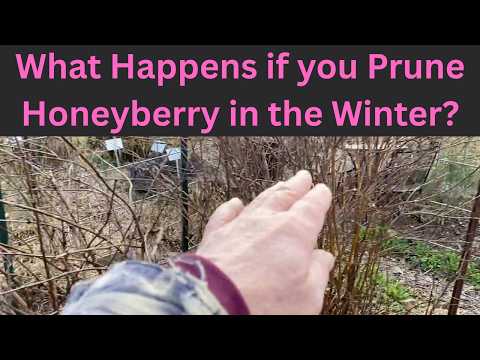
TL;DR: Winter pruning of honeyberries is essential for plant health and productivity, focusing on one-year-old wood for fruit production.
- Prune honeyberries in winter dormancy.
- Fruit grows on one-year-old wood.
- Improve air circulation and sunlight.
- Remove dead or diseased branches.
- Thin overcrowded areas and suckers.
Why it matters: Proper winter pruning enhances honeyberry yields, prevents disease, and maintains manageable plant size, ensuring long-term plant vigor.
Do this next: Watch the video to see effective honeyberry winter pruning techniques explained.
Recommended for: Home gardeners and small-scale fruit growers looking to optimize honeyberry production and plant health.
Honeyberry, also known as Haskap or *Lonicera caerulea*, is a deciduous shrub that benefits significantly from winter pruning. This practice, typically performed when the plant is dormant, helps maintain its health, shape, and productivity. Understanding the plant's growth habits is crucial for effective pruning. Honeyberries produce fruit on one-year-old wood, meaning the branches that grew in the previous season will bear the current year's fruit. This characteristic dictates a pruning strategy that encourages new growth while removing older, less productive wood.
The primary goals of winter pruning for honeyberries are to improve air circulation, enhance sunlight penetration, remove dead or diseased branches, and manage the plant's overall size and shape. Good air circulation is vital for preventing fungal diseases, especially in humid environments. Sunlight penetration ensures that all parts of the plant receive adequate light for photosynthesis and fruit development. Removing dead or diseased wood prevents the spread of pathogens and directs the plant's energy towards healthy growth. Finally, managing size and shape makes harvesting easier and keeps the plant within its allotted space.
When approaching a honeyberry for winter pruning, the first step is to identify and remove any dead, damaged, or diseased branches. These branches are often discolored, brittle, or show signs of decay. Cutting them back to healthy wood or to the main stem is essential. Next, focus on thinning out overcrowded areas. Honeyberries tend to produce many suckers from the base and can become very dense. Removing some of these suckers, especially those growing inward or crossing other branches, opens up the canopy. The aim is to create an open structure that allows light and air to reach the inner parts of the plant.
Another important aspect of winter pruning is to encourage new, fruitful growth. Since fruit is produced on one-year-old wood, it's beneficial to remove some of the older, less productive branches. These older branches can be identified by their thicker, woodier appearance and often have fewer fruiting spurs. A common technique is to remove about 20-30% of the oldest branches each year, cutting them back to the ground or to a strong side branch. This systematic removal stimulates the plant to produce new shoots, which will become the fruiting wood for future seasons.
For very old or neglected honeyberry bushes, a more aggressive rejuvenation prune might be necessary. This involves cutting back a significant portion of the plant, sometimes even all branches, to about 6-12 inches from the ground. While this will result in a year or two of reduced fruit production, it can revitalize the plant, leading to a flush of new, vigorous growth and ultimately improved yields in subsequent years. This type of pruning is typically done only every few years, or when the plant's productivity has significantly declined.
Finally, after the main structural pruning is complete, a light shaping prune can be performed. This involves trimming branches to maintain a desirable size and form, ensuring the plant remains manageable and aesthetically pleasing. Always use sharp, clean pruning tools to make clean cuts, which heal faster and reduce the risk of disease. Disinfecting tools between plants, especially if dealing with diseased branches, is also a good practice to prevent pathogen transmission. By following these guidelines, gardeners can ensure their honeyberry plants remain healthy, productive, and a valuable addition to their landscape.
Source: youtube.com
Related Analysis
- Farmers Convert Six Weeks of Rhubarb Into 25-Year Supply — Initial signals suggest a rhubarb preservation technique can extend a brief seasonal harvest into 25 years of storage—a …
- Compost Builds Soil Microbiomes—But Human Waste Divides Practitioners — A small but consistent set of signals indicates composting's soil benefits are well-documented, while human-waste compos…
Related on PermaNews
- Ernst Götsch's Cacao Syntropy: Master Agroforestry Now (How-To Guide)
- Finnish Off-Grid: Rocket Mass Heater Performance in Greenhouse (Case Study)
- Berlins schwimmende Gärten: Permakultur auf dem Wasser (Case Study)
- Rodale Report 2025: Thermal Mass Boost in Solar Greenhouses (Case Study)
- AUTarcaMatricultura La Palma: Permakultur & Energieautarkie (How-To Guide)
- Earthaven Ecovillage: 30 Years Off-Grid with Hydro & Solar (Video)
Explore more in Food Systems & Growing — the full hub for this knowledge area.