Permaculture Design Course: Certify Your Skills
By Litchfield Magazine (events listing)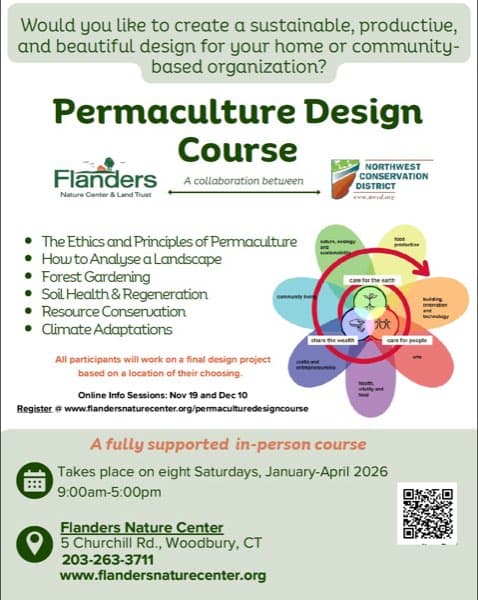
TL;DR: Gain comprehensive permaculture design skills for sustainable living, from soil to social systems, through an internationally recognized certification course.
- Learn permaculture ethics, principles, and practical applications.
- Master climate analysis, soil health, and water harvesting.
- Design food forests and integrate small-scale technologies.
- Practice composting, mulching, and natural building techniques.
- Explore social permaculture and community engagement strategies.
Why it matters: A Permaculture Design Certificate provides foundational knowledge and practical skills crucial for creating resilient, regenerative systems in diverse environments, addressing critical ecological and social challenges.
Do this next: Enroll in a local PDC course to gain hands-on experience and connect with the permaculture community.
Recommended for: Ideal for aspiring permaculturists, gardeners, farmers, and community organizers seeking to implement sustainable and regenerative design principles.
This event listing advertises an upcoming Permaculture Design Certificate (PDC) course aimed at immersing participants in the principles and practical applications of permaculture design for homes, gardens, and community landscapes. The listing summarizes the course scope — typically following the 72-hour internationally accepted PDC curriculum — which covers foundational topics such as permaculture ethics and principles, climate and site analysis, soil health and composting, water harvesting and swale construction, garden and orchard planning, food forest design, and small-scale appropriate technologies. The announcement describes the learning format as a mix of classroom instruction, practical demonstrations, field visits, and group design projects, allowing attendees to apply theory to site-specific design exercises and to develop a final conceptual plan or portfolio piece. Practical skills emphasized include hands-on composting methods, mulching, seed-saving, propagation techniques, basic natural building considerations, and approaches to integrating animals into regenerative systems; the course also covers social permaculture elements such as community engagement strategies, participatory design methods, and governance processes that support collaborative projects. The listing includes logistical information such as course dates, daily schedule, location details, instructor bios or affiliations, registration instructions, and fee structure; it may note eligibility for a full PDC certificate upon completion and any recommended materials or pre-course reading to prepare participants. Target audiences cited in the listing range from beginners seeking foundational knowledge to farmers, gardeners, and community organizers wanting to deepen practical skills and design capacity. The event description often points readers toward continuing education options, follow-up workshops, or local permaculture groups for project implementation and networking. By framing the course as both educational and action-oriented, the listing positions the PDC as a practical pathway for individuals to contribute to local resilience-building through informed design and hands-on regenerative practices.
Source: litchfieldmagazine.com
Related Analysis
- Stacking Functions Emerges as Key to Resilience Practices — Emerging evidence shows stacking functions enhances community resilience through interlinked systems focused on efficien…
- Homesteading Moves Beyond Skill Acquisition to Durability — Homesteading is evolving beyond initial skill acquisition, with practitioners increasingly prioritizing long-term mainte…
Related on PermaNews
- Ernst Götsch's Cacao Syntropy: Master Agroforestry Now (How-To Guide)
- Finnish Off-Grid: Rocket Mass Heater Performance in Greenhouse (Case Study)
- Berlins schwimmende Gärten: Permakultur auf dem Wasser (Case Study)
- Rodale Report 2025: Thermal Mass Boost in Solar Greenhouses (Case Study)
- AUTarcaMatricultura La Palma: Permakultur & Energieautarkie (How-To Guide)
- Finca Bellavista: Costa Rica's 200-Acre Water System Innovation (Case Study)
Explore more in Skills, Preparedness & Self-Reliance — the full hub for this knowledge area.