Engineer's Desert Dome: Living Organism Home Blends Off-Grid
By Kirsten Dirksen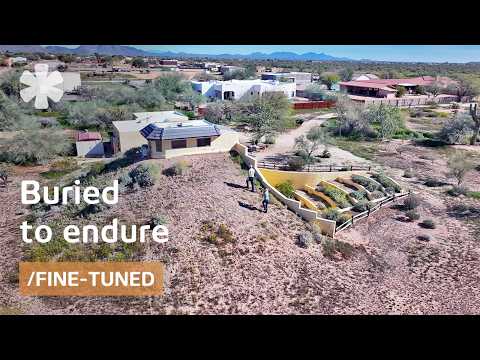
An engineer has developed an innovative underground dwelling in the desert that integrates seamlessly with its environment, resembling a natural, living structure. This unique home is designed to be highly sustainable and resilient, offering a novel approach to off-grid living in challenging climates.
The dwelling is constructed primarily from concrete, formed into a series of interconnected domes that are then buried beneath the earth. This subterranean design is a key feature, providing natural insulation against the extreme temperature fluctuations common in desert regions. The earth acts as a thermal mass, keeping the interior cool during hot days and warm during cold nights, significantly reducing the need for artificial heating and cooling systems. The concrete itself is reinforced with steel, ensuring structural integrity and longevity.
Access to the home is through a discreet entrance that blends into the landscape, further enhancing its camouflaged appearance. Inside, the layout is open and fluid, with the domed ceilings creating a sense of spaciousness and natural light filtering in through strategically placed skylights and tunnels that extend to the surface. These light sources are designed to maximize natural illumination while minimizing heat gain. The interior finishes are generally simple and robust, reflecting the practical and sustainable ethos of the design.
Water management is a critical aspect of this desert home. The design incorporates systems for rainwater harvesting, collecting precipitation from the surface and storing it in underground cisterns. This water is then filtered and used for domestic purposes. Additionally, the dwelling utilizes a greywater recycling system, where water from sinks and showers is treated and reused for irrigation of a small, integrated garden area. This closed-loop system minimizes water waste and maximizes resource efficiency.
Energy independence is another core principle. The home is equipped with solar panels installed on the surface, which generate electricity for all household needs. A battery bank stores excess energy, ensuring a continuous power supply even during periods of low sunlight. This reliance on renewable energy sources eliminates the need for external utility connections, making the dwelling entirely off-grid.
Ventilation is achieved through passive design strategies. Air circulates naturally through a system of vents and chimneys that draw in cooler air from below ground and expel warmer air, creating a constant, gentle airflow without the need for energy-intensive mechanical fans. This passive ventilation system contributes to the comfortable indoor climate and further reduces energy consumption.
The engineer's motivation behind this project was to create a dwelling that not only minimizes its environmental footprint but also offers a secure and comfortable living space in harsh conditions. The design emphasizes self-sufficiency and resilience, allowing occupants to live independently of external infrastructure. The aesthetic appeal lies in its organic integration with the landscape, making it almost invisible from a distance and fostering a deep connection with the natural environment. This underground dome home represents a practical and innovative solution for sustainable living, particularly relevant in an era of increasing environmental awareness and the need for resilient housing options.
Source: youtube.com
Related Analysis
- Homeowners Retrofit Properties with Renewable Energy Solutions — Renewable energy retrofitting gains traction as regenerative agriculture principles inform home upgrades. Experts point …
- New Practices Build Climate-Resilient Cob Homes — Cob construction emerges as a key strategy in enhancing resilience against ecological challenges in permaculture systems…
Related on PermaNews
- Couldn't buy a house. 10 years digging underground home of earth & rubble (Video)
- Grünes Bauen: Passivhaus, Fassadenbegrünung & Öko-Materialien (How-To Guide)
- Egg: Permakultur & Holzbau – Essbare Ökosysteme im Fokus (Article)
- DIY-Strohballenkapelle mit Stampflehm-Altar: Nachhaltig gebaut (Video)
- Missile Silo Transformed: 4-Gen Family's Container Fourplex (Video)
- Build Tiny: Earthship Brighton 3-Day Course, Sep 11-13, 2026 (How-To Guide)
Explore more in Shelter, Energy & Infrastructure — the full hub for this knowledge area.