Sahel Groundwater Agroforestry: Faidherbia Carbon & Yield Trade-offs
PermaNews Brief
Key Takeaways
Deep-rooted trees in agroforestry systems in drylands can access groundwater, boosting carbon capture and crop yields, but careful water management is crucial.
- Faidherbia albida trees tap into groundwater, enhancing dryland agroforestry productivity.
- Agroforestry systems balance carbon sequestration with increased crop yields.
- These systems improve soil fertility, reduce erosion, and aid crop growth.
- Groundwater access is key for sustainable agroforestry in arid regions.
- Careful water management optimizes ecological and agricultural benefits.
Why It Matters
Understanding how deep-rooted trees utilize groundwater in drylands offers a blueprint for sustainable food production and carbon sequestration in vulnerable regions, directly impacting climate resilience and food security.
What to Do Next
Research local deep-rooted, drought-tolerant native tree species suitable for agroforestry in your region and assess their water needs.
Recommended for: Farmers, land managers, and policymakers in dryland regions seeking to implement resilient, productive, and carbon-sequestering agroforestry practices.
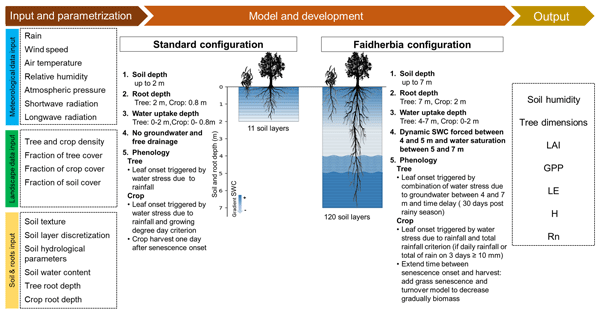
This scientific study investigates the carbon dynamics and productivity of a Sahelian agroforestry system centered on the deep-rooted Faidherbia albida tree, which accesses groundwater in semi-arid environments. The research highlights the trade-offs between carbon sequestration and crop yields, emphasizing the importance of groundwater availability for sustaining agroforestry productivity. The study demonstrates that such systems play a crucial role in global carbon cycles and sustainable land use in dry regions by enhancing soil fertility, reducing erosion, and supporting crop growth under challenging climatic conditions. The findings underscore the potential of groundwater-based agroforestry to contribute to climate change mitigation and food security in the Sahel, while also pointing to the need for careful management of water resources to optimize ecological and agricultural outcomes.
Source: gmd.copernicus.org
Related Analysis
- Designers Push Urban Standard From Sustainable to Regenerative — Early signals point to a push for urban design that actively restores ecosystems, not merely reduces harm — with field-t…
- Scrapped EV Batteries Convert to Solar Storage in Off-Grid Markets — Several sources suggest retired EV batteries are finding a second role in rural off-grid solar systems, potentially lowe…
Related on PermaNews
- Ernst Götsch's Cacao Syntropy: Master Agroforestry Now (How-To Guide)
- Designing Regenerative Resilience: Participatory Living Labs (How-To Guide)
- Berlins schwimmende Gärten: Permakultur auf dem Wasser (Case Study)
- Finca Bellavista: Costa Rica's 200-Acre Water System Innovation (Case Study)
- Priya's 2024 India Report: 10-Hectare Water Harvesting Success (Case Study)
- Borneo's Rainforest Revival: Dr. Smits' Sugar Palm Village Hub (Case Study)
Explore more in Water, Climate & Adaptation — the full hub for this knowledge area.