Permaculture Soil: Boost Health with the Food Web
PermaNews Brief
Key Takeaways
Cultivating a thriving soil food web with compost and cover crops boosts garden fertility and plant resilience.
- Diverse soil life improves plant health and nutrient cycling.
- Create compost with balanced manure, browns, and greens.
- Enhance microbial activity with food scraps and nitrogen activators.
- Compost mixed with sand makes excellent potting mix.
- Increased biodiversity strengthens pest and disease resistance.
Why It Matters
Understanding and nurturing your soil’s ecosystem fundamentally transforms garden productivity and sustainability.
What to Do Next
Start a compost pile using a balanced mix of organic materials.
Recommended for: Gardeners, homesteaders, and permaculture enthusiasts keen to develop resilient and fertile soil ecosystems.
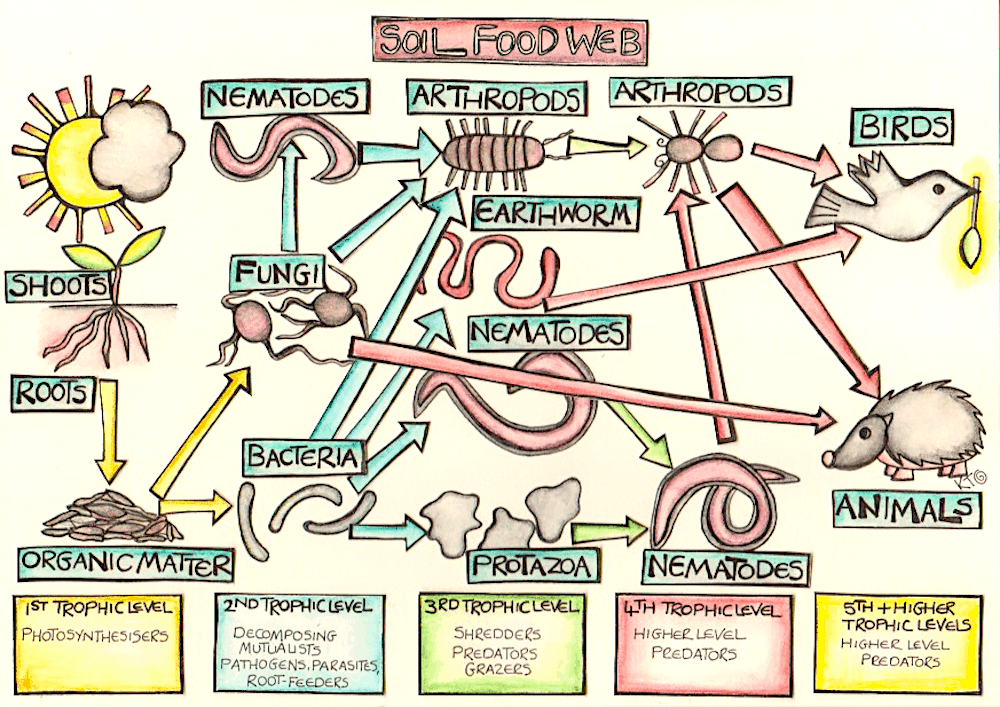
This article explains the importance of the soil food web in permaculture, describing how a diverse community of microorganisms and soil fauna contribute to soil fertility and plant health. It advocates building a closed-loop soil fertility system using compost, cover crops, and organic amendments to feed and sustain soil life. The article details the balance of materials needed for effective composting—one-third manure, one-third high-carbon 'browns,' and one-third fresh greens—and suggests adding food scraps and nitrogen-rich activators like alfalfa meal or blood meal to enhance microbial activity. It also discusses how mixing compost with sharp river sand can create a nutrient-rich potting mix suitable for various seed sizes. The piece highlights that increasing soil biodiversity through these methods improves soil structure, nutrient cycling, and resilience against pests and diseases.
Source: freepermaculture.com
Related Analysis
- Food Forest Courses Shift From Theory to Build-Ready Skills — Several food forest courses now open with site assessment and guild-building rather than design theory, suggesting a dev…
- Practitioners Build Silvopasture Playbook Before Researchers Catch Up — A small but consistent set of signals from the Northeast U.S. shows farmers actively piloting silvopasture while formal …
Related on PermaNews
- Nakivale's Regenerative Toilets: Refugee Resilience, Circular Sanitation (Case Study)
- Federal Policy Shift: Native Regenerative Ag for Soil & Carbon (Article)
- Nagaland's Jhum-Alder Agroforestry: Climate-Smart Farming (Article)
- Aboriginal Cool Burns: Permaculture's Ancient Fire Wisdom (Case Study)
- Crop Rotation Boosts Soil Biodiversity: Global Meta-analysis (Article)
- Revolutionizing Agriculture: People, Nature, & a Fertile Earth (Article)
Explore more in Food Systems & Growing — the full hub for this knowledge area.