North American Landscapes: Spiritually Depraved? Ep. 2
By Crime Pays But Botany Doesn't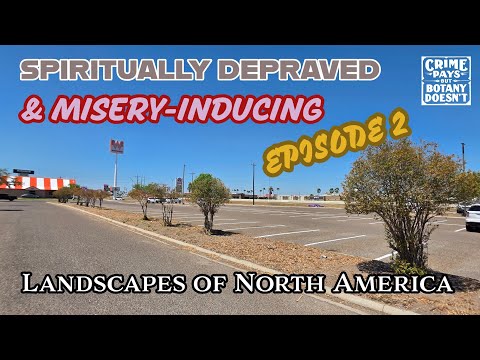
TL;DR: North American landscapes, shaped by industrial and agricultural practices, have become detached from ecological and spiritual roots, impacting human well-being.
- Industrialization degraded ecosystems and human connection to land.
- Pre-colonial societies fostered sustainable land relationships.
- Colonial practices shifted land management paradigms.
- Monoculture farming led to soil depletion and biodiversity loss.
- Environmental changes have spiritual and cultural impacts.
Why it matters: Understanding historical land management shifts is crucial for addressing contemporary ecological and social challenges, promoting sustainable practices and well-being.
Do this next: Reflect on the historical human impact on your local landscape.
Recommended for: Anyone interested in the long-term historical impact of human activities on North American landscapes and their societal implications.
This article, the second installment in a series, delves into the concept of "spiritually depraved and misery-inducing landscapes" within North America, exploring the historical and ongoing impact of human activities on the continent's natural environment and, by extension, on human well-being. The author posits that many contemporary landscapes, particularly those shaped by industrialization and modern agricultural practices, have become detached from their ecological and spiritual roots, leading to a sense of alienation and degradation.
The discussion begins by examining the pre-colonial state of North America, highlighting the intricate and sustainable relationships indigenous populations maintained with their environment. These societies often viewed the land as sacred, a living entity to be respected and coexisted with, rather than merely a resource to be exploited. This perspective fostered biodiversity, ecological resilience, and a deep spiritual connection to place. The author suggests that this indigenous worldview offers a stark contrast to the subsequent European colonial approach.
The arrival of European settlers marked a significant shift in land management and perception. Driven by ideologies of conquest, resource extraction, and a desire to "tame" the wilderness, colonial practices rapidly transformed vast swathes of the continent. Forests were cleared for timber and agriculture, wetlands were drained, and natural ecosystems were fragmented. This period saw the introduction of monoculture farming, which, while initially boosting production, ultimately led to soil depletion, erosion, and a decline in biodiversity. The author emphasizes that these changes were not merely physical but also had profound spiritual and cultural ramifications, severing the deep connections between people and the land that had existed for millennia.
The article then moves to the industrial era, where the pace of environmental degradation accelerated. The rise of factories, urban centers, and large-scale infrastructure projects further intensified the pressure on natural resources. Pollution of air, water, and soil became widespread, impacting both human health and ecosystem integrity. The author points out that the relentless pursuit of economic growth, often at the expense of environmental sustainability, has created landscapes that are not only ecologically impoverished but also aesthetically unappealing and spiritually unfulfilling. These "misery-inducing" landscapes are characterized by concrete jungles, sprawling suburbs, and vast agricultural fields devoid of natural complexity.
A key argument presented is that the spiritual "depravity" of these landscapes stems from a fundamental disconnect from natural cycles and an overemphasis on human dominance. When humans view nature as something to be controlled and manipulated rather than a partner in a complex ecological dance, the resulting environment often reflects this imbalance. This detachment can manifest as a lack of appreciation for natural beauty, a diminished sense of place, and an increased feeling of isolation from the living world.
The author also touches upon the psychological and social consequences of living in such environments. A degraded landscape can contribute to feelings of anxiety, depression, and a general sense of unease. The absence of vibrant natural spaces for recreation, contemplation, and community gathering can further exacerbate these issues, leading to a decline in overall well-being. The article implicitly suggests that the current environmental crisis is not just an ecological problem but also a spiritual and existential one, deeply intertwined with how humans perceive and interact with their surroundings.
In conclusion, the article argues that the "spiritually depraved and misery-inducing landscapes" of North America are a direct consequence of historical and ongoing human actions driven by a worldview that prioritizes exploitation over stewardship. It serves as a critical reflection on the environmental legacy of the continent, urging readers to consider the profound impact of human choices on both the physical environment and the human spirit. The underlying message is a call for a re-evaluation of humanity's relationship with nature, advocating for a return to more harmonious and sustainable practices that foster ecological health and spiritual well-being.
Source: youtube.com
Related Analysis
- Lo-TEK Institute Challenges Conventional Agriculture with Ancestral Wisdom — Indigenous practices are offering innovative frameworks for regenerative agriculture, emphasizing holistic ecological ap…
- Indigenous Ways Pioneer Regenerative Design Integration — New approaches in regenerative design and permaculture are integrating Indigenous frameworks, moving past Western-centri…
Related on PermaNews
- Ernst Götsch's Cacao Syntropy: Master Agroforestry Now (How-To Guide)
- Finnish Off-Grid: Rocket Mass Heater Performance in Greenhouse (Case Study)
- Berlins schwimmende Gärten: Permakultur auf dem Wasser (Case Study)
- Rodale Report 2025: Thermal Mass Boost in Solar Greenhouses (Case Study)
- AUTarcaMatricultura La Palma: Permakultur & Energieautarkie (How-To Guide)
- Earthaven Ecovillage: 30 Years Off-Grid with Hydro & Solar (Video)
Explore more in Community, Policy & Systems Change — the full hub for this knowledge area.