Our Journey to Self-Sufficiency: Steps We're Taking Now
By Simples Na Serra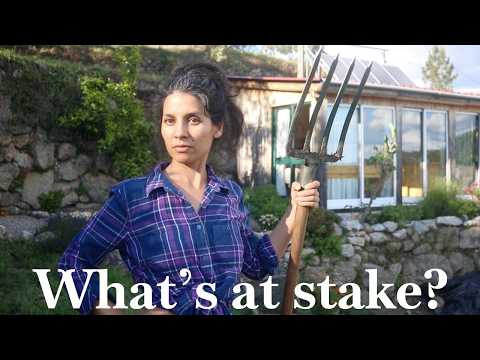
PermaNews Brief
Key Takeaways
This video outlines practical strategies for establishing a self-sufficient homestead.
- Focus on kitchen garden expansion
- Grow staple and feed crops
- Implement free-range poultry systems
- Practice soil regeneration methods
- Utilize food preservation techniques
Why It Matters
Implementing these strategies fosters resilience, reduces dependency on outside systems, and enhances food security.
What to Do Next
Watch the video for detailed strategies on self-sufficiency.
Permaculture Context
What this kind of field documentation represents for serious permaculture practitioners is something the movement has long needed: honest, granular evidence that closed-loop homestead systems are buildable in increments rather than requiring a wholesale lifestyle transformation overnight. The integration of feed crop production with poultry management is particularly significant, because feed dependency is quietly one of the largest hidden costs and vulnerabilities in small-scale animal husbandry — most backyard keepers never fully account for it until supply chains tighten or prices spike. Seed saving compounds this resilience further, functioning less as a romantic gesture toward tradition and more as a genuine hedge against input inflation and variety discontinuation. For practitioners actively designing or refining their own systems, the deeper lesson here is about sequencing: soil biology comes first, diversity of outputs follows, and preservation infrastructure closes the loop. A homestead that can convert its own waste streams into fertility, feed part of its own livestock, and store its own harvest occupies a categorically different position of stability than one still dependent on weekly supply runs, regardless of how productive it appears on the surface.
Recommended for: Individuals interested in practical self-sufficiency strategies.
This is a practical homesteading field log focused on the concrete steps a household is taking to reduce dependence on outside systems and move toward self-sufficiency. The central thread is not an abstract philosophy but an ongoing build-out of food, soil, and household resilience systems. The video documents how the homestead is expanding a kitchen garden with the goal of producing a larger share of everyday produce and staple ingredients at home. It also covers the decision to grow crops that are useful beyond fresh eating, including staple foods and feed crops that can support poultry, which is important because feed security is often a limiting factor in small-scale animal keeping. Another key element is seed saving, which turns annual planting into a more closed-loop system and reduces recurring input costs while preserving locally adapted varieties.
The poultry section adds another layer of practicality. Free-range chicken management is presented not just as animal husbandry, but as part of a larger resilience strategy that can produce eggs, meat, and even pest control while integrating with garden systems. Soil rebuilding is treated as foundational rather than optional. The video emphasizes regenerative methods such as composting and worm farming, which convert kitchen scraps, bedding, and organic waste into fertility inputs. This matters because the long-term productivity of a homestead depends on maintaining soil structure, organic matter, and nutrient cycling instead of relying entirely on purchased fertilizers. The composting and vermiculture details are especially useful for viewers trying to close loops at household scale.
Food preservation is another major practical area. The video references multiple preservation methods, showing that self-sufficiency is seasonal and requires planning for abundance as well as scarcity. By preserving harvests, the household can smooth out supply through winter and reduce reliance on store-bought produce. Taken together, the project demonstrates an incremental model for becoming more self-reliant: grow more food, save seed, manage poultry efficiently, rebuild soil, recycle organic waste, and preserve surplus. The value of the piece lies in its systems thinking and in the way it connects daily household choices to longer-term resilience, making it relevant for suburban, rural, or urban growers who want a realistic path toward greater self-sufficiency.
Source: youtube.com
Related Analysis
- Food Forest Courses Shift From Theory to Build-Ready Skills — Several food forest courses now open with site assessment and guild-building rather than design theory, suggesting a dev…
- Practitioners Build Silvopasture Playbook Before Researchers Catch Up — A small but consistent set of signals from the Northeast U.S. shows farmers actively piloting silvopasture while formal …
Related on PermaNews
- Nakivale's Regenerative Toilets: Refugee Resilience, Circular Sanitation (Case Study)
- Borneo's Rainforest Revival: Dr. Smits' Sugar Palm Village Hub (Case Study)
- Holmgren's 40 Yrs: Abundant Permaculture Design Webinar 3 (Video)
- Building Resilient Soils: Planning & Resources for Extreme Weather Events (Event)
- BEAM Compost: Pilzkompost & Vieh für Bodengesundheit (Case Study)
- Rodale Institute: Soil Health Principles for Regenerative Ag (How-To Guide)
Explore more in Food Systems & Growing — the full hub for this knowledge area.