Nepal PDC: HASERA Permaculture & Livestock Integration
PermaNews Brief
Key Takeaways
Learn permaculture design principles in Nepal with a focus on integrating livestock for resilient, sustainable agriculture.
- PDC in Nepal emphasizes livestock integration.
- Hands-on training in sustainable animal husbandry.
- Covers rotational grazing, composting, pest control.
- Addresses unique challenges of mountainous terrain.
- Focuses on low-input, ethical animal care.
Why It Matters
Integrating livestock into permaculture systems can significantly enhance soil fertility, manage pests, and create closed-loop nutrient cycles, boosting farm resilience and food security.
What to Do Next
Explore local permaculture courses that emphasize practical, hands-on animal integration.
Recommended for: Farmers, permaculture designers, and community developers interested in integrated livestock systems for sustainable agriculture, particularly in challenging environments.
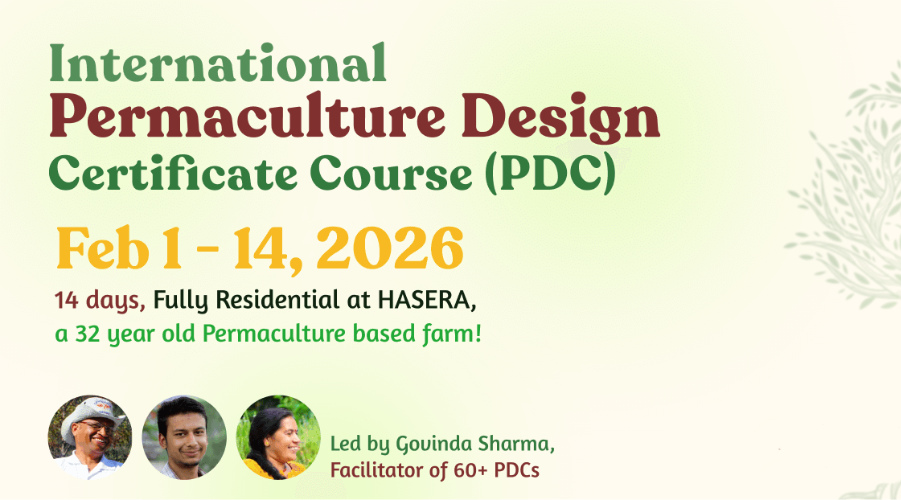
This listing describes a Permaculture Design Course (PDC) offered at HASERA Permaculture Learning Center in Nepal, emphasizing sustainable agriculture practices including livestock management. The course covers integrating animals into permaculture systems alongside strategies for seed saving, soil building, and pest control. Participants learn hands-on techniques for managing livestock in diverse ecosystems, focusing on multi-species interactions to enhance farm resilience. Topics include rotational grazing for goats and chickens, using animal manure for compost, and designing pastures that support biodiversity. The curriculum addresses Nepal's mountainous terrain, teaching water harvesting, agroforestry, and animal traction for tillage. Livestock modules explore dairy production with cows and buffaloes, poultry for eggs and pest control, and bees for pollination. Emphasis is placed on low-input methods, natural veterinary care using local herbs, and ethical animal husbandry aligned with permaculture ethics. The center serves as a demonstration site where students apply designs to real farm plots, observing benefits like improved soil fertility from animal impact and reduced chemical use. Course structure includes theory, practical workshops, and group design projects, fostering community-based farming solutions. It promotes food security in rural Nepal by teaching closed-loop systems where animal outputs feed plants and vice versa. Graduates gain certification and access to networks for ongoing support. This PDC exemplifies education as a permaculture tool, empowering locals to regenerate degraded lands through integrated livestock systems, combining traditional knowledge with modern permaculture principles for long-term sustainability.
Source: permacultureday.org
Related Analysis
- Composting Advice Shifts From Chemistry to Microbial Biology — Several sources suggest composting guidance is pivoting from nutrient ratios toward microbial ecology—reframing what "go…
- Does Growing Your Own Food Actually Save Money? The Real Numbers — Most home gardens save money by year two — but only if the right crops are planted. Herbs and salad greens deliver 5–10x…
Related on PermaNews
- Ernst Götsch's Cacao Syntropy: Master Agroforestry Now (How-To Guide)
- Finnish Off-Grid: Rocket Mass Heater Performance in Greenhouse (Case Study)
- Berlins schwimmende Gärten: Permakultur auf dem Wasser (Case Study)
- Rodale Report 2025: Thermal Mass Boost in Solar Greenhouses (Case Study)
- AUTarcaMatricultura La Palma: Permakultur & Energieautarkie (How-To Guide)
- Earthaven Ecovillage: 30 Years Off-Grid with Hydro & Solar (Video)
Explore more in Food Systems & Growing — the full hub for this knowledge area.