Permaculture & Nationalism: A Deeper Look (Podcast)
By Discover Permaculture with Geoff Lawton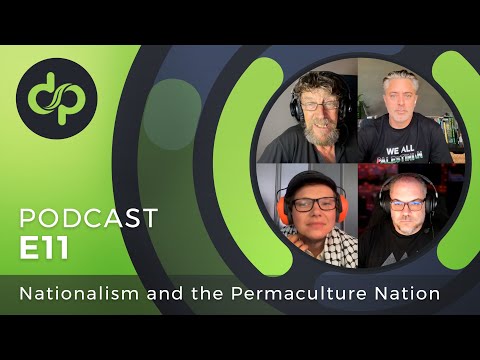
PermaNews Brief
Key Takeaways
Permaculture principles promoting local resilience can appear nationalistic, yet its core ethics of global sharing and care transcend national borders.
- Local permaculture aligns with national self-reliance ideas.
- Bioregional models prioritize land and people.
- Permaculture ethics extend beyond national boundaries.
- Global knowledge sharing is crucial for adaptation.
- Nationalism risks isolating permaculture efforts.
Why It Matters
Understanding the tension between local focus and global collaboration is vital for permaculture practitioners to avoid insular approaches and foster wider impact.
What to Do Next
Watch the full podcast to explore the nuances of nationalism in permaculture.
Recommended for: Permaculture thinkers, community organizers, and those interested in the socio-political dimensions of environmental movements.
The concept of nationalism, when applied to the permaculture movement, presents a complex and often contradictory set of ideas. Permaculture, at its core, advocates for localized, resilient systems that are deeply connected to their specific environments and communities. This focus on local self-sufficiency and regional identity can, at first glance, appear to align with certain aspects of nationalistic thought, particularly the idea of a nation as a distinct and self-reliant entity. However, a closer examination reveals significant divergences and potential pitfalls.
One perspective suggests that a "permaculture nation" could be envisioned as a collection of interconnected, self-sustaining bioregions, each managing its resources responsibly and fostering strong internal economies. This model emphasizes food sovereignty, renewable energy, and ecological restoration within defined geographical boundaries. Such a nation would prioritize the well-being of its land and people, aiming for a high degree of independence from globalized systems that are often seen as exploitative or unsustainable. The emphasis on local production and consumption could be interpreted as a form of economic nationalism, where resources are primarily utilized for the benefit of the national population.
However, the inherent principles of permaculture, which include ethical considerations like "fair share" and "care for people," often extend beyond national borders. Permaculture's global reach, with practitioners and projects in diverse climates and cultures, highlights a universal applicability that transcends narrow nationalistic interests. The sharing of knowledge, techniques, and genetic resources across international lines is a cornerstone of the movement's growth and innovation. Imposing strict nationalistic barriers could hinder this vital exchange, potentially isolating communities and limiting their ability to adapt to global challenges like climate change.
Furthermore, traditional nationalism often carries connotations of exclusivity, competition, and even conflict with other nations. This stands in stark contrast to permaculture's emphasis on cooperation, diversity, and the interconnectedness of all living systems. A permaculture nation, if it were to truly embody the movement's ethics, would likely prioritize peaceful coexistence, mutual aid, and collaborative solutions to shared environmental problems, rather than pursuing isolationist or adversarial policies. The idea of a "nation" itself, with its defined borders and often centralized governance, can clash with permaculture's preference for decentralized, community-led initiatives and bioregional governance structures that may not align with existing political boundaries.
The historical baggage of nationalism, including its association with xenophobia, protectionism, and resource hoarding, also poses a significant challenge. Permaculture, by its very nature, promotes inclusivity and the recognition of the intrinsic value of all life. Applying a nationalistic framework could inadvertently lead to the exclusion of certain groups or the prioritization of national interests over global ecological health. For instance, a nation focused solely on its own food security might neglect its responsibility to contribute to global food systems or to address the root causes of food insecurity in other regions.
Ultimately, while the concept of a "permaculture nation" might initially appear appealing due to its focus on local resilience and self-sufficiency, it requires careful consideration to ensure that it aligns with the broader ethical framework of permaculture. The movement's principles of earth care, people care, and fair share inherently promote a global perspective and a spirit of cooperation that transcends narrow nationalistic boundaries. A truly permacultural approach would likely envision a world of interconnected, resilient communities, rather than isolated, competing nations, working together to create a sustainable and equitable future for all.
Source: youtube.com
Related Analysis
- Lo-TEK Institute Challenges Conventional Agriculture with Ancestral Wisdom — Indigenous practices are offering innovative frameworks for regenerative agriculture, emphasizing holistic ecological ap…
- Indigenous Ways Pioneer Regenerative Design Integration — New approaches in regenerative design and permaculture are integrating Indigenous frameworks, moving past Western-centri…
Related on PermaNews
- Ernst Götsch's Cacao Syntropy: Master Agroforestry Now (How-To Guide)
- Finnish Off-Grid: Rocket Mass Heater Performance in Greenhouse (Case Study)
- Berlins schwimmende Gärten: Permakultur auf dem Wasser (Case Study)
- Rodale Report 2025: Thermal Mass Boost in Solar Greenhouses (Case Study)
- AUTarcaMatricultura La Palma: Permakultur & Energieautarkie (How-To Guide)
- Earthaven Ecovillage: 30 Years Off-Grid with Hydro & Solar (Video)
Explore more in Community, Policy & Systems Change — the full hub for this knowledge area.