Garlic Soaking Trial: Red Gardens' Fertility Experiment Pt. 1
By RED Gardens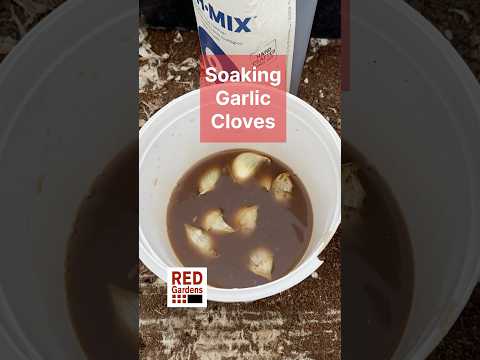
PermaNews Brief
Key Takeaways
Experiment to boost garlic health and yield by pre-soaking cloves in various solutions, like compost tea or seaweed extract, before planting.
- Pre-soaking garlic cloves may improve growth.
- Compost tea offers beneficial microorganisms.
- Seaweed extract can stimulate root development.
- Experimental trials compare different soaking methods.
- Control groups assess treatment effectiveness.
Why It Matters
Enhancing garlic fertility through simple pre-planting treatments can significantly increase crop success and yield for home gardeners and small-scale growers.
What to Do Next
Consider experimenting with different pre-planting soaking solutions for your next garlic crop.
Recommended for: Anyone interested in improving their garlic harvest through innovative and science-backed pre-planting methods.
This article discusses an experimental approach to improving garlic growth, specifically focusing on the pre-planting treatment of garlic cloves. The author, who manages Red Gardens, is undertaking a growing trial to investigate the impact of soaking garlic cloves in various solutions before planting. This initiative stems from a desire to enhance the fertility and overall success of their garlic crop, moving beyond conventional planting methods.
The core of the experiment involves dividing garlic cloves into several groups, each subjected to a different soaking solution. The primary goal is to observe if these treatments lead to noticeable differences in germination rates, plant vigor, disease resistance, and ultimately, the size and quality of the harvested garlic bulbs. The author is particularly interested in solutions that might boost nutrient uptake, deter pests, or provide a head start for the young plants.
One of the solutions being tested is a compost tea. This organic concoction is believed to introduce beneficial microorganisms to the cloves, potentially improving soil health around the developing plant and aiding in nutrient availability. The theory is that these microbes can help break down organic matter in the soil, making essential nutrients more accessible to the garlic roots. Another solution under investigation is a diluted seaweed extract. Seaweed is known for its rich mineral content and growth-promoting hormones, which could stimulate root development and overall plant resilience. The author anticipates that the seaweed extract might provide a natural boost to the cloves, encouraging stronger growth from the outset.
Beyond these organic options, the trial also includes a group of cloves soaked in a simple water solution. This serves as a control group, allowing for a direct comparison with the other treatments to determine if the added ingredients truly offer a benefit. There's also a group that receives no pre-soaking treatment at all, acting as a baseline to assess the impact of any soaking, regardless of the solution used. This comprehensive approach aims to isolate the effects of each variable.
The author emphasizes that this is an ongoing trial, and the initial phase focuses solely on the preparation of the cloves. Future updates are expected to detail the planting process, observations during the growth cycle, and ultimately, the harvest results. The intention is to meticulously document each stage of the experiment, providing insights into which, if any, of these pre-planting treatments prove most effective for cultivating robust and productive garlic. The trial is a practical application of permaculture principles, seeking to optimize plant health and yield through natural and sustainable methods. The author's commitment to sharing these findings reflects a broader interest in fostering knowledge and improving gardening practices within the permaculture community. The experiment is designed to be replicable, allowing other growers to potentially adopt successful techniques in their own gardens.
Source: youtube.com
Related Analysis
- Food Forest Courses Shift From Theory to Build-Ready Skills — Several food forest courses now open with site assessment and guild-building rather than design theory, suggesting a dev…
- Practitioners Build Silvopasture Playbook Before Researchers Catch Up — A small but consistent set of signals from the Northeast U.S. shows farmers actively piloting silvopasture while formal …
Related on PermaNews
- Ernst Götsch's Cacao Syntropy: Master Agroforestry Now (How-To Guide)
- Finnish Off-Grid: Rocket Mass Heater Performance in Greenhouse (Case Study)
- Berlins schwimmende Gärten: Permakultur auf dem Wasser (Case Study)
- Rodale Report 2025: Thermal Mass Boost in Solar Greenhouses (Case Study)
- AUTarcaMatricultura La Palma: Permakultur & Energieautarkie (How-To Guide)
- Earthaven Ecovillage: 30 Years Off-Grid with Hydro & Solar (Video)
Explore more in Food Systems & Growing — the full hub for this knowledge area.