Protecting Your Harvest: Frost Solutions for Growers
By Justin Rhodes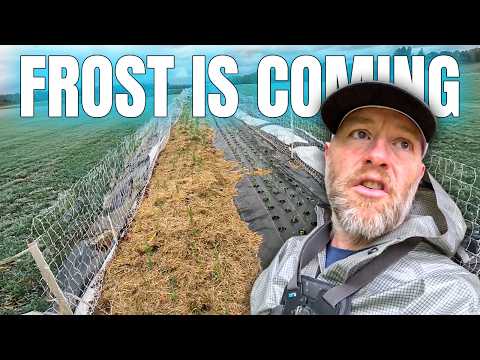
TL;DR: Protecting crops from frost is crucial for successful harvests, requiring understanding plant vulnerability and implementing timely preventative measures.
- Frost damages plants by freezing water in tissues.
- Young plants are more susceptible to frost injury.
- Row covers provide thermal insulation and protection.
- Continuous sprinkler irrigation releases latent heat.
- Site selection and plant choice aid frost avoidance.
Why it matters: Unexpected cold snaps can devastate crops, impacting food supply and economic stability for growers. Proactive frost protection ensures resilient agricultural systems.
Do this next: Explore different row cover materials and consider their suitability for your garden before the next cold snap.
Recommended for: Home gardeners and small-scale farmers seeking practical advice on protecting their crops from frost damage.
Frost poses a significant threat to agricultural crops, particularly during unexpected cold snaps or in regions with unpredictable weather patterns. Understanding the mechanisms of frost damage and implementing effective preventative measures are crucial for safeguarding harvests.
Frost damage occurs when the temperature of plant tissues drops below freezing, causing the water within and between plant cells to crystallize. This ice formation can rupture cell walls, leading to dehydration, wilting, and ultimately, the death of the affected plant parts. The severity of damage depends on several factors, including the duration of freezing temperatures, the rate of temperature drop, and the specific plant species and its stage of growth. Young, tender plants and new growth are generally more susceptible to frost injury than mature, hardened plants.
Several strategies can be employed to protect crops from frost. One common approach involves enhancing the thermal insulation around plants. Row covers, such as spun-bonded polypropylene or burlap, can trap ground heat and prevent it from radiating into the atmosphere. These covers should be applied before temperatures drop and removed once the danger has passed to allow for sunlight and air circulation. For larger areas, low tunnels or hoop houses offer a more robust form of protection, creating a microclimate that is several degrees warmer than the ambient air.
Another effective method is the use of water. Sprinkler irrigation, when applied continuously throughout the freezing period, can prevent frost damage through a process called latent heat release. As water freezes on the plant surfaces, it releases a small amount of heat, which keeps the plant tissues just above freezing. It's critical to ensure continuous application, as intermittent watering can exacerbate damage by creating a layer of ice without the protective heat release. Overhead irrigation is particularly useful for broadacre crops.
Site selection and plant placement also play a vital role in frost mitigation. Cold air is denser than warm air and tends to settle in low-lying areas, creating "frost pockets." Planting frost-sensitive crops on higher ground or slopes can help them avoid these cold air accumulations. Windbreaks, such as hedges or fences, can also be beneficial by slowing down cold air movement and reducing heat loss from the soil.
Soil management practices can contribute to frost protection. Keeping the soil moist and free of weeds can help retain ground heat. Moist soil has a higher thermal conductivity than dry soil, meaning it can absorb and release heat more effectively. Weeds, on the other hand, can act as insulators, preventing heat from radiating upwards from the soil.
For individual plants or small garden beds, mulching can provide a protective layer. A thick layer of organic mulch, such as straw, wood chips, or leaves, insulates the soil, preventing heat loss and keeping the root zone warmer. This is particularly useful for perennial plants and root crops.
Understanding the specific frost tolerance of different crop varieties is also important. Some varieties are naturally more resilient to cold temperatures than others. Selecting cold-hardy varieties can significantly reduce the risk of frost damage.
In summary, protecting crops from frost requires a multi-faceted approach that combines preventative measures with an understanding of local climate conditions and plant physiology. From physical barriers like row covers and hoop houses to strategic watering and careful site selection, a range of techniques can be employed to minimize the impact of freezing temperatures and ensure a successful harvest.
Source: youtube.com
Related Analysis
- Farmers Convert Six Weeks of Rhubarb Into 25-Year Supply — Initial signals suggest a rhubarb preservation technique can extend a brief seasonal harvest into 25 years of storage—a …
- Compost Builds Soil Microbiomes—But Human Waste Divides Practitioners — A small but consistent set of signals indicates composting's soil benefits are well-documented, while human-waste compos…
Related on PermaNews
- Cold Snap Composting: Hot Piles for Winter Gardens (Video)
- Worst Soil? See Our Food Growth Successes! (Video)
- Compost Ready? Do THIS First for Soil Health! (Video)
- Beat the Frost: Gardening Protection Strategies (Video)
- Winter Squash Sowing: UK Gardeners - Part 2 (Video)
- Mastering Compost Ratios for Garden Soil Health (Video)
Explore more in Food Systems & Growing — the full hub for this knowledge area.