Rainwater Harvesting: Permaculture Driveway & Pathway Design
By GrowTree Organics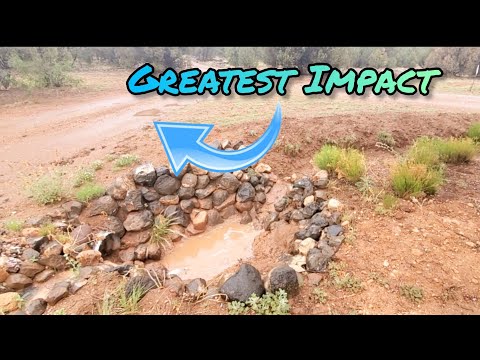
PermaNews Brief
Key Takeaways
Rainwater harvesting driveways and pathways use earthworks like rolling dips and swales to capture and infiltrate water, preventing erosion and nourishing landscapes.
- Design paths to harvest and direct rainwater.
- Use rolling dips to slow and divert runoff.
- Zoney bowls infiltrate water and trap sediment.
- Staggered dips channel water to swales.
- Ramped dips maximize water storage and infiltration.
Why It Matters
Converting driveways and pathways into water-harvesting infrastructure can transform arid landscapes, build soil moisture, and support resilient ecosystems without irrigation.
What to Do Next
Consider how rolling dips and zoney bowls could be integrated into your own path designs to maximize water infiltration rather than runoff.
Recommended for: Anyone looking to implement practical, low-cost water harvesting solutions on their property, particularly those in dry or drought-prone regions.
This video from the Permaculture Homestead Greening the Desert Project demonstrates practical driveway and pathway designs that harvest rainwater using earthworks like rolling dips, water bars, zoney bowls, and swales. Key technique: rolling dips (one-way cross-drains) every 20-30m on contours to slow and divert runoff into infiltration zones—e.g., a dip with gravel berm directs water across the path to a zoney bowl (micro-swale basin) that traps sediment and sinks water. On contour-crossing driveways, pair opposing zoney bowls to capture bidirectional flow, filling with gravel for stability. Staggered dips lead water to roadside ditches, then swales or bowls for landscape infiltration. Advanced: ramped dips where water backs up higher in larger swales before spilling to smaller ones, maximizing storage—e.g., between two swales, curves and earthworks harvest 2-3x more than straight roads. Gabion walls reinforce edges in erodible soils. Multi-purpose design: pathways double as water conduits, reducing erosion and hydrating adjacent food forests. Real-site footage shows implementation on a desert homestead: dips filled post-rain, no erosion after monsoons, enabling tree growth without irrigation. Steps: survey contours, excavate dips (1-2m wide, 0.5m deep), line with gravel/clay, plant berms. Quantifiable: one driveway section stashes thousands of gallons per storm, building soil moisture for drought resilience. Integrates with broader permaculture: direct overflow to orchards or hugels. Ideal for regenerative living, turning infrastructure into water assets with low-cost hand tools or mini-excavators.
Source: youtube.com
Related Analysis
- Water-Scarce States Split Supplies Between Farms and Data Centers — Early signals suggest data center water demands are colliding with farm irrigation rights in water-stressed areas, raisi…
- Off-Grid Homesteaders Turn to Boreholes Over Surface Water — Early field accounts from off-grid homesteaders suggest drilled wells are emerging as a core drought-resilience tool, no…
Related on PermaNews
- Ernst Götsch's Cacao Syntropy: Master Agroforestry Now (How-To Guide)
- Finnish Off-Grid: Rocket Mass Heater Performance in Greenhouse (Case Study)
- Berlins schwimmende Gärten: Permakultur auf dem Wasser (Case Study)
- Rodale Report 2025: Thermal Mass Boost in Solar Greenhouses (Case Study)
- AUTarcaMatricultura La Palma: Permakultur & Energieautarkie (How-To Guide)
- Finca Bellavista: Costa Rica's 200-Acre Water System Innovation (Case Study)
Explore more in Water, Climate & Adaptation — the full hub for this knowledge area.