Seed Snail Success? Trial & Error in Seed Starting
By Self Sufficient Homesteading & Gardening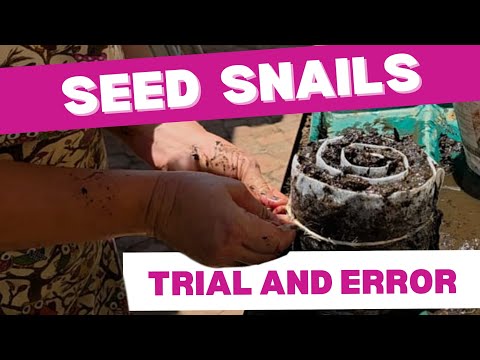
TL;DR: The seed snail method saves space for germinating seeds indoors but requires careful moisture management to prevent mold.
- Seed snails offer compact germination for limited indoor space.
- Consistent moisture is key for successful seed snail use.
- Monitor carefully for mold, especially with slow germinators.
- Delicate seedlings are easily damaged during transplanting.
- Clear plastic aids root observation and timely transplanting.
Why it matters: This method allows gardeners with limited indoor space to start more seeds, potentially extending their growing season and increasing plant diversity. Understanding its nuances can improve germination rates and plant health.
Do this next: Consider starting a small batch of seeds using the seed snail method to test its effectiveness for your specific needs.
Recommended for: Anyone seeking space-saving methods for indoor seed starting, particularly those with some gardening experience.
The article details an experimental approach to seed starting, specifically focusing on the "seed snail" method, which involves rolling seeds in a moist medium within a plastic strip. The author shares their experiences, highlighting both successful and unsuccessful attempts, and offers practical advice for those considering this technique.
Initially, the seed snail method was explored as a space-saving solution for germinating a large number of seeds, particularly for varieties that benefit from early indoor starting. The core concept involves placing a thin layer of moist growing medium, such as seed starting mix, on a strip of plastic (like a cut-up plastic bag or a piece of plastic sheeting). Seeds are then carefully placed on this medium, often with a small amount of additional medium sprinkled over them, before the entire strip is rolled up into a "snail" shape. This snail is then placed in a container with a small amount of water at the bottom, creating a humid environment conducive to germination.
One of the primary advantages observed was the significant space efficiency. A single seed snail could accommodate numerous seeds in a compact form, which is particularly beneficial for gardeners with limited indoor growing space. The method also appeared to maintain consistent moisture levels, a critical factor for successful germination. The author noted that the clear plastic allowed for easy observation of root development without disturbing the seeds, enabling timely transplanting.
However, the trial also revealed several drawbacks and challenges. A major issue encountered was the potential for mold growth, especially if the growing medium was too wet or if there was insufficient air circulation. This was particularly problematic for seeds that took longer to germinate. Another difficulty arose during the unrolling and transplanting phase. Delicate seedlings, especially those with fine root systems, were easily damaged when being separated from the rolled medium. This often led to transplant shock or even seedling loss.
The type of seeds used also played a significant role in the success rate. Seeds that were larger and had more robust root systems, such as certain vegetable seeds, tended to fare better in the snail method. Conversely, smaller seeds or those with very fine, fragile roots were more challenging to handle and transplant successfully. The author also experimented with different growing mediums, finding that a fine-textured seed starting mix worked best, as it provided adequate moisture retention without becoming waterlogged and was easier to work with during the rolling and unrolling process.
To mitigate some of the issues, several modifications were attempted. Reducing the amount of water in the bottom of the container and ensuring proper ventilation helped to control mold. The author also found that unrolling the snail very carefully and using a small tool, like a toothpick, to gently separate seedlings minimized damage during transplanting. It was also suggested that seeds that germinate quickly and have a short window before needing to be transplanted might be better suited for this method, as it reduces the time they spend in the potentially mold-prone environment.
In conclusion, the seed snail method presents an interesting and space-efficient approach to seed starting, particularly for certain types of seeds. While it offers advantages in terms of compactness and moisture retention, it also comes with challenges related to mold prevention and the delicate process of transplanting. Success largely depends on careful management of moisture, adequate ventilation, and selecting appropriate seed varieties. The author's experience underscores the importance of experimentation and adaptation when trying new gardening techniques.