No-Dig Turnips: Early-Late Harvest & Planting Guide
By Charles Dowding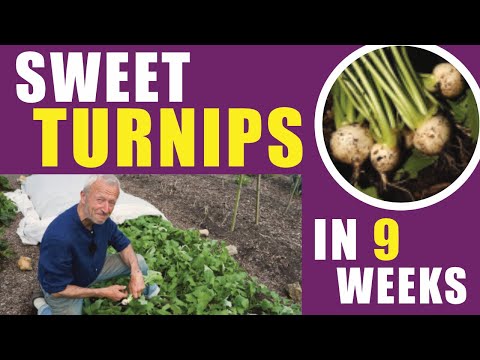
PermaNews Brief
Key Takeaways
Grow turnips year-round with no-dig methods by understanding optimal planting times, soil needs, and spacing for both root and greens harvests.
- Plant early March-May for summer turnips.
- Sow late July-Sept for autumn/winter crops.
- Direct sow to avoid root disturbance.
- Maintain consistent moisture for tender roots.
- Space 4-6 inches for roots, closer for greens.
- No-dig builds ideal, fertile soil.
- Early varieties mature in 6-10 weeks.
Why It Matters
Turnips offer a versatile and quick-growing crop, providing both nutritious roots and greens for continuous harvest throughout the year, especially with efficient no-dig techniques.
What to Do Next
Consult a local planting calendar to determine the best early and late-season turnip sowing windows for your specific climate.
Recommended for: Gardeners seeking to maximize their harvest throughout the year using efficient no-dig techniques for growing turnips.
This article offers a thorough guide to cultivating turnips, focusing on strategies for both early and late-season planting to ensure a continuous harvest, particularly within a no-dig gardening framework. The author underscores the turnip's adaptability, noting its rapid growth cycle and its utility in various culinary applications, encompassing both its root and leafy greens.
For turnips intended for an early harvest, the optimal planting period typically spans from late March to mid-May. The article generally recommends direct sowing seeds into the garden bed over transplanting, as turnips can be quite sensitive to root disturbance. However, if starting seeds indoors is necessary, the use of modules or trays designed to minimize root disruption during the transplanting process is advised. Turnips thrive in well-drained, fertile soil rich in organic matter, conditions naturally fostered by a no-dig system. The importance of consistent moisture is highlighted to promote optimal growth and prevent the roots from developing a woody texture or bitter taste. Proper spacing is also critical; for robust root development, plants should be thinned to approximately 4-6 inches apart. If the primary goal is to harvest turnip greens, a closer spacing can be tolerated. Early turnip varieties are typically ready for harvest within 6-10 weeks of sowing, with the exact timing dependent on the specific variety and the desired size of the roots. The article notes that smaller, younger roots generally offer a more tender texture and superior flavor.
Late-season turnips, destined for autumn and winter harvests, are best sown between July and early September. This timing allows the plants to mature during cooler weather, which can enhance their sweetness and reduce the likelihood of premature flowering (bolting). Similar to early plantings, direct sowing is the preferred method. The article stresses the significance of adequate soil preparation, even within a no-dig system, by ensuring a generous layer of compost is incorporated. Pest management, particularly against flea beetles, is identified as a crucial consideration for both early and late crops. The author suggests employing fine mesh netting or horticultural fleece to safeguard young seedlings. As the growing season progresses, late turnips can remain in the ground for extended periods, even through light frosts, which can further sweeten the roots. However, protection from severe freezes may become necessary in colder climates. Harvesting late turnips can extend into late autumn and early winter, providing a valuable source of fresh vegetables when many other crops are no longer available.
The article further explores specific cultivation practices tailored to a no-dig context. This method inherently improves soil structure and fertility, thereby reducing the need for extensive soil preparation. The author explains that simply applying a layer of compost to the soil surface provides the necessary nutrients and conditions for healthy turnip growth. This approach also minimizes weed disturbance, which can be beneficial for turnip development. Watering techniques are discussed, with an emphasis on deep, infrequent watering to encourage the development of strong, deep root systems. The article also touches upon the advantages of succession planting, where small batches of turnips are sown at regular intervals (every few weeks) to ensure a continuous supply throughout the entire growing season.
In essence, the article provides a comprehensive guide to successfully cultivating turnips, advocating for both early and late-season plantings to maximize the harvest. It underscores the benefits of the no-dig method for creating ideal growing conditions, emphasizing direct sowing, appropriate spacing, consistent moisture, and effective pest protection. The author's insights aim to assist gardeners in achieving a plentiful and continuous supply of tender, flavorful turnips.
Source: youtube.com
Related Analysis
- Composting Advice Shifts From Chemistry to Microbial Biology — Several sources suggest composting guidance is pivoting from nutrient ratios toward microbial ecology—reframing what "go…
- Does Growing Your Own Food Actually Save Money? The Real Numbers — Most home gardens save money by year two — but only if the right crops are planted. Herbs and salad greens deliver 5–10x…
Related on PermaNews
- Unlock Amazing Soil: Compost & No-Dig for Any Space (Video)
- How to Succession Sow Green Beans in Zone 4 for a Continuous Harvest (Video)
- Robin Greenfield: No-Dig Food Forest from Scratch (How-To Guide)
- Fedge: Endless Spinach from Edible Hibiscus Hedge (Video)
- Heukartoffelbeet anlegen: Permakultur-Workshop in Neuschönau (Event)
- Gartenboden erwärmen: Früher aussäen, früher ernten! (How-To Guide)
Explore more in Food Systems & Growing — the full hub for this knowledge area.