Unlock Soil Health: PCSM Paramagnetic Testing Insights
By Matt Powers - Regenerative Soil & Permaculture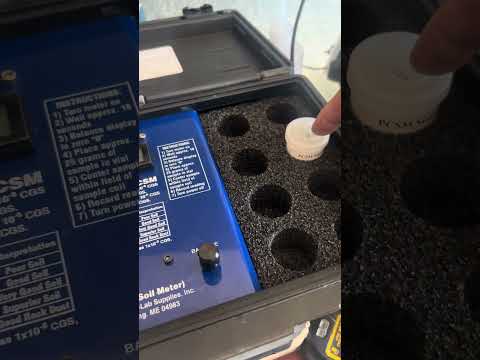
TL;DR: The Paramagnetic Conversion Soil Meter (PCSM) offers rapid insights into soil health by measuring the paramagnetic properties of minerals, indicating fertility and microbial activity.
- PCSM measures soil paramagnetism, linked to mineral content.
- Higher readings suggest better fertility and microbial health.
- Tool provides quick, non-destructive soil assessment.
- Supports timely decisions on soil amendments.
- Paramagnetism reflects microbial activity and nutrient cycling.
Why it matters: Understanding soil paramagnetism can help farmers and gardeners quickly assess soil quality and make informed decisions about its management without lengthy lab tests.
Do this next: Consider exploring the benefits of regular soil testing, including paramagnetic measurements, for improved garden and farm management.
Recommended for: Farmers, gardeners, and soil enthusiasts looking for innovative, rapid, and non-destructive ways to assess soil health and fertility.
The PCSM, or Paramagnetic Conversion Soil Meter, is a tool designed to measure the paramagnetic properties of soil, a characteristic that can offer insights into soil health and fertility. Paramagnetism refers to a material's weak attraction to a magnetic field, and in the context of soil, it's primarily influenced by the presence of certain minerals, particularly those containing iron. This measurement is distinct from ferromagnetism, which describes materials that retain their magnetism after being exposed to a magnetic field, or diamagnetism, which describes materials that are repelled by a magnetic field.
The PCSM operates by exposing a soil sample to a magnetic field and then quantifying the degree to which the soil is attracted to it. The resulting measurement, often expressed in CGS units (centimeter-gram-second), provides a numerical value indicating the soil's paramagnetic strength. Higher paramagnetic readings are generally associated with soils that are rich in beneficial minerals and have a robust microbial community. These minerals, often derived from weathered rocks, play a crucial role in plant nutrition and overall soil structure.
One of the key benefits of using the PCSM is its ability to offer a rapid and non-destructive assessment of soil quality. Traditional soil testing methods can be time-consuming and may require sending samples to a laboratory. The PCSM, however, allows for on-site measurements, providing immediate feedback to farmers and gardeners. This immediacy can be particularly valuable for making timely decisions regarding soil amendments and management practices.
The paramagnetic properties of soil are closely linked to its biological activity. Microorganisms in the soil, such as bacteria and fungi, contribute to the breakdown of organic matter and the cycling of nutrients. These processes can influence the availability of paramagnetic minerals to plants. A healthy and diverse microbial population often correlates with higher paramagnetic readings, suggesting a more vibrant and productive soil ecosystem.
Furthermore, the PCSM can be used to monitor the effectiveness of various regenerative agricultural practices. For instance, practices like cover cropping, no-till farming, and the application of compost are known to improve soil health and increase organic matter content. By taking regular paramagnetic measurements, users can track the progress of these practices and observe their impact on soil quality over time. An increase in paramagnetic readings after implementing regenerative techniques could indicate an improvement in mineral availability and microbial activity.
The tool is also useful for identifying areas within a field that may be deficient in certain minerals or experiencing reduced biological activity. By mapping paramagnetic readings across a larger area, users can pinpoint problematic zones and tailor their interventions accordingly. This targeted approach can lead to more efficient resource utilization and improved crop yields.
While the PCSM provides valuable data, it's important to interpret the results in conjunction with other soil health indicators. Factors such as soil pH, organic matter content, and nutrient levels still play a critical role in determining overall soil fertility. The PCSM should be seen as a complementary tool that offers an additional layer of insight into the complex dynamics of soil ecosystems. It provides a unique perspective on the mineral and biological vitality of the soil, contributing to a more holistic understanding of its health and potential for regeneration.