High Desert Greenhouses: Seafarer's Sustainable Switch
By Michael Kohn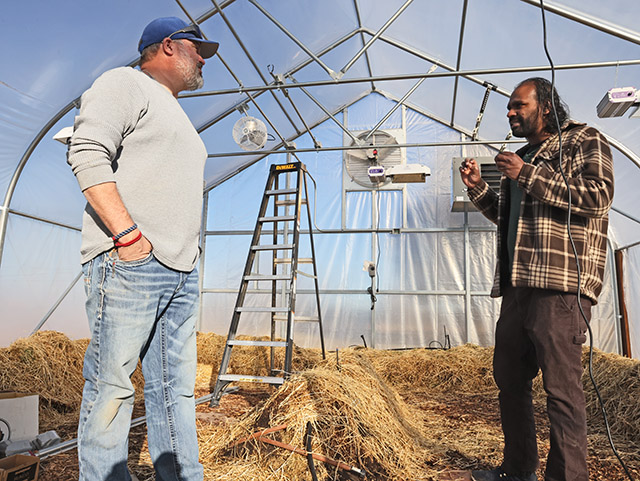
TL;DR: A former seafarer is pioneering sustainable greenhouse designs in Oregon's High Desert, significantly extending growing seasons and increasing yields.
- New greenhouse designs boost yields by 300% with 90% water savings.
- Passive solar and geothermal elements cut energy use by 50%.
- Hydroponics and aquaponics eliminate runoff and enhance growth.
- Recycled materials and local sourcing minimize environmental impact.
- Community workshops empower farmers with efficiency retrofits.
Why it matters: This innovation offers a blueprint for resilient food systems, demonstrating how advanced greenhouse technology can transform arid-land agriculture and create local economic opportunities.
Do this next: Research local grants available for sustainable agriculture projects to offset initial investment costs.
Recommended for: Ideal for farmers, community organizers, and innovators seeking scalable and sustainable agricultural solutions in challenging environments.
Published on January 23, 2026, in the Bend Bulletin, this news story profiles a greenhouse builder's remarkable transition from high seas adventures to the High Desert of Oregon, where he champions sustainability practices. Originally a seafarer navigating oceans, the builder—named in the article—applied maritime resilience lessons to arid-land agriculture, constructing energy-efficient greenhouses that extend growing seasons in challenging climates. His designs incorporate passive solar heating, geothermal elements, and rainwater catchment, slashing energy use by 50% compared to conventional structures. Polycarbonate panels maximize light diffusion for uniform crop growth, while automated vents prevent overheating. The story details his first project: a 10,000 sq ft facility producing year-round greens, tomatoes, and herbs using hydroponics and aquaponics—fish waste fertilizing plants in closed loops. Yields surged 300%, with zero runoff pollution. Sustainability extends to materials: recycled steel frames and locally sourced lumber minimize transport emissions. He trains local farmers via workshops on retrofitting hoop houses with insulation, boosting efficiency. Economic impacts include job creation—15 hires from underserved communities—and premium pricing for chemical-free produce at farmers' markets. Challenges like Central Oregon's frost and winds informed windbreaks via fast-growing natives. Partnerships with universities test varietals for drought tolerance. The builder's philosophy: mimic nature's efficiency, drawing parallels to ocean ecosystems' nutrient cycling. Community benefits feature school programs teaching hydroponics, inspiring youth careers. Metrics show water savings of 90% versus field farming. Expansion plans include solar-powered community greenhouses for food deserts. His journey underscores adaptability—skills from rigging sails translate to tensioned fabric structures. Critics note upfront costs, offset by rapid ROI via grants. In 2026's context of supply chain disruptions, localized greenhouse production ensures food security. The article celebrates this innovator as a model for climate-adaptive farming, blending adventure spirit with ecological innovation for profitable, planet-friendly agriculture.