Soil Compaction Challenge in Permaculture #shorts
By The Permaculture Consultant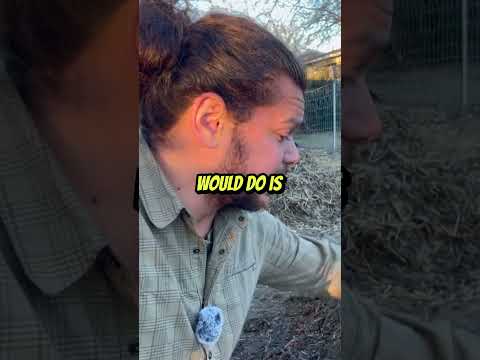
PermaNews Brief
Key Takeaways
Soil compaction severely hinders plant growth and ecosystem health by limiting air, water, and root penetration.
- Compacted soil lacks crucial air and water pore spaces.
- Reduced porosity impedes root growth and nutrient uptake.
- Compaction leads to stunted plants and increased disease.
- Runoff and erosion worsen with impermeable soil.
- Healthy soil is foundational to permaculture principles.
Why It Matters
Compacted soil degrades ecosystems, reduces yields, and undermines the basic principles of sustainable land management, making it a critical issue for gardeners and permaculturists.
What to Do Next
Watch the video to understand heavy compaction and identify if your garden suffers from it.
Recommended for: Gardeners and permaculturists looking to understand a fundamental barrier to plant health and soil productivity.
This video clip, titled "HEAVY Compaction," addresses a significant challenge often encountered in gardening and permaculture: soil compaction. The presenter highlights a common issue where the ground becomes excessively dense, making it difficult for plants to thrive. This compaction is depicted as a severe problem, suggesting that the soil has lost its desirable loose, crumbly structure.
The core message revolves around the detrimental effects of such heavy compaction. When soil is compacted, its pore spaces, which are crucial for air and water movement, are significantly reduced or eliminated. This lack of porosity directly impacts root growth, as roots struggle to penetrate the dense soil matrix. Consequently, plants may exhibit stunted growth, nutrient deficiencies, and increased susceptibility to disease due to an inability to access essential resources.
Furthermore, compacted soil impedes water infiltration. Instead of soaking into the ground, rainwater tends to run off the surface, leading to erosion and depriving the soil of much-needed moisture. This runoff can also carry away valuable topsoil and nutrients, further degrading the growing environment. The video implicitly suggests that this situation can create a cycle of decline, where poor soil structure leads to poor plant health, which in turn can exacerbate soil degradation.
The presenter's use of the term "heavy compaction" emphasizes the severity of the problem, implying that this is not a minor issue but a significant barrier to successful gardening and permaculture practices. In permaculture, healthy soil is considered the foundation of a productive and resilient ecosystem. Compacted soil directly contradicts permaculture principles that advocate for building and maintaining living, aerated soil structures.
While the short format of the video means it doesn't delve into specific solutions, the identification of "heavy compaction" as a key problem implicitly calls for intervention. Common permaculture strategies for addressing compaction include incorporating organic matter, which improves soil structure and aggregation; using cover crops, whose roots can break up dense layers; and minimizing disturbance through no-till or reduced-till practices. These methods aim to restore the soil's natural porosity, enhance microbial activity, and create a more hospitable environment for plant roots.
In essence, the video serves as a concise alert to a fundamental soil health issue. It underscores the importance of understanding and addressing soil structure in any gardening or permaculture endeavor. The visual or implied context of the video likely showcases a real-world example of this problem, making the concept of heavy compaction tangible and relatable for viewers interested in sustainable land management. The brevity of the clip suggests it might be part of a larger series or a quick tip designed to raise awareness about critical permaculture considerations.
Source: youtube.com
Related Analysis
- Composting Advice Shifts From Chemistry to Microbial Biology — Several sources suggest composting guidance is pivoting from nutrient ratios toward microbial ecology—reframing what "go…
- Does Growing Your Own Food Actually Save Money? The Real Numbers — Most home gardens save money by year two — but only if the right crops are planted. Herbs and salad greens deliver 5–10x…
Related on PermaNews
- Nachhaltigkeit neu gedacht: Natur, Mensch, Markt vereint (Article)
- Linda Harvey's 12 Permaculture Design Principles Explained (How-To Guide)
- Permaculture: Stacking Functions for Ultimate Resilience (Ep. 431) (Video)
- Holmgrens 12 Permakultur-Prinzipien: Anleitung für regenerative Systeme (How-To Guide)
- Permaculture's Core: Ancient Tech for Modern Design (Video)
- Beyond Pests: Growing Food with Wildlife (Multilingual) (Video)
Explore more in Food Systems & Growing — the full hub for this knowledge area.