Free Arabic "Rainwater Harvesting" Drylands Edition Now Live
By brad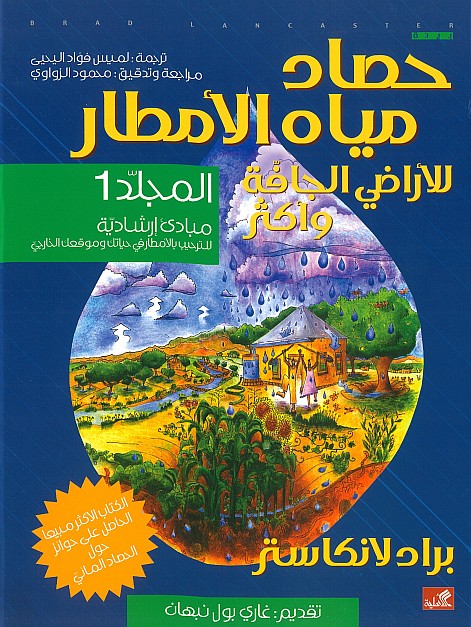
PermaNews Brief
Key Takeaways
An Arabic edition of "Rainwater Harvesting for Drylands and Beyond" is now freely available, promoting water conservation in arid regions.
- Free Arabic guide to rainwater harvesting.
- Learn passive and active collection methods.
- Essential for dryland water management.
- Boosts community water resilience.
- Integrates ecological design principles.
Why It Matters
Access to this foundational text in Arabic empowers more communities to implement sustainable water management practices, crucial for regions facing water scarcity.
What to Do Next
Download the free Arabic PDF and explore local rainwater harvesting initiatives.
Recommended for: Practitioners, educators, and community leaders in arid and semi-arid regions seeking to implement effective rainwater harvesting strategies.
An Arabic translation of the initial edition of "Rainwater Harvesting for Drylands and Beyond" has been made accessible for complimentary download. This translated version, derived from the book originally published in 2006, is provided as a low-resolution PDF file. The availability of this resource aims to disseminate knowledge and practical guidance on rainwater harvesting techniques to a broader, Arabic-speaking audience.
The original English publication, which this Arabic edition is based upon, has served as a foundational text in the field of sustainable water management, particularly in arid and semi-arid regions. Its core principles and methodologies focus on capturing, storing, and utilizing rainwater to support various needs, ranging from household consumption to agricultural irrigation and landscape restoration. The book emphasizes ecological design principles, promoting systems that are not only efficient in water collection but also integrate seamlessly with natural processes and local ecosystems.
Key themes likely covered in this Arabic edition, mirroring the original, include an in-depth exploration of different rainwater harvesting methods. This would encompass passive techniques, such as earthworks like swales and berms that slow, spread, and sink water into the soil, thereby enhancing soil moisture and supporting vegetation growth. Active systems, involving the collection of rainwater from rooftops and other impervious surfaces into tanks or cisterns for later use, would also be detailed. The book typically provides practical instructions on designing, constructing, and maintaining these systems, making it a valuable guide for both novices and experienced practitioners.
Furthermore, the publication often delves into the broader context of water scarcity and the importance of water conservation. It highlights how rainwater harvesting can contribute to building resilience in communities facing water challenges, reducing reliance on external water sources, and mitigating the impacts of drought. The ecological benefits, such as aquifer recharge, erosion control, and habitat creation, are also central to the book's message.
The decision to offer this Arabic edition for free download underscores a commitment to open access and knowledge sharing, particularly in regions where water scarcity is a pressing issue and where Arabic is a primary language. By removing financial barriers, the creators aim to empower individuals, communities, and organizations in Arabic-speaking countries to adopt and implement effective rainwater harvesting strategies. This initiative can foster local self-sufficiency in water management and promote sustainable land use practices.
While this is a translation of the first edition from 2006, the fundamental principles of rainwater harvesting remain highly relevant. Although subsequent editions might include updated technologies or case studies, the core concepts of water capture, storage, and utilization, along with the ecological design philosophy, are enduring. Therefore, this Arabic edition still offers substantial value as a comprehensive guide for anyone interested in implementing rainwater harvesting solutions in dryland environments and beyond. The low-resolution format is a practical consideration for ease of distribution and download, ensuring accessibility even with limited internet bandwidth.
Source: harvestingrainwater.com
Related Analysis
- Does a Home Greywater System Actually Pay for Itself? — A greywater system can redirect 30–50% of a household's daily water use — roughly 25–40 gallons per person — away from t…
- Rainwater Harvesting: The Install Cost That Actually Pays Off — Domestic rainwater harvesting systems carry a real upfront cost — $3,200–$8,500 installed in the US (modeled estimate) —…
Related on PermaNews
- Berlins schwimmende Gärten: Permakultur auf dem Wasser (Case Study)
- Finca Bellavista: Costa Rica's 200-Acre Water System Innovation (Case Study)
- Priya's 2024 India Report: 10-Hectare Water Harvesting Success (Case Study)
- Holmgren's 40 Yrs: Abundant Permaculture Design Webinar 3 (Video)
- Water Cycle Restoration Research: Indigenous Wisdom Meets Permaculture (Article)
- The Importance of Harvesting Rainwater for Conservation (Video)
Explore more in Water, Climate & Adaptation — the full hub for this knowledge area.