Lake-Dwelling Cacti: Unveiling Aquatic Desert Plants
By Crime Pays But Botany Doesn't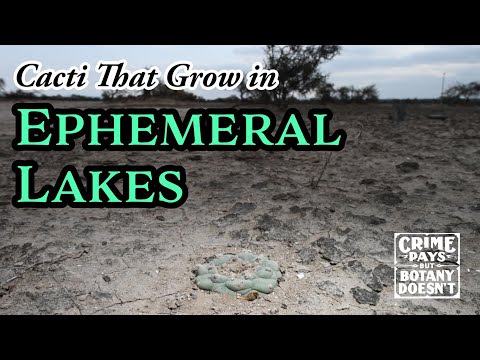
TL;DR: Cacti have been discovered thriving in lake environments, overturning assumptions about their habitat limitations and revealing unique aquatic adaptations.
- Cacti found flourishing in lakes, challenging conventional habitat understanding.
- Aquatic cacti exhibit modified buoyant or rot-resistant root systems.
- Stems and cladodes show increased resistance to waterlogging and pathogens.
- Specialized stomata adapt to humid, water-rich environments.
- Discovery signals significant evolutionary divergence in cactus species.
Why it matters: This discovery opens new avenues for understanding plant adaptability and evolutionary processes, potentially informing cultivation practices for diverse environments.
Do this next: Watch the video to explore the detailed adaptations of these aquatic cacti.
Recommended for: Anyone fascinated by evolutionary biology and the surprising adaptability of plant life, particularly those interested in cacti beyond desert environments.
A recent exploration into unusual plant habitats has revealed a fascinating phenomenon: certain cactus species thriving in aquatic environments, specifically within lakes. This discovery challenges conventional understandings of cactus biology, which typically associate these plants with arid, desert landscapes. The research highlights several key aspects of these aquatic cacti, including their unique adaptations, the specific conditions of their lake habitats, and the broader implications for ecological understanding.
The cacti observed in these lake settings are not merely surviving but actively flourishing, demonstrating robust growth and reproductive capabilities. This suggests a significant evolutionary divergence from their terrestrial counterparts. One of the primary adaptations identified is a modified root system. Unlike the extensive, shallow root networks characteristic of desert cacti designed to quickly absorb surface moisture, these aquatic species possess roots that are either highly buoyant, allowing them to anchor to submerged debris or floating vegetation, or are capable of tolerating prolonged submersion without succumbing to rot. Some species exhibit a fibrous, almost spongy root structure that appears to facilitate oxygen uptake even in waterlogged conditions, a critical adaptation for plants in anaerobic environments.
Furthermore, the stems and cladodes (flattened, leaf-like stems) of these lake-dwelling cacti display altered physiological characteristics. While still retaining the succulent properties for water storage typical of cacti, their epidermal layers appear to be more resistant to waterlogging and potential fungal or bacterial infections that can plague plants in consistently wet conditions. There is also evidence of specialized stomata, the pores on plant surfaces that regulate gas exchange, which may be adapted to function effectively in a humid, water-rich atmosphere above the water line, or even to facilitate some level of underwater gas exchange in certain circumstances.
The lakes themselves provide a unique set of environmental conditions that enable this unusual growth. These are typically shallow, freshwater lakes with relatively stable water levels and a substrate that, while submerged, may offer some anchoring points. The water quality appears to be a crucial factor, with observations suggesting a preference for oligotrophic or mesotrophic conditions – lakes with moderate to low nutrient levels. This might reduce competition from more conventional aquatic plants that thrive in nutrient-rich environments, allowing the cacti to establish themselves. The presence of submerged rocks, fallen logs, or other debris provides essential attachment points for the cacti, preventing them from simply floating away.
The light penetration in these shallow lakes is also sufficient to support photosynthesis, even for submerged portions of the plants. The temperature regimes of these lakes are generally temperate, avoiding the extreme cold that would be detrimental to most cacti, and also preventing the intense heat that could lead to rapid water evaporation and stress in terrestrial cacti.
This discovery has significant implications for our understanding of plant evolution and ecological resilience. It demonstrates the remarkable adaptability of plant life and challenges the rigid categorization of species based on their typical habitats. The existence of aquatic cacti suggests that the evolutionary pathways of these plants are far more diverse and flexible than previously assumed. It opens up new avenues for research into plant physiology, particularly concerning water tolerance and nutrient acquisition in unconventional environments.
From a broader ecological perspective, these lake-dwelling cacti represent a unique niche within their ecosystems. They may play a role in stabilizing lake sediments, providing habitat for aquatic invertebrates, or even contributing to the overall biodiversity of these freshwater environments. Further research is needed to fully understand their ecological interactions and their contribution to the health and functioning of these lake ecosystems. This phenomenon underscores the ongoing potential for new botanical discoveries and the continuous need to re-evaluate our understanding of the natural world.
Source: youtube.com
Related Analysis
- Farmers Convert Six Weeks of Rhubarb Into 25-Year Supply — Initial signals suggest a rhubarb preservation technique can extend a brief seasonal harvest into 25 years of storage—a …
- Compost Builds Soil Microbiomes—But Human Waste Divides Practitioners — A small but consistent set of signals indicates composting's soil benefits are well-documented, while human-waste compos…
Explore more in Food Systems & Growing — the full hub for this knowledge area.