Homestead Showdown: Us vs. Chickens - Round 1
By Justin Rhodes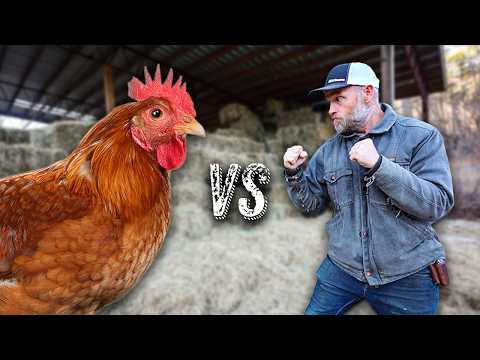
TL;DR: Chickens can be a challenge in permaculture gardens, often requiring creative and robust solutions to protect plants from their natural foraging behaviors.
- Free-ranging chickens can damage new garden beds.
- Simple barriers may not deter persistent chickens.
- Robust, multi-layered solutions are essential.
- Balancing animal integration with crop protection is key.
Why it matters: Integrating animals like chickens into permaculture systems offers many benefits but requires careful management to prevent conflict with cultivated areas, ensuring both productivity and animal well-being.
Do this next: Consider your garden layout and chicken habits to proactive implement deterrents before planting to protect new seedlings.
Recommended for: Homesteaders and gardeners looking to integrate chickens effectively into their permaculture systems without sacrificing their crops.
In a recent account of homesteading life, the ongoing dynamic between humans and chickens was humorously detailed, highlighting the challenges and occasional frustrations that arise when integrating poultry into a permaculture system. The narrative began with a common scenario: chickens, despite having designated foraging areas, often find the most appealing spots to be those cultivated by their human caretakers. This particular instance involved a newly planted garden bed, meticulously prepared and sown with seeds, which quickly became the target of the flock's scratching and dust-bathing activities.
The initial response to this avian intrusion was an attempt at deterrence. The homesteader, observing the chickens' destructive tendencies, decided to erect a temporary barrier. This involved repurposing a section of an old fence, which, while not aesthetically pleasing, was hoped to be sufficient to keep the chickens out of the vulnerable garden bed. The expectation was that this simple physical obstruction would be enough to redirect the birds to more appropriate foraging zones.
However, the chickens, demonstrating their characteristic ingenuity and persistence, quickly proved the barrier to be inadequate. Their ability to navigate around or even through small openings meant that the fence, rather than being a deterrent, became more of a minor inconvenience. The homesteader recounted discovering the birds back in the garden bed, continuing their excavation work, much to the dismay of the gardener. This highlighted a recurring theme in permaculture: the need for robust and often multi-layered solutions when dealing with animal integration.
Frustration began to mount as the garden bed, intended for productive growth, was instead being systematically dismantled by the feathered residents. The homesteader acknowledged the inherent conflict: the desire to allow animals to free-range and contribute to the ecosystem, balanced against the need to protect nascent crops. This led to a more determined effort to secure the garden.
The next step involved a more substantial fencing solution. The homesteader decided to utilize a roll of poultry netting, a common and effective tool for containing chickens. This netting, being taller and more flexible, offered a greater degree of protection. The installation process, while more involved than the initial makeshift fence, was undertaken with the hope that this would finally resolve the issue. The netting was carefully positioned around the perimeter of the garden bed, ensuring there were no gaps large enough for the chickens to exploit.
Despite the improved barrier, the narrative concluded with a sense of ongoing vigilance. While the poultry netting offered a more robust defense, the homesteader recognized that chickens are notoriously clever and persistent. The "Round 1" in the title suggested that this was merely the beginning of an ongoing negotiation between human agricultural efforts and the natural foraging instincts of the flock. The experience served as a reminder that permaculture, while aiming for synergistic relationships, often involves continuous adaptation and problem-solving to maintain balance and productivity within the system. The underlying message was one of learning and evolving strategies in the face of nature's unpredictable and often humorous challenges.