Clinical research drives health care innovation and quality
PermaNews Brief
Key Takeaways
Integrating clinical research within healthcare systems enhances innovation and quality improvement.
- Clinical research improves routine healthcare services.
- Feedback loops enhance patient care delivery.
- Research identifies and addresses unmet healthcare needs.
- Distributed research supports coordinated care initiatives.
- Embedding research aligns with quality improvement goals.
Why It Matters
This approach demonstrates how integrated systems can leverage research to continuously enhance healthcare services and operations.
What to Do Next
Evaluate how your organization integrates research into patient care.
Permaculture Context
The way Kaiser Permanente has woven research directly into the fabric of daily care delivery offers a compelling structural model for regenerative communities and intentional living projects. Most permaculture practitioners already understand the principle of observation feeding design — you watch your land, note what works, adjust, and iterate. What this integrated research framework demonstrates is that the same logic can be applied to community health infrastructure. For those building homesteads, ecovillages, or cooperative living arrangements, the practical implication is this: don't treat health knowledge as something that arrives fully formed from outside your community. Build in your own feedback mechanisms. Track what interventions — whether herbal protocols, dietary shifts, movement practices, or stress reduction approaches — are actually producing measurable outcomes for your people. Document it. Share it. The regenerative community that systematically observes and learns from its own health practices will develop genuine resilience that no supplement catalog or wellness trend can manufacture. Distributed, embedded knowledge generation is a permaculture principle as much as it is a healthcare strategy.
Recommended for: Healthcare professionals and administrators interested in innovative practices.
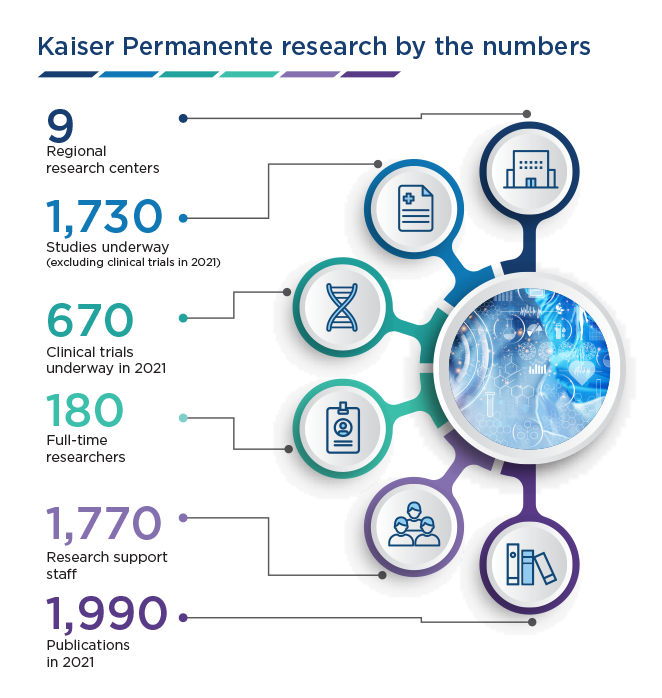
This article argues that clinical research is not only a mechanism for developing new therapies but also a driver of healthcare innovation and quality improvement within integrated delivery systems. It notes that clinical research at nine research institutes supports the Permanente Medical Groups in continuously improving healthcare across the nation. That structure is important because it shows clinical research being used as an operational engine inside a large healthcare organization rather than as a separate academic activity.
The practical lesson is that research can be embedded into routine care to generate evidence while also improving service quality. For organizations that manage large patient populations, this model can create feedback loops between care delivery and investigation: clinicians identify unmet needs, studies test interventions, and the findings inform better practice. The mention of multiple research institutes supporting Permanente Medical Groups suggests a distributed but coordinated research infrastructure, which can be relevant to health systems considering how to integrate research into their own operations.
The article is useful for understanding the strategic role of research in a health system context. It implies that clinical research can strengthen innovation capacity, support continuous improvement, and align with organizational quality goals. For readers who work in site operations, it provides an example of how research capacity can be scaled across multiple institutions while remaining tied to care delivery.
Because the page is from a healthcare organization with its own research ecosystem, it is most relevant as an institutional case for how integrated systems leverage research. Readers can use it to think about governance, staffing, and the relationship between research and quality metrics. The main value is not in procedural instruction but in showing a real-world model of research embedded in healthcare delivery at scale.
Source: permanente.org
Related Analysis
- Investor Pushes $1.4B to Break Midwest Corn Monoculture — Ivana Gazibara's $1.4B initiative to restructure Midwest agriculture is an early, rare signal of concentrated private ca…
- IUCN Rewilding Guidelines Move Practice Beyond Conceptual Debate — The IUCN's first global rewilding guidelines, backed by emerging policy momentum and hands-on training, signal a bounded…
Explore more in Community, Policy & Systems Change — the full hub for this knowledge area.