Essential Resources for Straw Bale Construction Enthusiasts
PermaNews Brief
Key Takeaways
A comprehensive guide for practical engagement in straw bale construction.
- Focus on hands-on learning resources
- Join workshops for experiential practice
- Benefit from expert-led training
- Explore community-building aspects of craft
- Utilize curated resources for improved skills
Why It Matters
This resource connects aspiring builders with practical knowledge and experienced practitioners, essential for success in straw bale construction.
What to Do Next
Explore nearby workshops to learn hands-on techniques.
Permaculture Context
Straw bale construction sits at a compelling intersection for permaculture practitioners because it transforms an agricultural byproduct — often burned or discarded after grain harvest — into a high-performance building envelope, closing a loop that conventional construction ignores entirely. What matters most here is not the novelty of the technique but the learning culture surrounding it: the workshop model pioneered by practitioners like the Steens reflects the same principles we apply in permaculture design itself, where observation, mentorship, and site-specific adaptation outperform any standardized blueprint. For someone building toward genuine resilience, this means prioritizing embodied skill over purchased solutions. A straw bale wall you understand from the inside out — its moisture dynamics, its plaster chemistry, its thermal mass behavior across seasons — becomes a living part of your systems literacy rather than a black box. That fluency has downstream value: it builds confidence for future natural-building projects, reduces dependence on specialist contractors, and grounds your design decisions in physical reality rather than catalog aesthetics. The path into this craft is less about the straw itself than about finding the right human network to learn alongside.
Recommended for: Aspiring builders interested in straw bale construction.
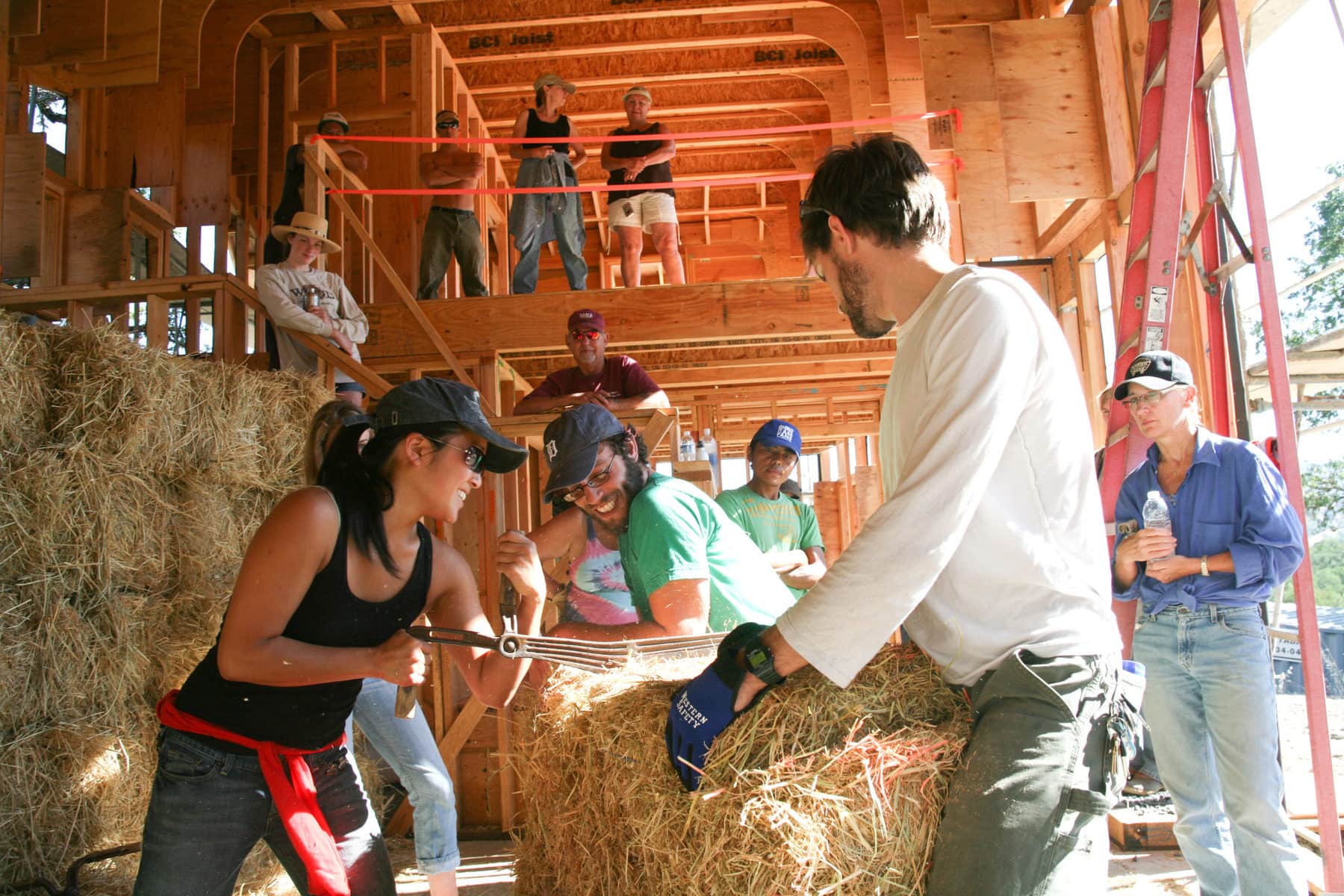
This resource page is a practical starting point for people interested in straw bale construction, workshops, and related self-build material. It is framed as a curated gateway rather than a broad theoretical overview, and it points readers toward hands-on learning opportunities and practitioner resources. The page specifically mentions the Canelo Project in Arizona, founded by Bill and Athena Steen, which hosts straw bale building workshops that include creative plaster sculpturing, and it also highlights access to the Steens’ book, The Strawbale House. That combination makes the source especially useful for someone trying to move from general interest into real-world building practice.
The value of the page is that it emphasizes active learning ecosystems around straw bale building: workshops, books, and builder communities. For a self-builder, those are often more actionable than generic descriptions of the method, because straw bale projects require attention to moisture management, plaster compatibility, detailing, and local code or permitting realities. The source does not itself provide a full step-by-step build manual, but it directs readers to established practitioners and training pathways that can materially improve a project’s chances of success. Its practical contribution is primarily in helping a reader identify where to learn, who to learn from, and which organizations have a track record in the field.
The page is also useful as a signpost for the breadth of straw bale practice. By centering workshops and books, it suggests that straw bale is not only a material choice but also a craft tradition with techniques that are best learned through guided implementation. A person using this source would likely gain the most by following its pointers to workshops and published resources, then combining that learning with detailed technical manuals and local building requirements. In short, it is a high-signal resource map for straw bale self-builders who want practical entry points rather than a surface-level introduction to natural building.
Source: craftsmanship.net
Related Analysis
- Composting Toilet vs. Septic: The Real Lifetime Cost Gap — For off-grid and rural property owners, the choice between a composting toilet and a conventional septic system is prima…
- Shipping Container Home Conversion: Real Costs, US vs. DACH — Converting a used shipping container into a livable home costs far more than the container itself — insulation, structur…
Related on PermaNews
- Explore the Permaculture Design Certificate Course for Sustainable Living (How-To Guide)
- 2025: Rocket Mass Heaters in PHI-Certified Earthship Tiny Homes (Case Study)
- Earthship Retrofits: PHI Standards & Regenerative Guide 2025 (Case Study)
- Mud Magic: Get Plastered (Event)
- Häuser bauen mit Stroh und Lehm – Workshop zu Strohballenbau und Lehmputz auf Stroh (Event)
- 2024 Earth-Sheltered Timber Frame: PermaFarm Build Guide (How-To Guide)
Explore more in Shelter, Energy & Infrastructure — the full hub for this knowledge area.