Dr. Ingham's Compost Tea Masterclass: Grow Amazing Plants (Part 1)
By Diego Footer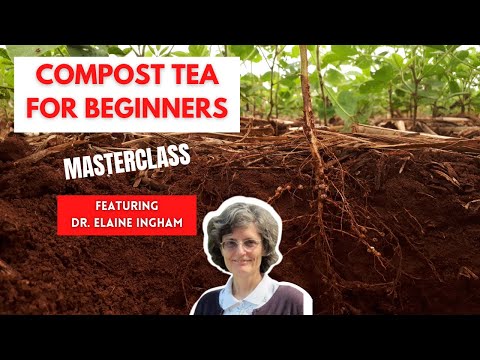
TL;DR: Compost tea, made by extracting and multiplying beneficial microorganisms from high-quality compost, significantly boosts plant health and soil vitality.
- Compost tea enhances plant growth and soil health.
- Quality compost is crucial for effective tea.
- Diverse microbes improve soil fertility.
- Aeration is key for beneficial aerobic organisms.
- Avoid chlorine in water for brewing.
Why it matters: Reintroducing diverse microbial communities to soil improves nutrient availability and counteracts damage from conventional farming practices, leading to healthier ecosystems.
Do this next: Learn about sourcing or creating high-quality compost as a foundation for effective compost tea.
Recommended for: Gardeners, farmers, and soil enthusiasts looking to enhance plant vitality and soil biodiversity using natural methods.
This article, the first in a five-part series, introduces the concept of compost tea as a powerful tool for enhancing plant health and growth, drawing insights from Dr. Elaine Ingham's expertise. The core idea behind compost tea is to extract beneficial microorganisms from high-quality compost and multiply them in a liquid solution, which can then be applied to plants and soil. This process aims to reintroduce a diverse and active microbial community, which is often depleted in conventional agricultural settings due to practices like tilling, synthetic fertilizer use, and pesticide application.
The masterclass emphasizes that not all compost is created equal, and the quality of the compost directly impacts the efficacy of the resulting tea. High-quality compost is characterized by a rich diversity of beneficial bacteria, fungi, protozoa, and nematodes, all working synergistically to break down organic matter and make nutrients available to plants. The article highlights that merely having organic matter is insufficient; the living organisms within the compost are the true drivers of soil fertility and plant vitality.
The process of making compost tea involves several key steps. First, selecting excellent compost is paramount. This compost should be made from a variety of organic materials, properly aerated, and allowed to mature. Once the compost is chosen, it is placed into a permeable bag or mesh container and steeped in water. The water quality is also a critical factor; it should be free of chlorine and other chemicals that can harm microorganisms. Dechlorinating tap water, often by letting it sit out for a day, is a common practice.
Aeration is another crucial element in brewing effective compost tea. The article explains that beneficial aerobic microorganisms thrive in oxygen-rich environments. Therefore, an air pump and air stone are typically used to continuously oxygenate the water during the brewing process. This aeration prevents the growth of anaerobic organisms, which can produce undesirable compounds and potentially harm plants. The duration of brewing can vary, but generally, it ranges from 12 to 36 hours, depending on factors like temperature and the desired microbial population.
The purpose of brewing is to encourage the rapid multiplication of the beneficial microbes present in the compost. As these organisms reproduce, they release enzymes and metabolites that further enhance the tea's beneficial properties. The resulting liquid, rich in a diverse array of microorganisms, can then be applied to plants as a foliar spray or soil drench.
When applied as a foliar spray, the microorganisms in the compost tea colonize the plant's leaf surfaces, forming a protective barrier against pathogens and helping the plant absorb nutrients more efficiently. As a soil drench, the tea introduces these beneficial microbes directly into the root zone, where they can improve soil structure, cycle nutrients, and suppress disease-causing organisms. The article underscores that a healthy soil food web, facilitated by these microorganisms, is essential for sustainable plant growth, reducing the need for synthetic inputs and fostering a more resilient ecosystem.
Ultimately, this introductory part of the masterclass sets the stage for understanding compost tea as a sophisticated biological amendment. It moves beyond a simplistic view of compost as just a nutrient source, instead emphasizing its role as a living ecosystem that, when properly extracted and applied, can revolutionize plant health and soil fertility. The focus is on understanding the microbial dynamics and the practical steps involved in creating a potent and beneficial compost tea.