Worthy Earth: Building No-Dig Market Garden Networks
By Regenerative Media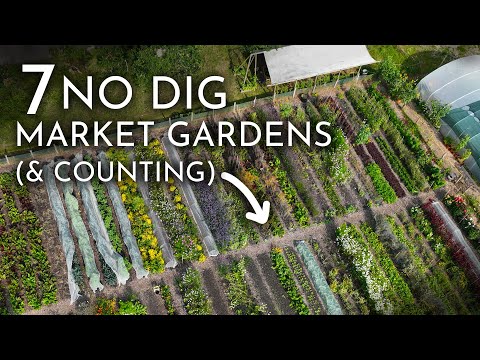
PermaNews Brief
Key Takeaways
No-dig market gardens linked in a network can create sustainable, localized food systems prioritizing soil health and community.
- No-dig protects soil, boosts fertility, and cuts chemical use.
- Worthy Earth links independent market gardens for shared learning.
- Decentralized model allows local adaptation and collective strength.
- Community engagement and education are integral to the project.
- Focuses on regenerative agriculture as an alternative to conventional farming.
Why It Matters
Implementing no-dig practices in market gardens can improve local food security, enhance environmental health, and build economic resilience within communities.
What to Do Next
Explore local initiatives or educational hubs promoting no-dig gardening and regenerative agriculture.
Recommended for: Individuals and communities interested in developing sustainable, localized, and resilient food production systems using regenerative agricultural practices.
The Worthy Earth initiative is focused on establishing a network of no-dig market gardens, aiming to foster a more sustainable and localized food system. This endeavor is rooted in the belief that small-scale, regenerative agricultural practices can significantly contribute to environmental health, community well-being, and economic resilience. The core philosophy behind Worthy Earth revolves around the principles of permaculture, particularly the no-dig method, which prioritizes soil health and biodiversity.
The no-dig approach, a cornerstone of Worthy Earth's strategy, involves minimizing disturbance to the soil structure. Instead of tilling, which can disrupt microbial life and release carbon, this method focuses on building up organic matter on the soil surface. This is typically achieved through layers of compost, mulch, and other organic materials, which gradually break down, enriching the soil and providing nutrients for plants. This practice not only improves soil fertility and water retention but also reduces the need for external inputs like synthetic fertilizers and pesticides, thereby lowering the environmental footprint of food production.
Worthy Earth envisions a network where each market garden operates as an independent, yet interconnected, entity. This decentralized model allows for local adaptation to specific climatic conditions and community needs, while still benefiting from the collective knowledge and resources of the broader network. The goal is to create a system where growers can share best practices, collaborate on marketing and distribution, and collectively address challenges. This collaborative spirit is seen as crucial for scaling up regenerative agriculture and making it a viable alternative to conventional farming.
A significant aspect of the Worthy Earth project is its emphasis on community engagement and education. The market gardens are not just places of food production; they are also intended to be educational hubs where people can learn about sustainable farming, healthy eating, and environmental stewardship. Workshops, volunteer opportunities, and direct sales to consumers are all part of the strategy to connect people with their food sources and foster a deeper understanding of the ecological processes involved in food production. This direct connection between growers and consumers is also seen as a way to build stronger local economies and enhance food security.
The economic viability of these no-dig market gardens is another key consideration. Worthy Earth aims to demonstrate that small-scale, regenerative farming can be profitable and provide a sustainable livelihood for growers. By focusing on high-value crops, direct-to-consumer sales, and efficient production methods, the initiative seeks to create a model that can be replicated and scaled. The network structure is also designed to support growers in navigating market challenges and accessing resources that might otherwise be unavailable to individual small farms.
Ultimately, Worthy Earth's ambition extends beyond simply growing food. It's about cultivating a more resilient and equitable food system, one that prioritizes ecological health, community empowerment, and economic sustainability. By championing the no-dig method and fostering a collaborative network of market gardens, the initiative seeks to contribute to a broader movement towards regenerative agriculture and a more sustainable future. The project represents a practical and holistic approach to addressing some of the most pressing environmental and social challenges of our time, offering a tangible pathway towards a more localized and regenerative food landscape.
Source: youtube.com
Related Analysis
- Baltimore Researchers Reject Yield as Urban Farm Success Metric — Several sources suggest urban agriculture is being recast from food supplement to food sovereignty tool, with peer-revie…
- Urban Food Forest Tours Signal Shift From Passive Gardens — Several initiatives indicate urban food forests are evolving into hands-on design and education hubs — distinct from con…
Related on PermaNews
- Ernst Götsch's Cacao Syntropy: Master Agroforestry Now (How-To Guide)
- Finnish Off-Grid: Rocket Mass Heater Performance in Greenhouse (Case Study)
- Berlins schwimmende Gärten: Permakultur auf dem Wasser (Case Study)
- Rodale Report 2025: Thermal Mass Boost in Solar Greenhouses (Case Study)
- AUTarcaMatricultura La Palma: Permakultur & Energieautarkie (How-To Guide)
- Earthaven Ecovillage: 30 Years Off-Grid with Hydro & Solar (Video)
Explore more in Food Systems & Growing — the full hub for this knowledge area.