Jeff King: Regenerative Ag Transforms Community Food Systems
By Jeff King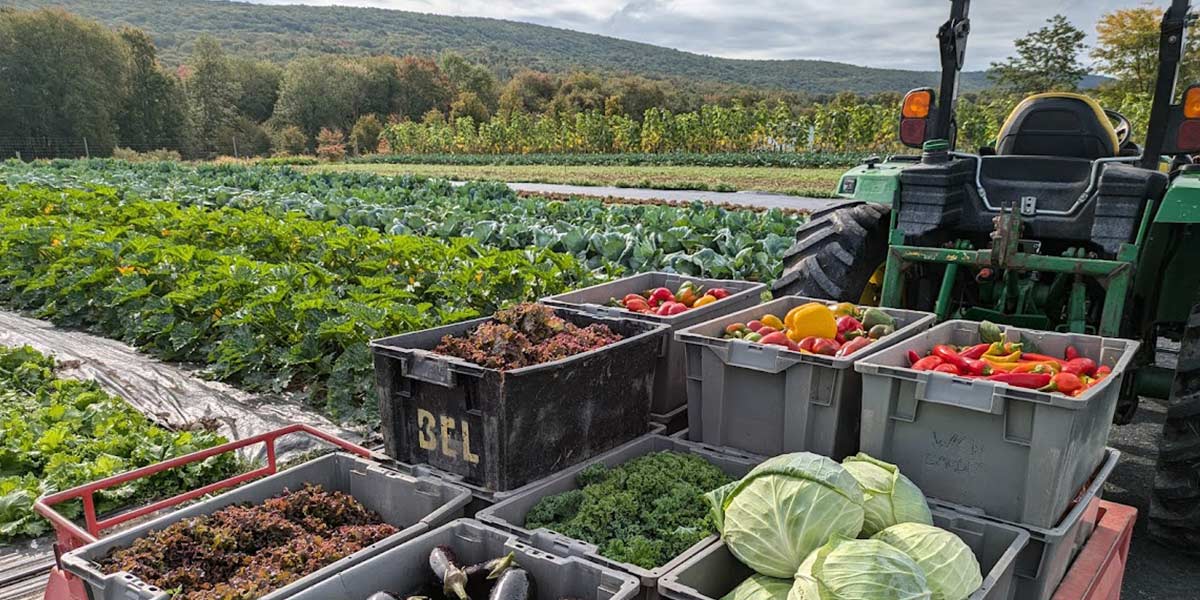
PermaNews Brief
Key Takeaways
A community farm effectively uses regenerative agriculture principles on a small scale to produce food and foster community engagement.
- Small farms can adopt regenerative agriculture principles successfully.
- Integrating livestock boosts soil fertility and provides forage.
- Community involvement is crucial for labor and food security.
- No-till, mulching, and diverse crops improve soil health.
- Regenerative practices enhance yields and reduce input costs.
Why It Matters
Regenerative agriculture on a community scale offers a viable path to local food security and ecological restoration, reducing reliance on conventional, resource-intensive methods.
What to Do Next
Explore local community gardens or farms that practice regenerative agriculture to learn about their methods firsthand.
Recommended for: Community leaders, small farmers, and individuals interested in sustainable food systems and hands-on regenerative agriculture methods.
Jeff King's article details practical implementation of regenerative agriculture on a small acreage to feed a community, adhering to six core principles: minimal soil disturbance, cover crops, diverse crops and animals, keeping soil covered, maintaining living roots, and integrating livestock. At his community farm, daily operations include composting, planting, pest management without chemicals, harvesting, and storage. A standout example is community harvest days where members process 2,000 pounds of green beans for winter storage, fostering collective labor and food security. King partnered with a sheep enthusiast to graze 20 sheep on spring cover crops using movable electric fencing, boosting soil fertility via manure while providing sheep with early-season forage when pastures are sparse. This symbiotic system enhances main-season crop yields without synthetic inputs. Actionable methods extend to large-scale projects like crop rotation for pest control, no-till planting to preserve soil structure, and mulching with organic matter to suppress weeds and retain moisture. The farm demonstrates resilience through polycultures that mimic natural ecosystems, improving water retention, reducing erosion, and sequestering carbon. Community involvement is central, with organized workdays building social bonds and ensuring surplus production for sharing. King shares lessons from adapting large-farm regenerative concepts to small plots, such as timing sheep grazing post-cover crop to maximize nutrient cycling. Practitioners can replicate by starting with cover crop mixes (e.g., legumes, grasses), installing portable fencing for rotational grazing, and scheduling group harvests. Results include nutrient-dense produce, healthier soils verified by earthworm activity and infiltration tests, and economic viability through reduced input costs. This model scales to urban or rural community gardens, emphasizing human labor over machinery for regenerative outcomes.
Source: plough.com
Related Analysis
- High-Salt Fertilizers Block Soil Microbes, Kempf Says — High-salt fertilizers disrupt soil microbes and microbial colonization, trapping farmers in chemical dependency. Biologi…
- Fertilizer Shortage Forces Reckoning on Nitrogen Sources — Fertilizer supply crisis drives farms toward nitrogen-fixing cover crops, compost, and legume rotations as alternatives.
Related on PermaNews
- Ernst Götsch's Cacao Syntropy: Master Agroforestry Now (How-To Guide)
- Designing Regenerative Resilience: Participatory Living Labs (How-To Guide)
- Lo—TEK: Indigenous Tech for Climate Solutions (Article)
- Nakivale's Regenerative Toilets: Refugee Resilience, Circular Sanitation (Case Study)
- Pippin Home Designs: Regenerative Home Design Explained (How-To Guide)
- Federal Policy Shift: Native Regenerative Ag for Soil & Carbon (Article)
Explore more in Food Systems & Growing — the full hub for this knowledge area.