Choosing a Soil Microscope: What to Look For
By Matt Powers - Regenerative Soil & Permaculture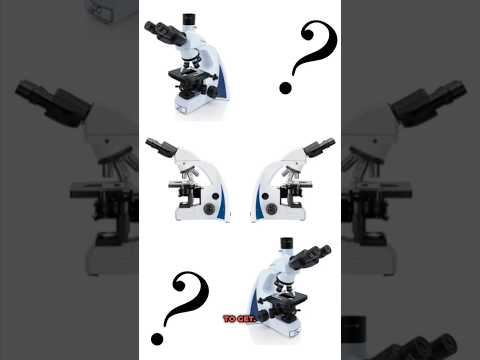
TL;DR: Selecting the right microscope for soil biology involves choosing between dissecting and compound types based on organism size and desired magnification.
- Stereomicroscopes suit larger organisms, offering 10-40x magnification.
- Compound microscopes are essential for bacteria, fungi, and protozoa.
- Objective lenses of 4x, 10x, 40x, and 100x are common for soil biology.
- LED illuminators and mechanical stages improve observation quality.
- Achromatic objectives provide a good starting point for optics.
Why it matters: Understanding soil microbial life is crucial for permaculture, impacting soil health and plant vitality, making proper magnification essential.
Do this next: Watch the full video to understand specific microscope features and achieve optimal resolution for different soil organisms.
Recommended for: Permaculturists, soil health enthusiasts, and educators interested in detailed soil biology analysis.
When considering which microscope to acquire for observing soil biology, several factors come into play, influencing the choice between different types and magnifications. The primary goal is to effectively visualize the diverse microbial life present in soil samples, which includes bacteria, fungi, protozoa, and nematodes. Each of these organisms varies significantly in size, dictating the necessary magnification levels.
For general observation of larger soil organisms and structures, a stereomicroscope, also known as a dissecting microscope, can be quite useful. These microscopes typically offer lower magnifications, ranging from around 10x to 40x, and provide a three-dimensional view of the sample. While not ideal for individual bacteria or fungal hyphae, they are excellent for examining aggregates, larger invertebrates, and the overall physical composition of the soil. They allow for the initial sorting and identification of larger components before moving to higher magnification.
However, to delve into the microscopic world of bacteria, fungi, and protozoa, a compound microscope is essential. These microscopes use multiple lenses to achieve much higher magnifications. The most common objective lenses for soil biology are 4x, 10x, 40x, and 100x. The 100x objective lens typically requires immersion oil to achieve optimal resolution, which is crucial for observing the smallest organisms.
When selecting a compound microscope, several features are important. The light source is critical; an LED illuminator is generally preferred over halogen due to its longer lifespan, cooler operation, and consistent light output. The stage should be mechanical, allowing for precise movement of the slide, which is invaluable when scanning samples for organisms. The focus mechanism should include both coarse and fine adjustments for accurate focusing at different magnifications.
The quality of the optics is paramount. Achromatic objectives are a good starting point, correcting for some chromatic aberration, but plan achromatic objectives offer a flatter field of view, which is more comfortable for extended viewing and better for photography. For even higher quality, semi-plan or plan apochromatic objectives provide superior color correction and flatness.
For observing live soil organisms, phase contrast microscopy is a highly advantageous feature. Many soil microbes are transparent and difficult to see under standard brightfield illumination. Phase contrast converts differences in refractive index within the sample into differences in brightness, making these organisms much more visible without the need for staining, which can kill or alter them. While microscopes with built-in phase contrast are more expensive, they significantly enhance the ability to observe the movement and morphology of live bacteria and protozoa. If a dedicated phase contrast microscope is not feasible, darkfield illumination can also improve visibility of unstained, transparent specimens, though it is generally less effective than phase contrast for detailed observation of internal structures.
Another consideration is whether to choose a monocular, binocular, or trinocular head. A binocular head is highly recommended for comfort during prolonged viewing, as it allows both eyes to be used. A trinocular head includes a third port for attaching a camera, which is extremely useful for documenting observations, sharing images, and teaching.
The overall build quality and stability of the microscope are also important. A sturdy frame minimizes vibrations, which can interfere with focusing at high magnifications. Investing in a reputable brand often ensures better quality components and availability of spare parts and accessories.
In summary, for comprehensive soil biology observation, a combination of a stereomicroscope for initial scanning and a high-quality compound microscope is ideal. The compound microscope should feature a mechanical stage, LED illumination, good quality achromatic or plan achromatic objectives (4x, 10x, 40x, 100x), and ideally, phase contrast capabilities. A binocular or trinocular head enhances usability and documentation potential. The choice ultimately depends on the specific needs, budget, and the level of detail required for the analysis of soil microbial communities.