Feijoa in France: The Exotic Fruit Nobody Knows
By Permaculture facile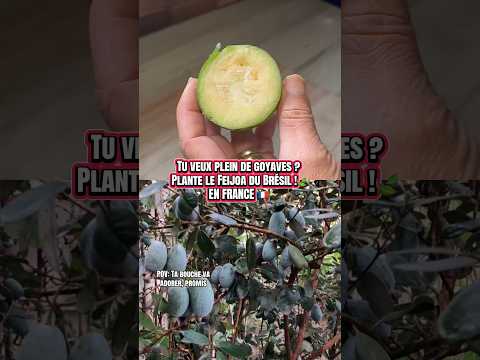
TL;DR: Feijoa, an exotic fruit thriving in surprising French microclimates, offers a unique flavor blend and resilient growth for temperate gardens.
- Feijoa (pineapple guava) grows in France.
- It adapts to cooler, temperate climates.
- Fruit offers complex, aromatic flavor.
- Plant is drought-tolerant and frost-resistant.
- Cultivation possible in southern France and Atlantic coast.
Why it matters: Discovering adaptable exotic fruits like feijoa expands local food systems and enhances garden biodiversity in temperate regions.
Do this next: Explore local nurseries or specialized fruit suppliers for feijoa plants suitable for your region.
Recommended for: Home gardeners, permaculture enthusiasts, and small-scale growers looking to diversify their edible landscape with a resilient and unique fruit.
This article discusses the surprising cultivation of a particular exotic fruit within France, a fact that remains largely unknown to the general public. The fruit in question is the feijoa, also known as the pineapple guava, a plant native to the highlands of South America, specifically parts of Brazil, Paraguay, Uruguay, and northern Argentina. Despite its tropical origins, the feijoa demonstrates a remarkable adaptability to cooler climates, making its cultivation in certain regions of France not only possible but increasingly successful.
The feijoa plant is an evergreen shrub or small tree, typically growing to a height of 1 to 7 meters. It is characterized by its attractive silvery-green foliage and distinctive, showy flowers with white petals and prominent red stamens, which are edible and possess a slightly sweet, floral taste. The fruit itself is oval or pear-shaped, ranging from 2 to 8 centimeters in length, with a dull green skin that remains green even when ripe. The flesh is granular, juicy, and aromatic, containing a jelly-like pulp surrounding small, edible seeds. Its flavor profile is complex and often described as a blend of pineapple, guava, and mint, with subtle hints of strawberry and apple.
The article highlights that while feijoa cultivation is not widespread across all of France, specific microclimates, particularly in the southern regions and along the Atlantic coast, provide suitable conditions for its growth. These areas benefit from milder winters and sufficient summer warmth, allowing the plant to thrive and produce fruit. The feijoa is known for its resilience, being relatively tolerant to drought once established and capable of withstanding light frosts, which further contributes to its viability in temperate zones.
One of the reasons for its relative obscurity in France, despite its local cultivation, might be the limited commercial scale of production compared to more traditional fruit crops. Many feijoa growers in France are likely small-scale producers or individuals cultivating the fruit in their home gardens. This decentralized production means the fruit does not frequently appear in mainstream supermarkets, contributing to its status as a "hidden gem."
From a permaculture perspective, the feijoa offers several advantages. It is a low-maintenance plant once established, requiring minimal intervention. Its evergreen nature provides year-round aesthetic appeal and can contribute to biodiversity in a garden setting. The edible flowers offer an additional harvest, and the fruit itself is rich in Vitamin C, dietary fiber, and antioxidants, making it a nutritious addition to a diet. Furthermore, the plant can serve as an attractive hedge or windbreak due to its dense foliage. Its adaptability to various soil types, as long as they are well-drained, also makes it a versatile choice for permaculture designs.
The article implicitly suggests that there is an opportunity for greater awareness and potentially increased cultivation of feijoa in France. As interest in local, exotic, and sustainable food sources grows, the feijoa could emerge from its current obscurity to become a more recognized and appreciated fruit within the French culinary landscape. Its successful growth in certain French territories demonstrates the potential for expanding the range of locally grown produce, challenging conventional notions of what can be cultivated in a given climate.