The Complete Guide to Seed Saving: An Article Containing Every Bit ...
PermaNews Brief
Key Takeaways
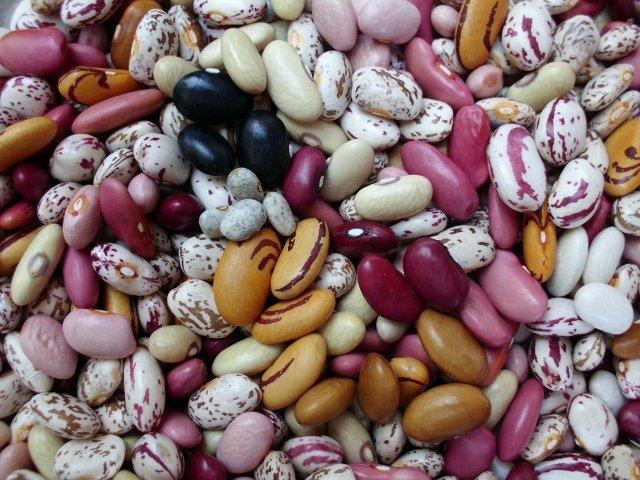
Seed saving enhances agricultural resilience through genetic diversity, particularly with landraces.
- Landraces offer genetic diversity for reliability
- Genetic variability aids adaptation to climate extremes
- Seed saving supports self-sufficiency and resilience
- Focus on crop variation, not uniformity
- Practical guidance for collection and maintenance
Why It Matters
Understanding genetic diversity helps farmers adapt to changing climates and contribute to food security.
What to Do Next
Start preserving seeds from your most resilient plants today.
Permaculture Context
For practitioners designing systems around long-term food security, this resource arrives at a moment when the case for seed sovereignty has never been more urgent or more practical. The landrace concept cuts directly against the grain of modern agricultural logic, which has spent decades treating genetic uniformity as a proxy for quality — a framework that works beautifully under controlled conditions and collapses quietly when those conditions shift. What regenerative growers understand, and what this material reinforces, is that a population of seeds carrying diverse genetic expressions is essentially a form of living insurance: some individuals will underperform in a drought year, others will struggle in a wet one, but the population as a whole keeps producing. That is exactly the kind of embedded redundancy that permaculture design tries to build into every system layer. The concrete implication is this — if you are growing food on a homestead, a community farm, or any land where input costs and weather unpredictability are real constraints, transitioning toward open-pollinated, locally adapted seed populations is not an ideological choice. It is a practical infrastructure decision with compounding returns over time.
Recommended for: Growers and gardeners interested in sustainable practices and crop resilience.
This guide is presented as a comprehensive resource on seed saving, with a particular emphasis on how genetic diversity supports stable yields under marginal growing conditions. A key concept in the material is the landrace, defined as a food crop with substantial genetic diversity that tends to produce reliable performance in challenging environments. That framing is highly relevant to regenerative living, local adaptation, and practical self-sufficiency because it points to an alternative model of crop maintenance: instead of maximizing uniformity, growers can maintain a genetically variable population that better absorbs environmental uncertainty. The resource is useful for people who want to understand the relationship between seed saving and resilience, especially where weather variability, limited inputs, or poor soils make rigid high-uniformity crop systems less reliable. The article appears to be oriented toward broad practical instruction, likely covering many facets of seed collection and maintenance, but the most clearly extractable value from the source text is its treatment of landraces and genetic diversity as a functional advantage rather than a drawback. That makes it especially relevant for growers, breeders, and seed stewards who want to develop or maintain crops that can keep producing across changing conditions. It is less clearly a project report than an instructional compendium, but it still offers actionable grounding for seed savers who care about preserving and using crop variation in a practical way.
Source: garden.org
Related Analysis
- DIY Root Cellar vs. Chest Freezer: Build Costs & Payback — A DIY in-ground or basement root cellar in the US costs roughly $500–$5,000 to build depending on method, while a chest …
- Worm Composting: 6 Ways to Build a Bin, Real 2026 Costs, and Where the Research Actually Disagrees — Vermicomposting turns kitchen scraps into worm castings using a container, bedding, and red wigglers (Eisenia fetida) — …
Related on PermaNews
- Sowing Sovereignty: Growing (Event)
- Traditional Seed Saving: Crop Diversity & Resilience Secrets (How-To Guide)
- Milkwood: Build a Seed Bank – Save Tomato & Cucumber Seeds (Video)
- Seed Saving Mastery: Permaculture's Genetic Diversity Key (How-To Guide)
- Seed Saving: A Revolutionary Act for Biodiversity & Food (Article)
- Master Seed Saving and Crop Trials at Fruits of Our Labor, ME (Event)
Explore more in Food Systems & Growing — the full hub for this knowledge area.