Patrick Holden: Meat Paradox, Sustainable Diets, & Harmony Farming
By Regenerative Media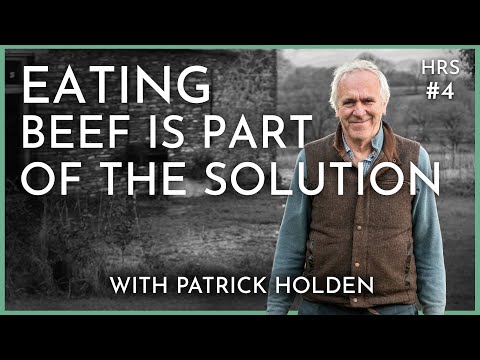
TL;DR: Sustainable food systems require holistic approaches that reconcile human dietary needs with ecological well-being, emphasizing regenerative farming and mindful meat consumption.
- Industrial meat production harms environment.
- Sustainable diets prioritize regeneration and equity.
- Reduce overall meat; choose pasture-raised options.
- Mimic natural ecosystems in farming practices.
- Soil health links to dietary sustainability.
Why it matters: The way we produce and consume food profoundly impacts environmental health, human nutrition, and social justice. Understanding these connections is crucial for building resilient food systems.
Do this next: Explore local farms practicing regenerative agriculture and consider sourcing pasture-raised animal products.
Recommended for: Individuals interested in the intersection of food systems, environmental ethics, and sustainable living practices.
In a discussion centered on the complexities of food systems, Patrick Holden, a prominent figure in sustainable agriculture, delves into the concept of the "meat paradox" and the pursuit of truly sustainable diets, emphasizing the importance of farming practices that align with natural ecological processes. The conversation highlights the inherent tension between human dietary preferences, particularly for meat, and the environmental impact of conventional livestock farming.
Holden explains that the meat paradox arises from the human inclination to consume meat, which has been a part of human diets for millennia, juxtaposed with the growing awareness of the ecological footprint associated with industrial meat production. He argues that the problem isn't necessarily meat consumption itself, but rather the methods by which most meat is currently produced. Large-scale, confined animal feeding operations (CAFOs) contribute significantly to greenhouse gas emissions, deforestation, water pollution, and a decline in biodiversity. These systems often rely on monoculture crops for feed, further exacerbating environmental degradation.
The discussion then shifts to defining what constitutes a "truly sustainable diet." Holden advocates for a diet that is not only nutritionally sound for humans but also environmentally regenerative and socially equitable. He emphasizes that such a diet would likely involve a reduction in overall meat consumption for many individuals, particularly in developed nations, and a shift towards higher quality, pasture-raised, and ethically produced animal products. He suggests that a sustainable diet is intrinsically linked to the health of the soil and the biodiversity of the landscape.
A core tenet of Holden's philosophy is "farming in harmony with nature." This concept involves adopting agricultural practices that mimic natural ecosystems, rather than attempting to dominate or control them. Key elements of this approach include regenerative agriculture, which focuses on building soil health through practices like cover cropping, no-till farming, and diverse crop rotations. These methods enhance carbon sequestration, improve water retention, and foster a thriving microbial community in the soil.
For livestock, farming in harmony with nature means integrating animals into diverse farm systems, allowing them to graze on pastures and contribute to soil fertility through their natural behaviors. This contrasts sharply with industrial systems where animals are often disconnected from the land. Holden points out that well-managed grazing can actually improve grassland ecosystems, promoting biodiversity and enhancing the land's ability to absorb carbon.
The conversation also touches upon the economic and social dimensions of transitioning to more sustainable food systems. Holden acknowledges the challenges faced by farmers in adopting regenerative practices, including initial investment costs and the need for new knowledge and skills. He stresses the importance of consumer education and demand for sustainably produced food as a driving force for change. Policy support, including subsidies for ecological farming and regulations that discourage environmentally damaging practices, is also deemed crucial.
Ultimately, Holden's perspective underscores a holistic view of food, where the health of humans, animals, and the planet are interconnected. He proposes that by re-evaluating our relationship with food, particularly meat, and embracing farming methods that work with nature rather than against it, humanity can move towards a more resilient, equitable, and truly sustainable future. This involves a fundamental shift in mindset, moving away from a purely extractive model of agriculture towards one that prioritizes regeneration and ecological balance.