India: Large-Scale Composting Units Boost Regenerative Ag
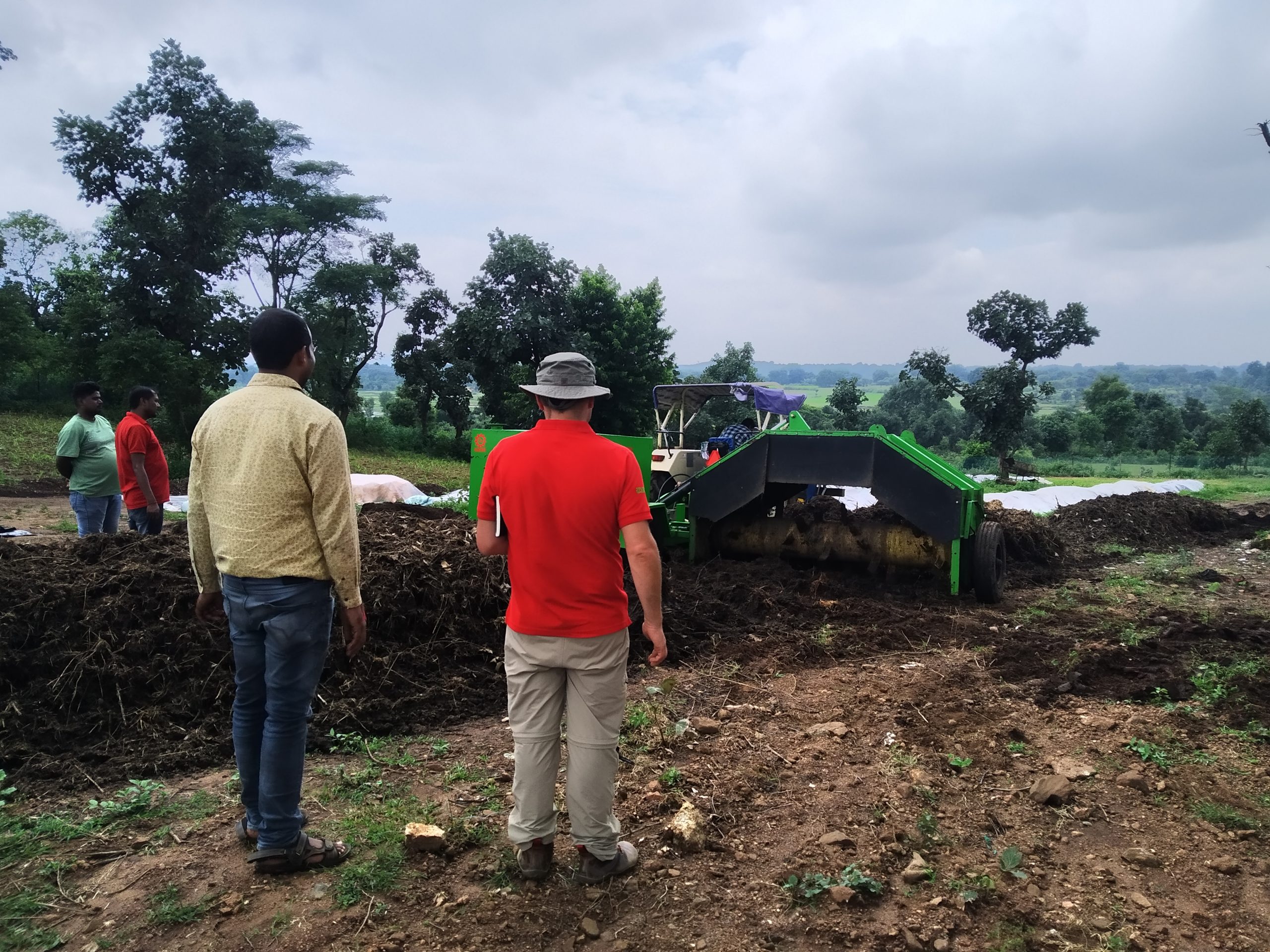
TL;DR: Large-scale composting units offer a scalable and cost-effective approach to restoring soil health and improving crop yields in regenerative agriculture, especially in regions with limited access to organic fertilizers.
- LSCUs mitigate chemical input damage by enhancing soil organic matter.
- Seasonal material availability impacts compost formulation and management.
- Visual monitoring and adequate machinery are crucial for quality compost.
- Successful implementation requires strong business and distribution plans.
- Collaborative efforts accelerate adoption and expansion of composting initiatives.
- LSCUs provide affordable, quality compost for enhanced food production.
Why it matters: Restoring soil health through composting is vital for sustainable food systems, offering a practical pathway to regenerative agriculture and increased food security.
Do this next: Explore local partnerships to establish or expand a large-scale composting unit in your community or region.
Recommended for: Farmers, agricultural policymakers, and community leaders seeking scalable and sustainable solutions for soil regeneration and food production.
This article explores large-scale composting units (LSCUs) as a scalable solution for regenerative agriculture in India, particularly in Madhya Pradesh and Jharkhand under the Green Transformation Pathways (GTP) project. LSCUs address limited access to organic compost and information on regenerative practices, countering decades of chemical input damage by restoring soil health through decomposed organic matter that improves aeration, moisture retention, nutrient enrichment, and microbial activity for better plant uptake. Key implementation details include adapting formulations to seasonal material availability and weather (dry/rainy seasons), visual monitoring of process and quality, adequate machinery sizing/maintenance for consistent production, and developing business/marketing plans for distribution. The piece outlines collaborative efforts with PRADAN, FES, and MetaMeta to enhance existing units and establish new ones, boosting soil fertility and food production affordably. It highlights Indian farmers' adoption of integrated practices like compost application, providing a case for upscaling via centralized units that supply quality compost locally. Practical aspects cover staff training, production consistency, and market integration, offering a model for regenerative transitions in resource-limited areas with documented project interventions for measurable impact on soil and yields.