Webinar on Leveraging Adaptation Tools for Enhanced Climate Resilience
By RRCAP Media Podcast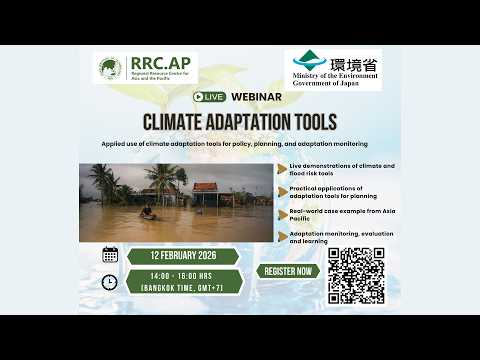
PermaNews Brief
Key Takeaways
Digital tools enhance climate resilience through effective decision-making at all levels.
- Digital tools support climate risk mapping.
- Real-time monitoring aids disaster preparedness.
- Investment planning improves with climate data.
- User-friendly information empowers local officials.
- Integration of systems boosts adaptation efforts.
Why It Matters
This webinar illustrates practical applications of digital tools in improving climate resilience, crucial for informed decision-making.
What to Do Next
Watch the webinar to explore effective climate resilience strategies.
Permaculture Context
For permaculture designers and regenerative land stewards, the growing sophistication of climate adaptation tools represents something genuinely useful — not because we need government dashboards to tell us when to plant, but because these systems increasingly generate granular, localized data that can inform site selection, water harvesting design, and long-term land investment decisions. When municipalities use climate risk mapping to identify flood hotspots or drought corridors, that same underlying data becomes accessible to small-scale practitioners making decisions about swale placement, food forest establishment, or where to site a homestead. Early warning infrastructure that improves lead time for extreme weather events directly benefits anyone managing livestock, annual crops, or vulnerable seedlings. Perhaps most practically, the integration of nature-based solutions into mainstream investment planning frameworks signals that regenerative approaches — living rootzones, constructed wetlands, polyculture buffers — are entering the language of infrastructure policy. This matters because funding, permitting, and institutional support tend to follow that language. Regenerative practitioners who learn to speak fluently within these frameworks will find more doors open for projects that would otherwise be considered unconventional.
Recommended for: Climate resilience practitioners and local decision-makers.
This technical webinar explains how digital tools can improve climate-resilient decision-making at national, local, and infrastructure levels. The discussion is highly implementation-oriented and focuses on practical applications rather than general theory. One major use case is climate risk mapping and future scenario analysis, which helps identify hotspots of climate hazard and prioritize adaptation investments across urban, coastal, and other high-risk areas. Another key theme is early warning and preparedness: the webinar describes how real-time monitoring can increase lead time for floods, cyclones, and other hazards, and how impact-based early warning systems improve coordination and response among agencies. A third major application is climate-smart investment planning, where digital tools quantify climate risk to infrastructure and economic assets, support cost-benefit analysis, and improve investment prioritization. The webinar also notes that these tools can strengthen adaptation monitoring and evaluation by helping planners compare future scenarios and determine where to invest in drainage upgrades or nature-based solutions. It further emphasizes the role of user-friendly climate information for local officials, so that adaptation planning is based on evidence rather than assumptions. The practical value of this item is that it connects data systems, decision workflows, early warning, and capital planning into a single adaptation toolkit. For practitioners in government, planning, or development finance, it offers a concrete model for integrating digital climate intelligence into real-world resilience programs.
Source: youtube.com
Related Analysis
- California Homesteaders Retrofit Greywater Before Drought Season — Several sources suggest CA homesteaders are retrofitting greywater systems ahead of drought season, prioritizing water r…
- Earthworks Retrofits Outperform Tech in Farm Drought-Proofing — Several regenerative farm case studies show earthworks and cascading storage systems achieving 2–3x water retention gain…
Explore more in Water, Climate & Adaptation — the full hub for this knowledge area.