Transform Your Balcony: Micro Forest Garden Guide
PermaNews Brief
Key Takeaways
Cultivate a resilient and productive micro forest garden on your balcony using perennial plant selection and strategic vertical layering.
- Choose diverse perennials for continuous harvests.
- Mimic forest layers for optimal space use.
- Employ propagation techniques for easy scaling.
- Enhance biodiversity and microclimate.
- Maximize yields in minimal urban spaces.
Why It Matters
This method offers a sustainable way to produce food in limited urban spaces, increasing food security and local biodiversity.
What to Do Next
Select six diverse perennial vegetables suitable for container growth, prioritizing different botanical families.
Recommended for: Urban dwellers and small-space gardeners seeking to create a highly productive and resilient food system on their balcony.
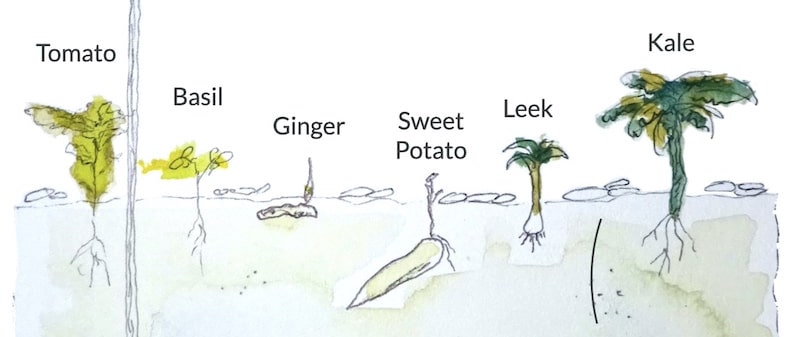
This article details the creation of a micro balcony forest garden starting with six diverse vegetables selected from different botanical families, prioritizing perennials, easy growers, and plants that multiply via tubers, bulbs, cuttings, or seeds to mimic natural forest dynamics in a tiny space. The method emphasizes diversity for resilience, ensuring varied shapes and growth habits to optimize light, nutrient cycling, and pest resistance. Specific protocols include choosing plants like those with perennial traits for low-maintenance productivity and propagation ease, enabling rapid scaling without constant replanting. Benefits highlighted are enhanced biodiversity, improved microclimate regulation, and higher yields per square meter compared to monocultures. Practical implementation involves container arrangements that stack layers—tall stems, bushy mid-layers, and ground covers—to replicate forest stratification, maximizing vertical and horizontal efficiency. The guide goes beyond basics by addressing multiplication techniques, such as dividing tubers or taking cuttings, providing concrete steps for self-sufficiency. For urban practitioners, it offers troubleshooting for common issues like wind exposure or limited sun through strategic positioning. Results from the author's setup demonstrate substantial harvests from minimal space, with insights on integrating pollinator-attracting flowers and companion planting to boost health. This approach supports regenerative living by building soil biology through organic matter recycling and fostering closed-loop systems, ideal for apartment balconies aiming for year-round production and resilience against supply chain disruptions. The depth ensures users gain specific, replicable knowledge for their own high-signal urban permaculture projects.
Source: elegantexperiments.net
Related Analysis
- Food Forest Courses Shift From Theory to Build-Ready Skills — Several food forest courses now open with site assessment and guild-building rather than design theory, suggesting a dev…
- Practitioners Build Silvopasture Playbook Before Researchers Catch Up — A small but consistent set of signals from the Northeast U.S. shows farmers actively piloting silvopasture while formal …
Related on PermaNews
- Ernst Götsch's Cacao Syntropy: Master Agroforestry Now (How-To Guide)
- Finnish Off-Grid: Rocket Mass Heater Performance in Greenhouse (Case Study)
- Berlins schwimmende Gärten: Permakultur auf dem Wasser (Case Study)
- Rodale Report 2025: Thermal Mass Boost in Solar Greenhouses (Case Study)
- AUTarcaMatricultura La Palma: Permakultur & Energieautarkie (How-To Guide)
- Earthaven Ecovillage: 30 Years Off-Grid with Hydro & Solar (Video)
Explore more in Food Systems & Growing — the full hub for this knowledge area.