29 Perennial Crops: Endless Harvests, Soil Health, Carbon
By Epic Gardening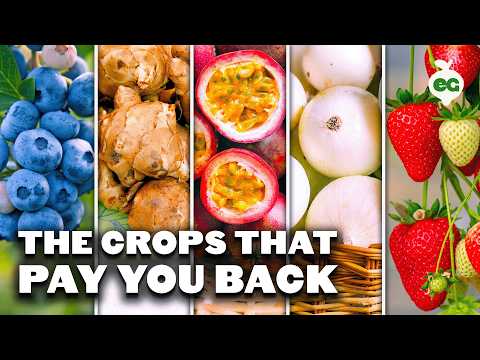
PermaNews Brief
Key Takeaways
Perennial crops offer ongoing harvests, reducing labor and enhancing garden ecosystems through diverse edible plants like roots, greens, fruits, and nuts.
- Perennials reduce labor and support soil health.
- Diverse perennial options suit varied climates and designs.
- Root vegetables like Jerusalem artichokes are resilient.
- Leafy greens such as sorrel provide early harvests.
- Berries and nuts offer long-term fruit production.
Why It Matters
Embracing perennial crops can transform your garden into a more sustainable and self-sufficient system, benefiting both the environment and your workload.
What to Do Next
Research specific perennial crops suitable for your local climate and soil conditions.
Recommended for: Gardeners interested in establishing a sustainable, low-maintenance food system for continuous harvests.
The cultivation of perennial crops offers a sustainable approach to gardening, providing continuous harvests over multiple years without the need for annual replanting. This method significantly reduces labor, conserves soil health, and often enhances biodiversity within the garden ecosystem. A diverse range of perennial plants can be incorporated into various climates and garden designs, from edible roots and shoots to fruits, nuts, and leafy greens.
One category of beneficial perennial crops includes root vegetables. Jerusalem artichokes, for instance, produce edible tubers that can be harvested after the plant flowers, offering a nutty flavor. They are known for their resilience and ability to thrive in various soil conditions. Another root crop, the groundnut, is a nitrogen-fixing legume that produces edible tubers and beans, contributing to soil fertility while yielding food. Sunchokes, similar to Jerusalem artichokes, are also a good option for their edible tubers.
Leafy greens are another important component of a perennial food system. Sorrel, with its tangy, lemony flavor, provides early spring greens and can be used in salads or cooked dishes. Rhubarb, though often treated as a fruit, is botanically a vegetable whose stalks are popular for pies and jams. It is a robust plant that returns year after year. Asparagus is a classic perennial vegetable, offering tender spears in the spring. Once established, an asparagus patch can produce for decades. Sea kale is another hardy perennial green that tolerates coastal conditions and offers edible leaves, flower shoots, and blanched stems. Good King Henry, a traditional European vegetable, provides edible leaves and shoots similar to spinach.
For those interested in perennial fruits and nuts, a wide selection is available. Various berry bushes, such as blueberries, raspberries, and blackberries, are excellent choices, providing sweet harvests and often thriving in different soil types. Elderberries offer both edible berries and flowers, which can be used for syrups, wines, and teas. Hazelnuts are a valuable perennial nut crop, providing nutritious nuts and contributing to a diverse food forest. Pawpaws, a native North American fruit, produce unique, tropical-flavored fruits and are well-suited to temperate climates. Persimmons, another fruit tree, offer sweet, astringent fruits that ripen in the fall.
Beyond these common categories, several other unique perennial crops can enhance a garden's productivity and diversity. Daylilies, while primarily ornamental, have edible flower buds and young shoots. Hostas, another popular ornamental, also have edible young shoots that can be cooked like asparagus. Ramps, or wild leeks, are a prized spring ephemeral with a strong garlicky-onion flavor. Cardoon, a relative of the artichoke, is grown for its edible leaf stalks, which are often blanched. Skirret, a historical root vegetable, offers sweet, white roots.
Herbs and spices also feature prominently in perennial gardening. Mint, chives, oregano, thyme, and sage are all perennial herbs that provide flavor for cooking and can be easily grown. These herbs often spread readily and require minimal care once established.
Integrating these perennial crops into a garden design can lead to a more resilient and productive food system. By selecting plants appropriate for the local climate and soil conditions, gardeners can establish a low-maintenance, high-yield system that provides food year after year, contributing to food security and environmental sustainability. The initial investment in planting perennials is often offset by the long-term benefits of reduced labor, water conservation, and continuous harvests.
Source: youtube.com
Related Analysis
- Food Forest Courses Shift From Theory to Build-Ready Skills — Several food forest courses now open with site assessment and guild-building rather than design theory, suggesting a dev…
- Practitioners Build Silvopasture Playbook Before Researchers Catch Up — A small but consistent set of signals from the Northeast U.S. shows farmers actively piloting silvopasture while formal …
Related on PermaNews
- Essential Role of Topsoil in Earth's Life Systems (Video)
- Unveiling Gardening Wisdom: Ancient Potatoes & Deep Mulch Techniques (Video)
- Hugelkultur Showdown Featuring Paul Wheaton and Beau Davidson (Video)
- Mastering Sweet Potato Slips in Cold Climates for Sustainable Gardening (Video)
- Why Growing Your Own Food is Crucial Amid Soaring Prices (Video)
- What If Nature Could Teach You to Become Your Own Best Gardening Guide? (Video)
Explore more in Food Systems & Growing — the full hub for this knowledge area.