5 Frameworks for a Regenerative Future: Permaculture, Regrarians & More
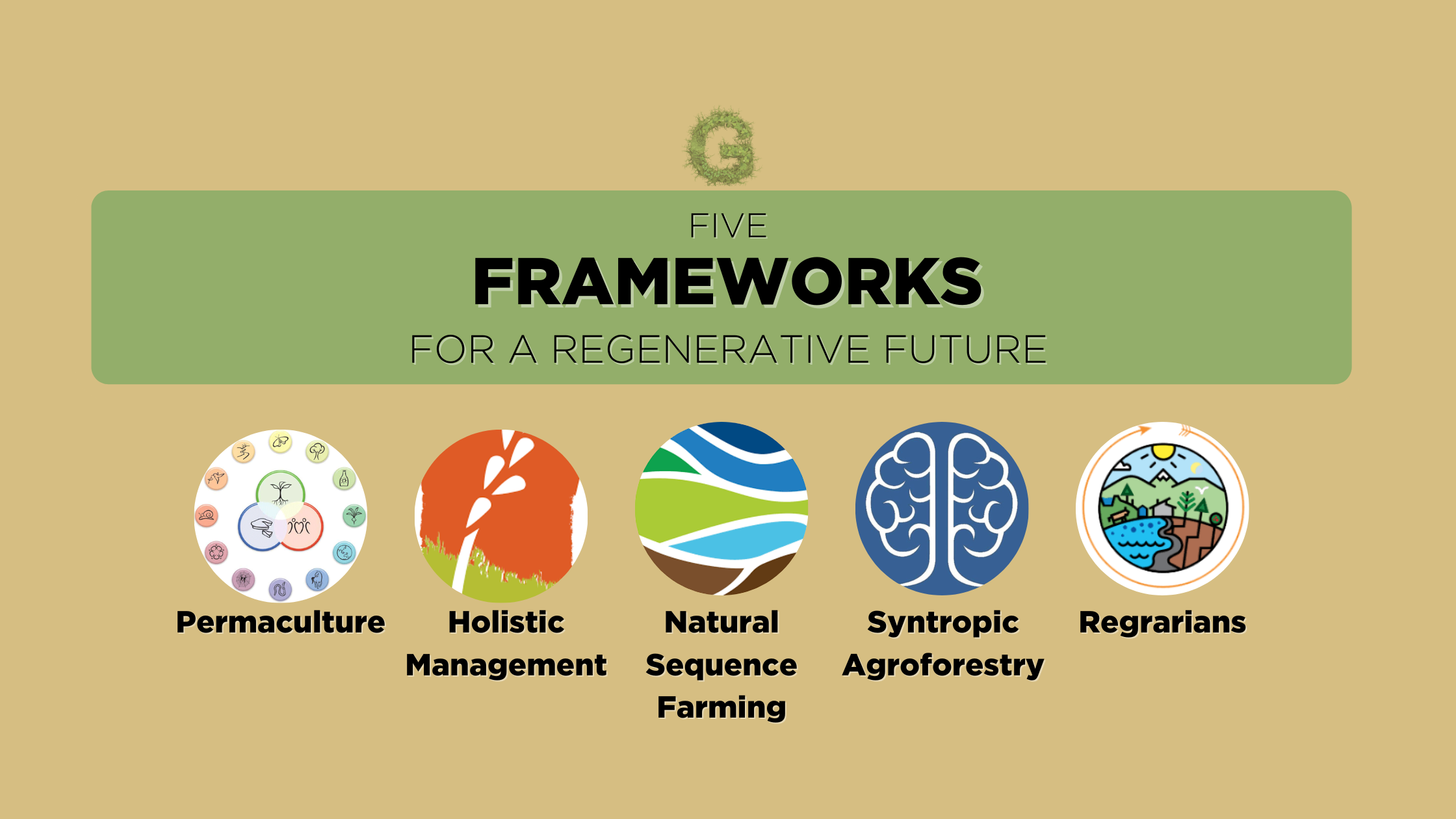
TL;DR: Permaculture, Regrarians, and Syntropic Agroforestry offer frameworks for designing and implementing regenerative land management practices.
- Permaculture provides ethical foundation for regenerative design.
- Regrarians Platform structures broad-acre farm planning focusing on water.
- Syntropic Agroforestry mimics natural succession for ecological restoration.
- Keyline design optimizes water distribution across varied topographies.
- High-density planting and pruning accelerate soil regeneration.
- These frameworks offer concrete tools for measurable ecological benefits.
Why it matters: These frameworks provide practical, scalable solutions for restoring degraded lands, building soil health, and increasing biodiversity and yields in agricultural systems.
Do this next: Research Keyline design principles for efficient water management on your property.
Recommended for: Experienced land managers, farmers, and permaculture designers seeking to integrate advanced regenerative frameworks.
This article outlines five frameworks for regenerative landscapes, with permaculture as the ethical foundation complemented by Regrarians and Syntropic Agroforestry for practical design. Permaculture provides ethics (earth care, people care, fair share), principles, and concepts for holistic harmony. Regrarians Platform, by Darren Doherty from P.A. Yeomans' Keyline Scale of Permanence, structures broad-acre planning across 12 factors: climate, water, access, economy, etc., prioritizing water via keyline plows—parallel contours offsetting ridges for even distribution, uniform pasture growth, infiltration. Steps: survey topography, mark keypoints (valley floor inflections), design primary/secondary keylines for dams, irrigation. Syntropic Agroforestry mimics forest succession for dynamic, economic ecosystems: principles include 100% ground cover (living/dead matter) via dense prunings; maximize photosynthesis through high-density planting; stacking plants by height/successional stage (pioneer legumes to climax fruits); succession planning 20-50 year timelines; continuous management—pruning biomass as mulch/fertilizer. Implementation: plant 10,000 trees/ha initially, chop-and-drop every 3-6 months to accelerate decomposition, boost soil carbon. Case examples restore degraded lands, increasing biodiversity, yields (e.g., 20t/ha biomass/year). Compared to permaculture's breadth, Regrarians excels in scale/logic for farms, Syntropics in tropical stacking for food/ timber. Practitioners gain concrete tools: Keyline math (spacing = 1/2000 slope), syntropic densities (4x4m grids), management calendars, enabling measurable regeneration—soil organic matter up 5-10% in years, water retention doubled.