Andrew Faust's Online PDC Courses 2026: Bioregional Living Cert.
By Andrew Faust Permaculture Consultant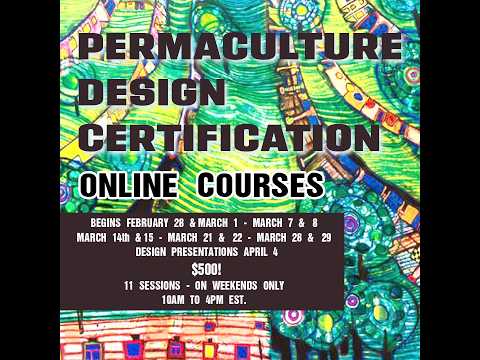
TL;DR: Andrew Faust and the Center for Bioregional Living are offering online Permaculture Design Certificate courses in 2026, making comprehensive permaculture education accessible globally.
- Online format expands access to permaculture education.
- Curriculum covers ethics, design principles, and practical applications.
- Taught by experienced permaculture designer Andrew Faust.
- Focuses on sustainable living and resilient human settlements.
- Certification offered upon successful course completion.
Why it matters: These online courses provide a structured pathway for individuals worldwide to acquire permaculture knowledge and formal certification, fostering ecological literacy and sustainable practices on a global scale.
Do this next: Explore the Center for Bioregional Living website for more details on the 2026 online PDC courses and enrollment.
Recommended for: Individuals globally interested in obtaining a Permaculture Design Certificate through a flexible, comprehensive online program taught by an experienced instructor.
The Center for Bioregional Living, under the guidance of Andrew Faust, is offering its Permaculture Design Certificate (PDC) courses online in 2026. These courses are structured to provide comprehensive permaculture education, leading to certification upon successful completion. The program is designed to be accessible to a global audience, allowing individuals from various locations and backgrounds to engage with permaculture principles and practices.
The curriculum for these online PDC courses is extensive, covering a wide array of topics central to permaculture. Participants can expect to delve into the foundational ethics of permaculture: earth care, people care, and fair share. The courses will explore design principles, including observing and interacting, catching and storing energy, obtaining a yield, applying self-regulation and accepting feedback, using and valuing renewable resources and services, producing no waste, designing from patterns to details, integrating rather than segregating, using small and slow solutions, using and valuing diversity, using edges and valuing the marginal, and creatively using and responding to change.
Beyond these core principles, the program will likely address practical applications such as water harvesting and management, soil regeneration and health, ecological building techniques, sustainable food production systems (including forest gardening, annual cropping, and animal integration), waste management, and energy efficiency. The courses are also expected to cover social permaculture, focusing on community building, economic models, and appropriate technologies that support resilient human settlements.
Andrew Faust, as the lead instructor, brings a wealth of experience and knowledge to these courses. His background in permaculture design and education suggests a teaching approach that combines theoretical understanding with practical, real-world applications. The Center for Bioregional Living's focus on bioregionalism implies an emphasis on understanding and working within the specific ecological and social contexts of a given region, promoting designs that are tailored to local conditions rather than a one-size-fits-all approach. This perspective encourages students to consider the unique characteristics of their own environments when applying permaculture principles.
The online format of the PDC courses offers flexibility, enabling students to learn at their own pace within a structured timeframe. This typically involves a combination of pre-recorded lectures, live online sessions, readings, assignments, and design projects. The design project is a critical component of the PDC, where students apply the learned principles to a real-world site, culminating in a comprehensive permaculture design. This practical application is essential for solidifying understanding and demonstrating proficiency in permaculture design.
The certification awarded upon completion signifies that participants have met the established standards for permaculture design education, equipping them with the knowledge and skills to design and implement sustainable systems. These courses are suitable for individuals interested in creating more sustainable lifestyles, developing resilient communities, engaging in ecological restoration, or pursuing careers in permaculture design and education. The 2026 offering provides an opportunity for new cohorts of students to engage with permaculture education from a respected institution and instructor.