DIY Rainwater Tower: Auto-Overflow Collector for Gardens
PermaNews Brief
Key Takeaways
Build an elevated rainwater collection system for gravity-fed irrigation, featuring an automatic overflow to simplify water management.
- Elevate rainwater barrels for gravity-powered garden irrigation.
- Implement an automatic overflow system for seamless drainage.
- Prioritize structural safety for elevated, heavy water barrels.
- No pumps needed; gravity provides water pressure.
- Reduce manual watering effort and complexity.
Why It Matters
This system offers a sustainable and efficient way to water your garden, minimizing effort and reliance on external water sources by leveraging simple physics.
What to Do Next
Assess a suitable, level location in your garden for a 4-foot tall, weight-bearing platform.
Recommended for: Gardeners seeking a self-sufficient, gravity-powered irrigation system to reduce manual watering efforts and utility costs.
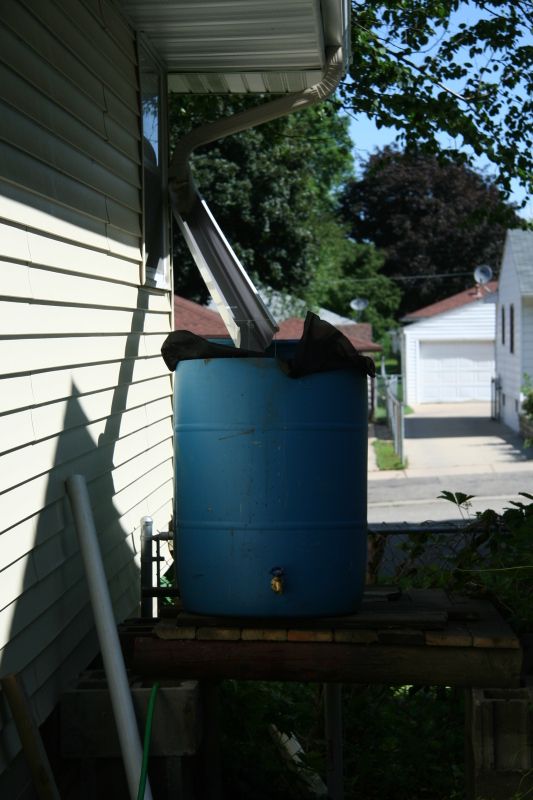
This instructional guide provides a practical approach to building an elevated rainwater collection system that functions as a gravity-powered water tower for garden irrigation. The project involves constructing a platform approximately 4 feet (over 1 meter) high to elevate water barrels, transforming them into a functional water tower that eliminates the need for manual watering can filling and carrying. The design incorporates an automatic overflow system that distinguishes it from conventional rainwater collection setups. When the barrels reach capacity, excess rainwater continues to cycle through the system but is automatically diverted through the existing gutter downspout, requiring no manual intervention or override mechanisms. A critical aspect of the construction involves safety considerations for the elevated platform. Since water weighs approximately 8 pounds per gallon, a full barrel system can exceed 800 pounds, necessitating careful engineering of the platform structure. Key safety factors include selecting appropriate decking materials with sufficient strength, maintaining proper proportions between the tower's height and its base dimensions (length and width), and ensuring the supporting legs can handle the concentrated load. The platform design must account for stability and structural integrity to safely support the weight of filled water barrels at elevation. This gravity-fed approach provides several practical advantages: it eliminates the need for mechanical pumps to pressurize the system, reduces operational complexity, and creates a reliable water distribution method powered entirely by gravitational force. The elevated storage also maximizes water pressure for garden irrigation applications, making it an effective solution for residential rainwater harvesting that combines functionality with straightforward engineering principles.
Source: instructables.com
Related Analysis
- Second-Life EV Batteries Replace Costlier Storage in Off-Grid Sites — Several sources suggest repurposed EV batteries can cut stationary storage costs and carbon footprints, with early signa…
- Passive Water Harvesting Moves From Niche to Replicable Model — Early case studies from Tucson and Germany's Beckower Ökodorf suggest passive water harvesting can scale within permacul…
Related on PermaNews
- Berlins schwimmende Gärten: Permakultur auf dem Wasser (Case Study)
- Finca Bellavista: Costa Rica's 200-Acre Water System Innovation (Case Study)
- Priya's 2024 India Report: 10-Hectare Water Harvesting Success (Case Study)
- Holmgren's 40 Yrs: Abundant Permaculture Design Webinar 3 (Video)
- Water Cycle Restoration Research: Indigenous Wisdom Meets Permaculture (Article)
- The Importance of Harvesting Rainwater for Conservation (Video)
Explore more in Water, Climate & Adaptation — the full hub for this knowledge area.