Brazil's First REVERTE Farmer: Igor Biancon's 4,000-Hectare Turnaround
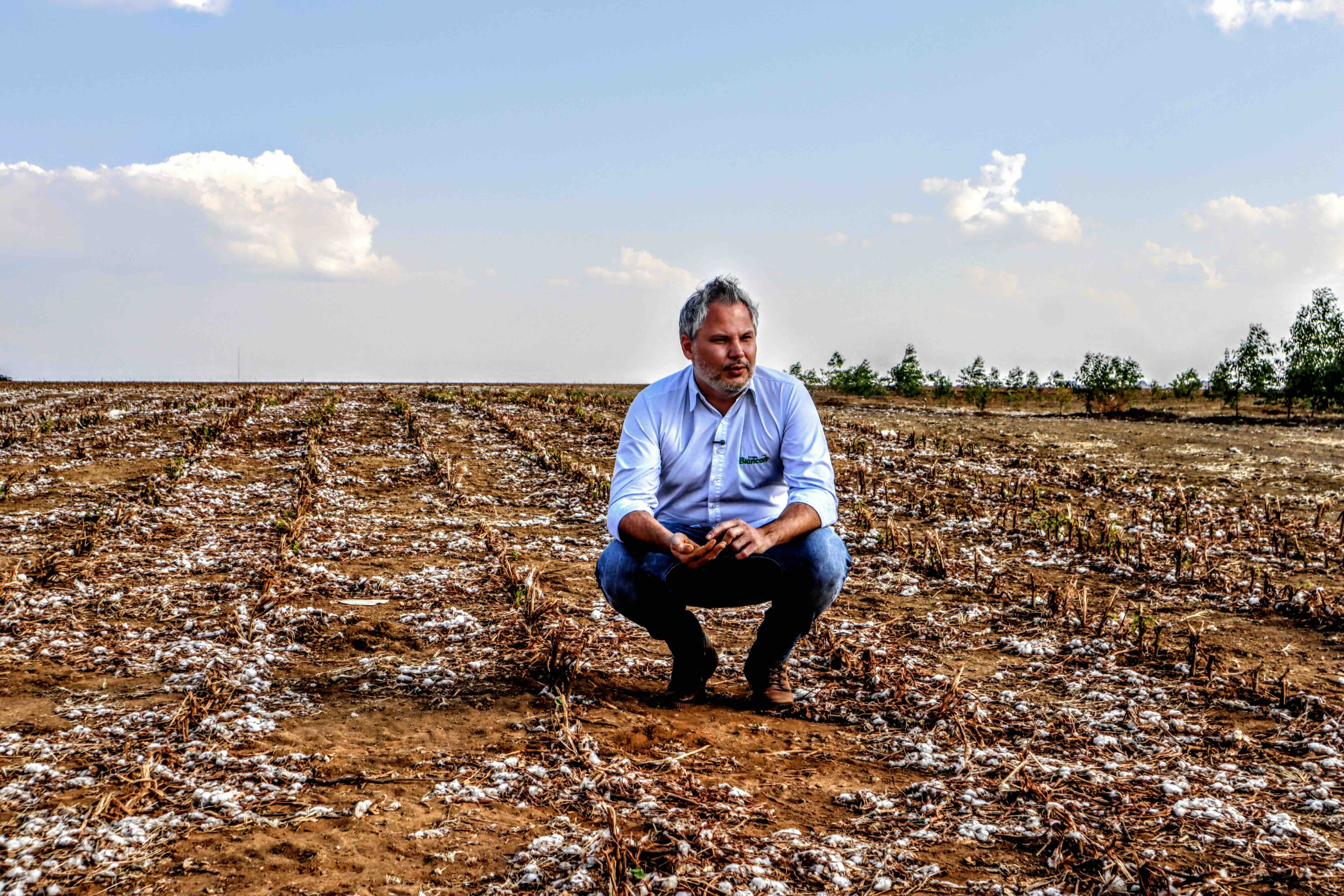
TL;DR: Large-scale agricultural project in Brazil successfully restores degraded pasture to highly productive cropland using regenerative practices, demonstrating significant environmental and economic benefits.
- Degraded land transformed into productive soy and cotton fields.
- Limestone application critical for pH balance and nutrient uptake.
- Soybeans and cattle integration enhance soil fertility.
- Cover cropping with Brachiaria improves soil structure and drought resilience.
- Regenerative practices ensure profitability and ecological health.
Why it matters: This case study demonstrates a viable and scalable model for restoring degraded agricultural land, offering a pathway to increased food production, improved soil health, and greater economic returns for farmers.
Do this next: Assess your soil’s pH and nutrient levels to determine if limestone application would benefit your land.
Recommended for: Farmers and agricultural managers interested in large-scale regenerative land restoration and integrated crop-livestock systems.
The REVERTE project, led by Syngenta, showcases transformative results on Igor Biancon's 4,000-hectare farm in Brazil, where unproductive degraded pastureland was restored to support soy and cotton crops within just four years. Key methods included soil preparation with large quantities of limestone to raise pH levels and enable nutrient uptake in acidic soils common to the region. Soybeans were planted to boost nitrogen content, while cattle integration provided natural fertilization and increased organic matter. Cover cropping with Brachiaria, a drought-resistant grass with deep roots, brought nutrients from deeper soil layers to the surface and served as cattle feed, enhancing sustainability and reducing costs. These regenerative principles—cover cropping, livestock integration, and native vegetation preservation—yielded visible results, such as green fields enduring 120 days without rain. The approach demonstrates economic viability by turning non-productive land into high-value cotton production, which typically requires nutrient-dense soils. Broader project context includes scaling to one million hectares by 2030, with technical support and financing to overcome transition costs. Practitioners learn specific sequencing: limestone application first, followed by soy for nitrogen fixation, cattle for organic inputs, and Brachiaria for soil structuring and drought resilience. This case provides actionable steps for degraded land recovery, emphasizing measurable productivity gains and ecosystem benefits like improved soil health and water retention in regenerative contexts.