Regenerative Coffee: Ethiopia's Business Case, Uganda's Future
PermaNews Brief
Key Takeaways
Regenerative coffee farming offers substantial financial and environmental benefits for smallholders, increasing yields and reducing emissions.
- Regenerative practices boost coffee yields dramatically.
- Composting and pruning enhance soil and tree health.
- Carbon footprint of coffee production significantly reduced.
- Smallholder incomes can increase substantially.
- Context-specific training is vital for adoption.
Why It Matters
Adopting regenerative practices in coffee farming directly improves farmer livelihoods and contributes to global environmental sustainability by enhancing biodiversity and mitigating climate change impacts.
What to Do Next
Explore local agricultural extension services for regenerative farming training and resources in your region.
Recommended for: Smallholder coffee farmers, agricultural policymakers, and sustainability-focused investors interested in scalable regenerative agriculture models.
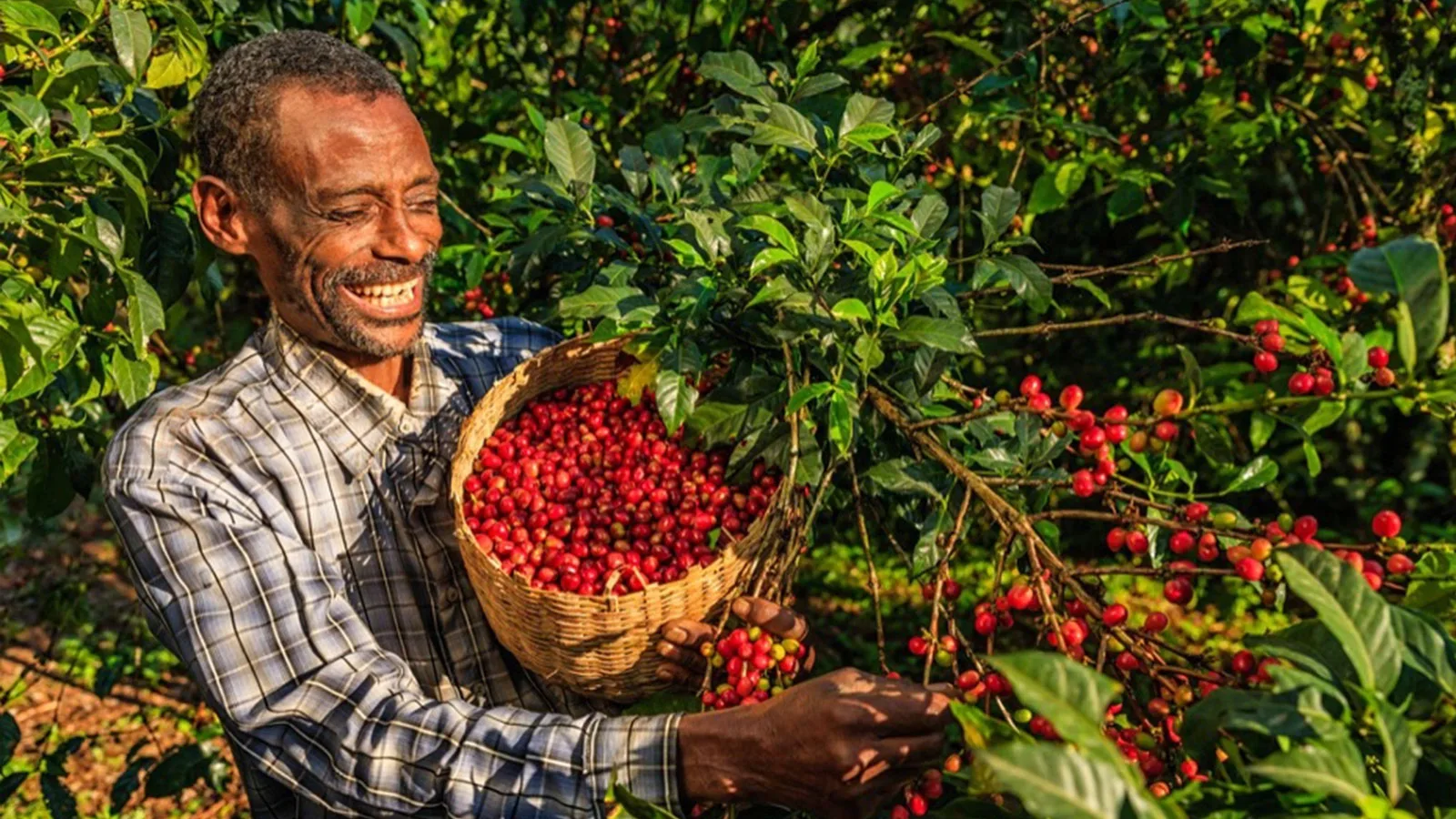
This resource outlines a compelling business case for regenerative coffee production, highlighting transformations achieved by smallholder farmers like Fedila and Mustafa in Ethiopia, with direct applicability to Uganda. By rejuvenating coffee trees through pruning, applying compost to enhance soil fertility, and adopting holistic regenerative practices, their annual harvests increased dramatically from 200 kilograms to 4,300 kilograms over eight years—a 23-fold improvement. The analysis provides global insights tailored to regions like Uganda, where regenerative methods could drive a 52% increase in Robusta exports while significantly reducing the coffee sector's carbon footprint. Key practices include closing nutrient cycles via on-farm composting, promoting biodiversity through intercropping and habitat provision, and building soil organic matter surplus for resilience against climate shocks. In Uganda's context, this aligns with efforts to boost smallholder incomes by 88% as seen in comparable East African cases, through technical assistance, model farms, and cooperatives. The investment case details a roadmap for financial, social, and environmental impacts: helping over 3 million smallholders adopt proven practices to increase exports by 30%, cut 3.5 million tons of CO₂e emissions annually, and restore nature. Practical steps involve field agronomists delivering context-specific training from handbooks on regenerative coffee agriculture, focusing on seven entry points: soil health, water conservation, biodiversity, farm labor optimization, and economic viability. Partnerships with entities like Alliance of Bioversity CIAT, IDH, and Nestlé provide tools, monitoring via digitization, and geotagged plot tracking for input management. Challenges addressed include climate-induced suitability loss and poverty, with regenerative approaches mitigating GHG emissions, improving nutrient density, and ensuring long-term farm viability. This practitioner-focused framework emphasizes grassroots, farmer-led implementation over standardized marketing, valuing ecological reciprocity and adaptive management.
Source: wbcsd.org
Related Analysis
- High-Salt Fertilizers Block Soil Microbes, Kempf Says — High-salt fertilizers disrupt soil microbes and microbial colonization, trapping farmers in chemical dependency. Biologi…
- Fertilizer Shortage Forces Reckoning on Nitrogen Sources — Fertilizer supply crisis drives farms toward nitrogen-fixing cover crops, compost, and legume rotations as alternatives.
Related on PermaNews
- Ernst Götsch's Cacao Syntropy: Master Agroforestry Now (How-To Guide)
- Designing Regenerative Resilience: Participatory Living Labs (How-To Guide)
- Lo—TEK: Indigenous Tech for Climate Solutions (Article)
- Nakivale's Regenerative Toilets: Refugee Resilience, Circular Sanitation (Case Study)
- Pippin Home Designs: Regenerative Home Design Explained (How-To Guide)
- Federal Policy Shift: Native Regenerative Ag for Soil & Carbon (Article)
Explore more in Food Systems & Growing — the full hub for this knowledge area.