American vs. Asian Beautyberry: Callicarpa Showdown
By Great Escape Farms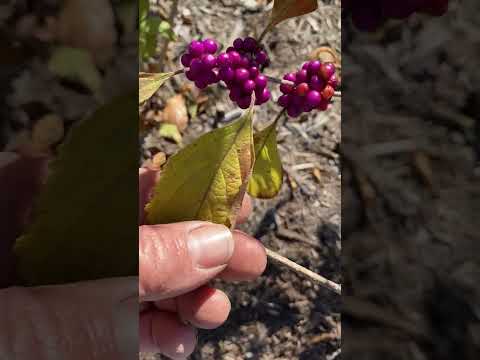
TL;DR: American and Asian beautyberry shrubs offer distinct advantages for landscaping and wildlife, differing in growth, hardiness, and ecological roles.
- American beautyberry supports local wildlife with abundant fall berries.
- Asian varieties provide denser growth and varied fall foliage colors.
- Both types are valued for vibrant, persistent purple berries.
- Consider growth habit, hardiness, and ecological impact for selection.
- American prefers sun to partial shade, tolerates some drought.
- Asian types often grow taller and more compactly.
Why it matters: Choosing the right beautyberry can enhance biodiversity, provide food for birds, and add seasonal interest to your landscape with minimal maintenance.
Do this next: Research the specific hardiness zone and growth habits of beautyberry varieties suited to your local climate.
Recommended for: Gardeners, landscapers, and permaculture enthusiasts interested in incorporating fruiting shrubs that support wildlife and offer aesthetic appeal.
The American beautyberry (Callicarpa americana) and its Asian counterparts, such as the Japanese beautyberry (Callicarpa japonica) and Bodinier's beautyberry (Callicarpa bodinieri), are often subjects of comparison due to their similar aesthetic appeal but distinct characteristics. While both types are valued for their vibrant, often metallic-hued berries that persist into the fall and winter, there are notable differences in their growth habits, hardiness, and ecological impact.
The American beautyberry is a native species to the southeastern United States. It typically grows as a deciduous shrub, reaching heights and widths of 3 to 8 feet. Its growth habit is often described as more open and arching compared to the denser forms of some Asian varieties. The leaves are generally larger and a lighter green, and in the fall, they may turn a yellowish-green before dropping. The most striking feature, of course, is the clusters of bright, iridescent magenta to purple berries that encircle the stems in the leaf axils. These berries are a significant food source for various bird species and other wildlife, particularly during the colder months when other food sources are scarce. The American beautyberry thrives in a range of conditions, from full sun to partial shade, and prefers well-drained soil, though it can tolerate some drought once established. Its hardiness typically extends from USDA zones 7 to 11.
In contrast, the Asian beautyberries, particularly Callicarpa japonica and Callicarpa bodinieri, tend to exhibit a more upright and compact growth habit. They often grow slightly taller, sometimes reaching up to 10 feet, and maintain a denser form. Their leaves are generally smaller and a darker green, and some cultivars may offer more pronounced fall foliage color, ranging from yellow to reddish-purple. The berry production in Asian varieties is also prolific, with clusters of similarly vibrant purple berries, though some cultivars may produce white or pink berries. While these berries are also consumed by birds, the ecological benefit for native wildlife might be less significant compared to the native American species, as native wildlife is often adapted to consume native plant fruits. Asian beautyberries are generally more cold-hardy than their American cousin, with many varieties thriving in USDA zones 5 to 8, making them suitable for a broader range of climates in temperate regions.
From a cultivation perspective, both types of beautyberries are relatively low-maintenance. They generally require minimal pruning, primarily for shaping or to remove dead or damaged wood. Pruning in late winter or early spring, before new growth emerges, is recommended as they flower and fruit on new wood. Both prefer full sun for optimal berry production, though they can tolerate partial shade, which might result in fewer berries. Soil requirements are similar, favoring well-drained conditions.
A key consideration when choosing between American and Asian beautyberries is their potential for invasiveness. While the American beautyberry is a native and beneficial plant in its natural range, some Asian beautyberry species have shown a tendency to naturalize and spread aggressively in certain regions outside their native habitat. This can lead to competition with native plant species and alter local ecosystems. Therefore, when selecting a beautyberry, it is important to consider the local ecosystem and choose species that are either native or known to be non-invasive in the specific geographic area.
In summary, while both American and Asian beautyberries offer stunning visual appeal with their unique berry displays, they differ in growth habit, leaf characteristics, cold hardiness, and ecological impact. The American beautyberry is a valuable native plant providing food for wildlife, while Asian varieties offer a broader range of cold hardiness and often a more compact form, but require careful consideration regarding their potential for invasiveness.