Yancey County Homestead: From Degradation to Permaculture Oasis
PermaNews Brief
Key Takeaways
Owner-built permaculture homestead in challenging mountain terrain demonstrates successful land restoration and self-sufficiency using passive solar, food forests, and rotational grazing.
- Degraded tobacco farm transformed into high-performance permaculture.
- Passive solar and rocket mass heaters optimize energy efficiency.
- Food forests, swales, and keyline plowing restore soil and hydrology.
- Rotational pasturing of poultry and pigs fertilizes orchards.
- Rainwater harvesting and drip irrigation conserve water.
- Soil organic matter increased from 2% to 6% in two years.
- Diverse yields reduced grocery dependence by 70%.
Why It Matters
This case study offers a practical blueprint for transforming degraded land into a productive, resilient homestead, demonstrating significant improvements in soil health and self-sufficiency within a short timeframe.
What to Do Next
Research passive solar design principles and consider their application for new builds or retrofits in your climate.
Recommended for: Experienced homesteaders and land stewards looking to implement advanced permaculture techniques in challenging environments and achieve high levels of self-sufficiency.
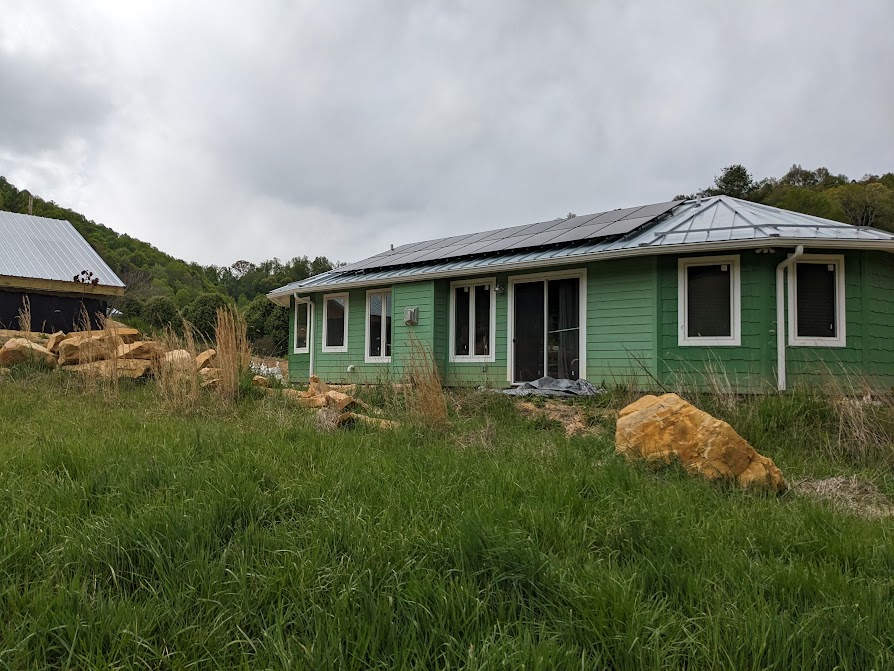
This case study profiles Sheri's owner-builder homestead in Yancey County's mountains, converting a former three-generation tobacco farm—left degraded by a failed homesteader—into a high-performance, biophilic permaculture system emphasizing land restoration and self-sufficiency. Practical implementations include passive solar home design with south-facing windows, rocket mass heaters, and natural insulation for energy efficiency; permaculture zoning with food forests of chestnuts, walnuts, pawpaws, elders, and medicinal herbs in guilds; swales and keyline plowing to hydrate slopes; pastured poultry and pigs in rotational systems fertilizing orchards; rainwater harvesting into cisterns feeding drip irrigation. Soil regeneration via cover cropping (legumes, rye), composting toilet outputs, and mycorrhizal inoculants. Biophilic elements: native pollinator meadows, wildlife corridors, outdoor classrooms. Construction details: timber framing from salvaged wood, green roof for insulation, rocket stoves for cooking. Economic model: on-site work trade, workshops, and produce sales. Phased rollout: Year 1 earthworks and structures; Year 2 plantings and animals; ongoing refinements via observation. Metrics: improved soil organic matter from 2% to 6%, diverse yields reducing grocery needs by 70%. Challenges like steep terrain tackled with hugelkultur berms and vetiver. This provides blueprints for mountain homesteading, blending permaculture with owner-building for regenerative living in challenging topographies.
Source: greenbuilt.org
Related Analysis
- Off-Grid Builders Test Rocket Mass Heaters at -35°F — Early 2024 data from high-altitude and sub-zero builds indicate rocket mass heaters sustaining livable temperatures with…
- Homeowners Retrofit Properties with Renewable Energy Solutions — Renewable energy retrofitting gains traction as regenerative agriculture principles inform home upgrades. Experts point …
Related on PermaNews
- AUTarcaMatricultura La Palma: Permakultur & Energieautarkie (How-To Guide)
- Borneo's Rainforest Revival: Dr. Smits' Sugar Palm Village Hub (Case Study)
- PRI Jordan: Arid Zone Permaculture Yields 5 Tons/Hectare (Case Study)
- Holmgren's 40 Yrs: Abundant Permaculture Design Webinar 3 (Video)
- Amazonas: Chakra Waldgärten – Dynamische Agroforst-Wunder (Case Study)
- CIT-ED Pioneers Tribal Food Forest for Climate & Food Security (Case Study)
Explore more in Shelter, Energy & Infrastructure — the full hub for this knowledge area.