Prairie Homestead Sauerkraut: Easy 2% Salt Fermentation
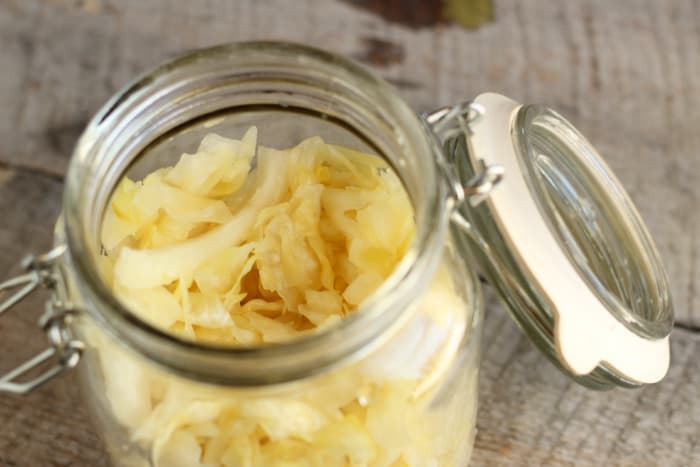
TL;DR: Transform cabbage into probiotic-rich sauerkraut simply by salting, fermenting, and storing it to extend your harvest without refrigeration.
- Shred cabbage, massage with 2% fine sea salt until brine forms.
- Pack tightly into jars or crocks, ensuring full submersion under brine.
- Use fermentation weights and airlock lids to prevent mold and release gases.
- Ferment 1-4 weeks at 64-67°F, then refrigerate to halt fermentation.
- Avoid iodized salt and chlorinated water for successful fermentation.
Why it matters: Sauerkraut making is a valuable skill for food preservation, greatly extending the shelf life of cabbage and providing beneficial probiotics, reducing food waste and increasing food security.
Do this next: Obtain a head of cabbage and fine sea salt, then begin your first batch of sauerkraut in a glass jar.
Recommended for: Anyone interested in sustainable food preservation, homesteading, or incorporating more probiotic-rich foods into their diet.
The Prairie Homestead's guide details a reliable sauerkraut recipe using cabbage and 2% fine sea salt (e.g., Redmond Real Salt, avoid iodized table salt which inhibits bacteria). Steps: Quarter, core, and shred cabbage thinly; salt and massage until brine forms (leave 2" headspace). Pack tightly into jars or crock, mashing to remove air pockets; submerge fully—if short, add 2% brine (non-chlorinated water). Use fermentation weights (or cabbage leaves/core), airlock lids (e.g., pickle pipes from Fermentools) to release gases and prevent mold—no daily burping needed. Ferment 1-4 weeks at stable temps (64-67°F ideal), tasting from day 10; refrigerate to halt. Practical tips: Chlorine-free water essential; full submersion critical to avoid gunk. Yields probiotic-rich kraut for long-term storage. Scalable for crocks, supporting homestead bulk preservation. Insights on salt texture (fine dissolves faster), vessel options (jars/crocks), and mold reduction via airlocks. Field-tested for off-grid resilience, preserving nutrients and extending shelf-life without power. Integrates regenerative practices by minimizing waste and enabling permaculture harvest storage.