PermaNews: Top Permaculture Business Models Explored
By Permaculture Institute of North America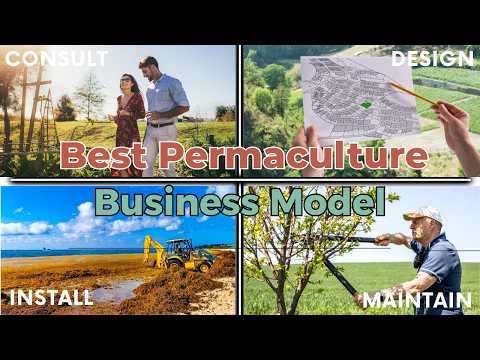
TL;DR: Permaculture offers profitable business models beyond land stewardship, integrating ecological design with sound financial strategies for sustainable enterprises.
- Design and consulting offers permaculture expertise to diverse clients.
- Regenerative agriculture focuses on diverse, resilient food production.
- Both models emphasize local economies and community engagement.
- Success requires strong portfolios and effective communication.
- Value-added products can boost profitability in food systems.
Why it matters: These models show how permaculture principles create environmental and financial sustainability, building resilient local economies.
Do this next: Explore permaculture design and consulting to see how your skills can serve diverse clients.
Recommended for: Those looking to apply permaculture principles to create sustainable and profitable businesses.
The Permaculture Institute of North America has compiled insights from various practitioners regarding effective business models within the permaculture sphere. These models demonstrate how permaculture principles can be applied not only to land management but also to creating sustainable and profitable enterprises. The overarching theme is the integration of ecological design with sound financial strategies, often emphasizing local economies, community engagement, and regenerative practices.
One prominent model discussed is the design and consulting service. This involves offering expertise in permaculture design to clients ranging from individual homeowners to large-scale agricultural operations and even urban planning projects. Practitioners in this area typically conduct site assessments, develop comprehensive design plans, and provide guidance on implementation. The revenue streams are primarily fee-for-service, with potential for recurring income through maintenance plans or ongoing advisory roles. Success in this model often hinges on building a strong portfolio, demonstrating tangible results, and effective client communication.
Another significant model is regenerative agriculture and food production. This encompasses a wide array of businesses, from small-scale market gardens and community-supported agriculture (CSA) programs to larger farms focusing on perennial crops, agroforestry, and livestock integration. The core principle here is to produce food in a way that enhances soil health, biodiversity, and ecosystem services, rather than depleting them. Businesses in this category often diversify their offerings, selling directly to consumers, restaurants, or through farmers' markets. Value-added products, such as preserves, herbal remedies, or processed goods, can also contribute significantly to profitability. The emphasis is on creating resilient food systems that are less reliant on external inputs and more connected to their local environment.
Education and workshops represent another vital permaculture business model. Many practitioners share their knowledge and skills through courses, workshops, and apprenticeships. These can range from introductory permaculture design courses (PDCs) to specialized training in areas like natural building, mushroom cultivation, or water harvesting. This model not only generates income but also plays a crucial role in disseminating permaculture knowledge and building a more informed community. Online courses and digital resources have expanded the reach of this model, allowing practitioners to connect with a global audience.
Product-based businesses that align with permaculture ethics are also highlighted. This includes enterprises that produce and sell tools, seeds, plants, books, or other materials essential for permaculture practice. Examples might include nurseries specializing in edible or medicinal plants, companies manufacturing composting systems, or publishers of permaculture literature. The key is to offer products that are durable, environmentally friendly, and support regenerative lifestyles.
Furthermore, the concept of community-based enterprises is explored. These models often involve collective ownership or management, focusing on meeting local needs and building social capital. Examples could include food co-ops, tool-sharing libraries, or community land trusts that facilitate access to land for permaculture projects. While financial returns might not always be the sole driver, these models aim for social and ecological dividends, fostering resilience and self-sufficiency within a community.
Finally, the article touches upon integrated models, where practitioners combine several of the above approaches. For instance, a permaculture designer might also run a small nursery, offer workshops, and sell value-added products from their own land. This diversification can create multiple income streams, reduce risk, and leverage existing resources more effectively. The success of these permaculture business models, regardless of their specific form, often relies on a deep understanding of ecological principles, strong business acumen, and a commitment to ethical and regenerative practices. They demonstrate that it is possible to create financially viable enterprises that simultaneously contribute to environmental restoration and social well-being.