Matsés & Acaté: Reclaiming Amazon Agroecology
PermaNews Brief
Key Takeaways
Matsés communities in the Amazon re-embrace traditional farming, blending it with permaculture to boost food security and regenerate ecosystems.
- Integrate traditional wisdom with modern permaculture techniques.
- Utilize terracing and short rotations for soil health.
- Incorporate nitrogen-fixing plants for natural fertilization.
- Develop fish farms to provide protein and fertilizer.
- Protect forests by reducing agricultural expansion needs.
Why It Matters
This initiative demonstrates how indigenous knowledge, combined with permaculture, can create resilient food systems, restore degraded lands, and protect vital ecosystems globally.
What to Do Next
Research local nitrogen-fixing plants suitable for your garden or farm.
Recommended for: Farmers, community organizers, and permaculture enthusiasts interested in resilient food systems rooted in indigenous wisdom and ecological regeneration.
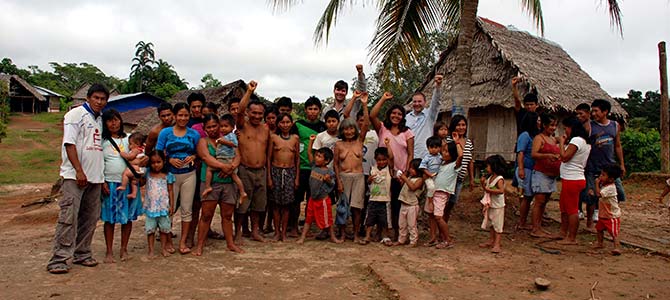
Acaté Amazon Conservation collaborates with traditional Matsés tribes in Peru to develop sustainable permaculture systems providing food staples, reducing dependency on external aid, and preserving cultural practices amid Amazonian challenges. Projects adapt fixed-settlement farming to regenerative methods, increasing biodiversity around communities. Concrete techniques include terracing sloped lands to prevent erosion, shifting cultivation with short rotations to maintain soil fertility, integrating native nitrogen-fixing plants (e.g., legumes like Inga species) for natural fertilization, and establishing fish farms yielding protein and nutrient-rich waste for compost. These systems reclaim lost indigenous knowledge of sustainable agriculture, countering deforestation driven by small-scale farming. Practical implementation details: site assessment for microclimates, seed saving of native crops, mulching with forest litter, and agroforestry guilds combining fruit trees, tubers, and ground covers. Outcomes project food security for Matsés, mitigation of nutritional gaps, and forest preservation of 2.3 million acres by curbing expansion needs. Scalability is emphasized for other eroded Amazon soils, with models including economic layering via eco-social entrepreneurship (e.g., selling surplus for income). Hands-on steps cover building fish ponds with clay liners, inoculating soils with mycorrhizal fungi, and monitoring via simple indicators like crop diversity and fish yields per pond. Combined with permaculture zoning (intensive near homes, wilder edges), this empowers communities, offering replicable blueprints: start with 1-hectare pilots, expand based on yield data (e.g., 20-50% productivity boost in year one). The approach integrates protein from fish (tilapia or native species), carbs from manioc terraces, and fruits/nuts from trees, ensuring year-round nutrition while regenerating soils and biodiversity.
Source: acateamazon.org
Related Analysis
- New Research Splits Silvopasture's Profit Case From Its Ecology — A small but consistent set of signals indicates silvopasture is shifting from ecological ideal to quantified economic ca…
- Seed-Saving Teachers Shift Focus to On-Farm Crop Trialing — Early signals suggest structured seed-saving workshops are coupling genetic diversity education with on-farm crop triali…
Related on PermaNews
- Ernst Götsch's Cacao Syntropy: Master Agroforestry Now (How-To Guide)
- Finnish Off-Grid: Rocket Mass Heater Performance in Greenhouse (Case Study)
- Berlins schwimmende Gärten: Permakultur auf dem Wasser (Case Study)
- Rodale Report 2025: Thermal Mass Boost in Solar Greenhouses (Case Study)
- AUTarcaMatricultura La Palma: Permakultur & Energieautarkie (How-To Guide)
- Earthaven Ecovillage: 30 Years Off-Grid with Hydro & Solar (Video)
Explore more in Food Systems & Growing — the full hub for this knowledge area.