Entropy Survival: Homestead Energy Independence Guide
PermaNews Brief
Key Takeaways
Achieve energy independence on your homestead by strategically combining renewable sources, prioritizing essential loads, and implementing a phased development plan.
- Assess your energy needs to size systems appropriately.
- Integrate multiple renewable sources for reliability and redundancy.
- Prioritize critical energy loads like water systems first.
- Start small and expand your energy system incrementally.
- Reduce consumption through efficient design and appliances.
Why It Matters
Energy self-sufficiency enhances homestead resilience, reduces utility costs, and provides security during outages, fostering true independence.
What to Do Next
Conduct a thorough energy audit of your homestead to identify essential loads and potential conservation measures.
Recommended for: Homesteaders and off-gridders seeking a strategic, phased approach to achieving energy self-sufficiency and resilience.
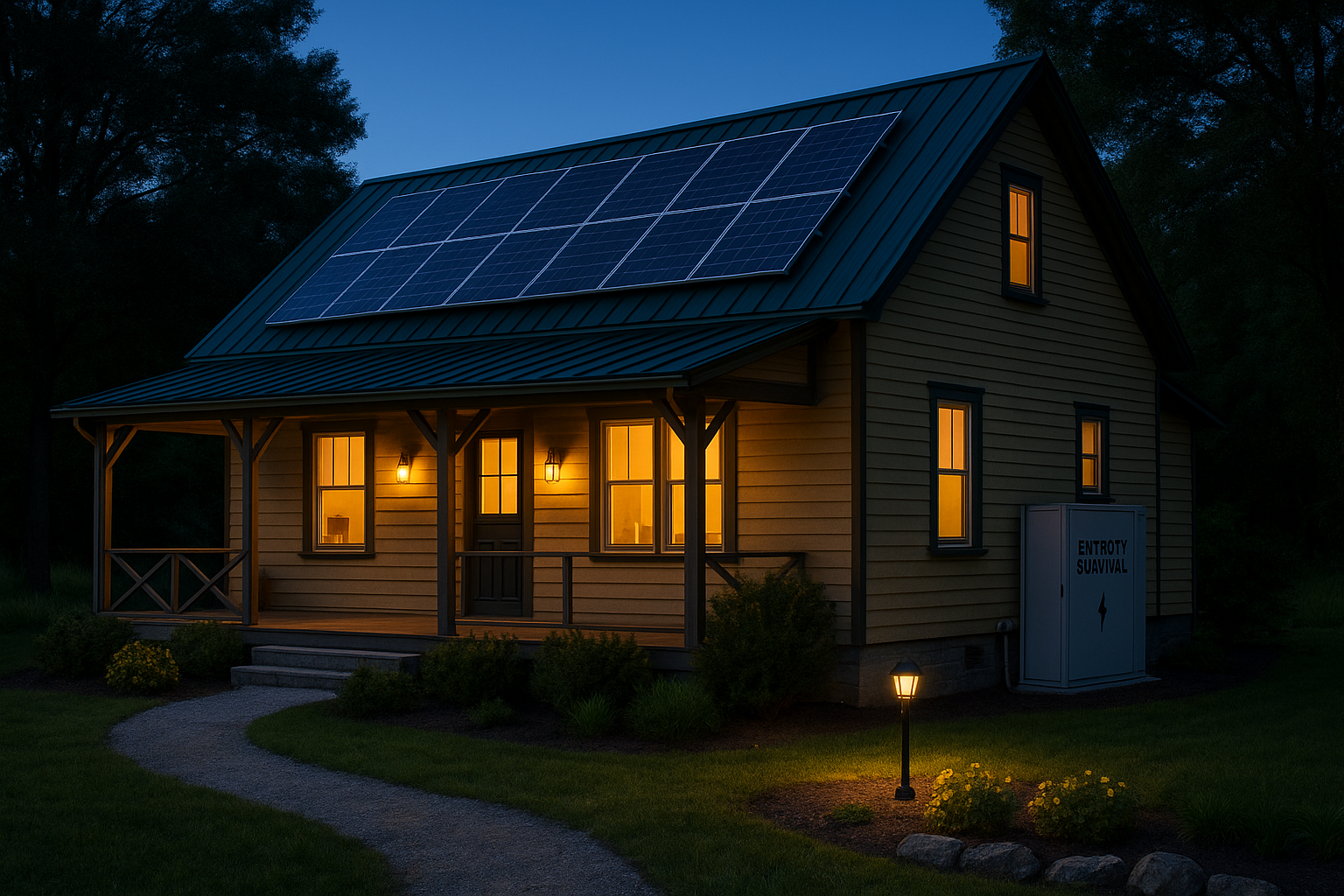
This guide provides a detailed blueprint for building resilient, independent homestead energy systems, emphasizing solar, wind, hydro, generators, and battery storage with a phased development approach. It starts with assessing power needs for a family of four, recommending a 3-5 kW solar array as the foundation to power critical systems and charge batteries, expandable as needed. Primary generation options include layered, redundant technologies suited to location, budget, and demands. Water systems are prioritized as major energy consumers, advocating elevated or pressure tanks with efficient pumping, or gravity-fed setups for ultimate resilience without electricity. Phased implementation allows starting small: first essential functionality like water, then scaling to comprehensive coverage. Solar serves as the core, generating surplus in optimal conditions for convenience or storage. The approach ensures strategic progress, reducing power requirements through smart design like efficient cycles. Practical details cover homestead-scale sizing, redundancy for reliability, and integration of multiple sources. Homesteaders learn to create self-sufficient setups by understanding limitations of each technology—solar for sunny exposures, supplemented by others—building robust systems that operate independently, even in disasters, with tips for ongoing expansion and maintenance.
Source: entropysurvival.com
Related Analysis
- Off-Grid Homesteads Merge Thermal and Electrical Renewable Systems — Several 2024–2025 case studies show off-grid permaculture sites pairing rocket mass heaters with solar or micro-hydro el…
- Off-Grid Solar Projects Shed Legacy Batteries for LFP — Several sources suggest LFP batteries are becoming the go-to storage solution as solar adoption grows across off-grid an…
Related on PermaNews
- Klärwerk nutzt faltbare Solaranlage zur Energieautarkie (Video)
- Harnessing Solar Growth: Key Takeaways from Solar & Storage Live (Podcast)
- Poland’s PPA Surge: Why 2025 Was the Turning Point (Podcast)
- German ShadeCut Solar Tiles: 95% Power, Seamless Look (Article)
- Stromdebatte Deutschland: Was Sustainability Manager wissen #100 (Podcast)
- Resilienz-Pilot Ostdeutschland: Wind, PV & Redox-Speicher-Erfolge (Case Study)
Explore more in Shelter, Energy & Infrastructure — the full hub for this knowledge area.