Weed Fabric: Farmer Dad's Efficiency vs. Old Ways Debate
By Justin Rhodes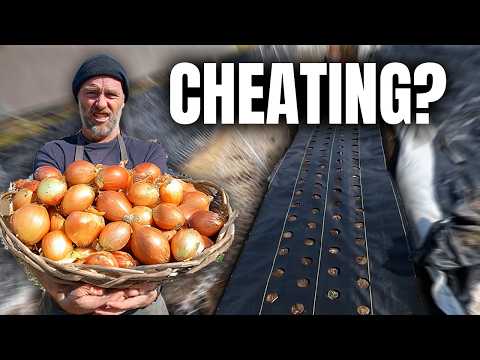
TL;DR: A farmer grapples with balancing traditional organic methods and modern efficiency tools like weed fabric to sustain his farm and family.
- Efficiency tools can support organic farming principles.
- Farm growth often necessitates reevaluating methods.
- Weed fabric offers practical weed suppression.
- Balancing ideals with practicality is key in farming.
- Modern solutions can reduce labor demands.
Why it matters: Farmers can optimize their operations and personal well-being by thoughtfully integrating modern techniques with established organic practices, ensuring long-term sustainability and productivity.
Do this next: Consider how expanding operations might require new approaches to old tasks.
Recommended for: Farmers and serious gardeners seeking to balance traditional organic ideals with efficient, sustainable practices for growing operations.
The article explores a farmer's internal debate regarding the adoption of modern farming techniques, specifically the use of weed fabric, versus adhering to more traditional, labor-intensive methods. The author, a father and farmer, reflects on his journey and the evolving perspective on efficiency and sustainability in agriculture, particularly as his family and farm grow.
Initially, the farmer embraced a purist approach to organic farming, emphasizing manual labor, natural processes, and a rejection of what he perceived as shortcuts. This philosophy was rooted in a desire to connect deeply with the land and to demonstrate a commitment to traditional, chemical-free methods. He prided himself on tasks like extensive hand-weeding, believing it fostered a stronger relationship with his crops and the soil. This perspective was also influenced by a sense of authenticity and a desire to avoid anything that might be seen as "cheating" in the world of sustainable agriculture.
However, as his farm expanded and his family grew, the demands on his time and energy significantly increased. The sheer volume of weeding required for larger plots became unsustainable, leading to exhaustion and a feeling of being overwhelmed. This practical challenge forced a re-evaluation of his rigid adherence to traditional methods. He began to consider the use of weed fabric, a material designed to suppress weeds while allowing water and nutrients to reach the plants.
The internal conflict arose from the perceived contradiction between his earlier ideals and the practical benefits of weed fabric. He questioned whether using such a material compromised his commitment to "true" organic farming or if it was a pragmatic solution that allowed him to manage his farm more effectively without resorting to harmful chemicals. He grappled with the idea that efficiency, when achieved through thoughtful and non-toxic means, could actually be a form of responsible farming, enabling him to produce more food and sustain his operation.
The farmer observed that many successful, larger-scale organic farms utilize similar tools and techniques to manage weeds and optimize production. This observation helped to normalize the idea of incorporating modern aids into his farming practice. He realized that the goal of sustainable agriculture isn't necessarily to do everything the hardest way possible, but to find methods that are environmentally sound, economically viable, and personally sustainable.
Ultimately, the article concludes with the farmer's acceptance of weed fabric as a legitimate and beneficial tool. He frames this shift not as a compromise of his values, but as a sign of growth and maturity as a farmer. He recognizes that adapting to new challenges and embracing effective, non-toxic technologies allows him to continue farming successfully, provide for his family, and maintain his commitment to organic principles, albeit with a more nuanced understanding of what those principles entail in practice. This evolution highlights the ongoing learning process inherent in farming and the need for flexibility in adapting to changing circumstances while staying true to core values.